
A caller told Julia Mejia she’s a criminal ‘pushing for a fight.’ Then she released the voicemail message he left.
"We’re not calling you out, we’re inviting you in."
Related Links
The phone rang inside Julia Mejia’s City Hall office last Friday. The call, unanswered, went to voicemail.
On the other end of the line, the caller had something to say.
“Let me tell you something you bigot, you fascist, you criminal,” the man said. “Apples don’t fall far from the tree. Your mother was a criminal too who came over here illegally. You have no respect for our laws.”
The message came just two days after Mejia, one of the City Council’s newest members, stood in the chamber and called for looking into creating “sanctuary safe spaces” around Boston.
The caller quipped he was contacting the White House, that President Donald Trump needed to take action against her.
“He better do something about people like you on (the) Boston City Council, and if he doesn’t, he won’t get re-elected,” he said.
On Wednesday, Mejia herself had something to say.
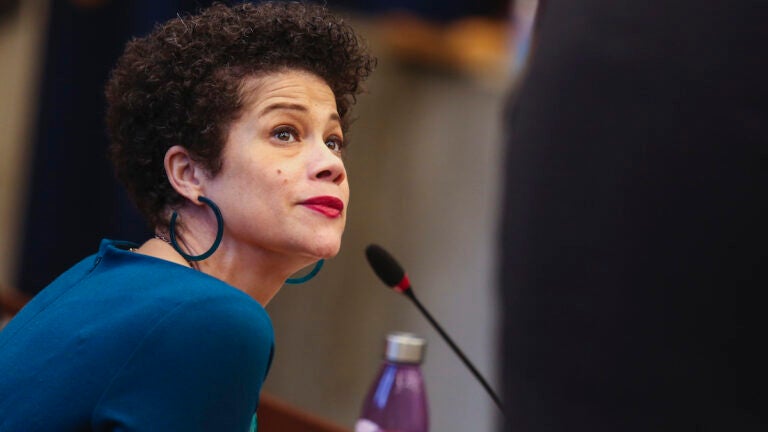
On Twitter, the council’s first foreign-born, Afro-Latina woman who was elected to her at-large seat in November, posted an over five-minute-long video with a recording of the call.
I received a voicemail on January 17th that was all too familiar to myself and those in the immigrant community. I will not be intimidated by these words of hate, but rather use this as a way to speak up for others who have received this bullying.
https://t.co/VtlijYrQSA— Julia Mejia (@juliaforboston) January 22, 2020
Mejia appears in several segments within the clip, interjecting with the call to share some of her personal story; how the former community activist is the daughter of a woman who was once an undocumented immigrant and how Mejia became a naturalized citizen after arriving in Boston from the Dominican Republic as a child.
The call was “all too familiar to myself and those in the immigrant community,” she wrote.
But Mejia saw an opportunity this time.
Using the call as a vehicle to speak up for others who have also been bullied like this, Mejia said the issue affects “all marginalized communities” from immigrants to LGBTQ+ persons and people living in poverty.
Echoing remarks she made in the video, Mejia wrote, “#AllMeansAll and this means standing up to hate & bullying by taking back our power. I ask those who disagree with me to meet with me so we can discuss our differences. This #MejiaMovement is about bringing people together. We’re not calling you out, we’re inviting you in.”
#AllMeansAll and this means standing up to hate & bullying by taking back our power. I ask those who disagree with me to meet with me so we can discuss our differences. This #MejiaMovement is about bringing people together. We’re not calling you out, we’re inviting you in.
— Julia Mejia (@juliaforboston) January 22, 2020
In the video, the call plays over a montage of photos ranging from Mejia’s personal family pictures to those taken during the civil rights movement and the tiki-torch carrying, far-right and white supremacist crowds that marched through Charlottesville, Virginia in 2017.
The caller, who was not identified, calls Mejia a variety of names, from fascist and communist to leech, and tells her she is “pushing for a fight.”
“You and the rest of you people, well let me just say this to you: you might keep Boston and San Francisco and these cities, but you’re not going to get the middle of this country,” he says in the recording. “And if you want to know how we fight, I suggest you look up the films that were filmed on Iwo Jima or the films on Normandy beach or the films of the jungle fight in Vietnam. You’ll see how we fight and you’ll see how we love because we obey the law. We’re decent people. We pay our taxes. We go to work. But all you do is antagonize and provoke. You’re a hater. You’re a racist. You’re a bigot.”
He adds that Trump should send immigration enforcement officers to Boston, where they can arrest and deport her.
In her maiden speech last week, Mejia called on officials to look at creating the sanctuary safe spaces at places like public schools, libraries, and family and youth centers, building on the city’s “sanctuary city” status, which limits how local police can interact with federal immigration enforcement agents.
“This is near and dear to me because for me I work with a lot of families who are still undocumented, and my mom as you know was undocumented at one point. But she is now a super voter, which means you can’t mess with her either,” Mejia says in the video.
The call then continues, before Mejia appears again, later on.
“Guess what?” she says. “We’re American too, and we’re not going anywhere.”


To comment, please create a screen name in your profile
To comment, please verify your email address
Conversation
This discussion has ended. Please join elsewhere on Boston.com