Elizabeth Warren should not have been silenced for reading anti-Jeff Sessions letter, says Jeff Sessions
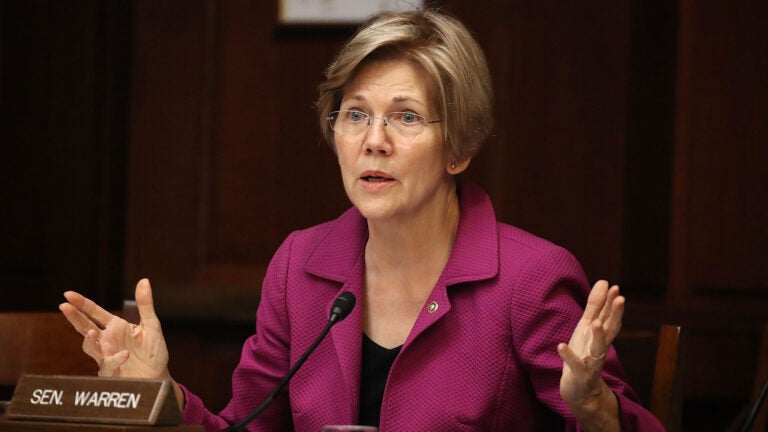
Even if rebuking Mitch McConnell seems en vogue lately for Alabama Republicans, it comes as somewhat of a surprise that Attorney General Jeff Sessions is on Elizabeth Warren’s side in her infamous showdown with the Senate majority leader.
Especially given the fact that it was Sessions who Warren was explicitly criticizing when she was silenced for reading a letter by Coretta Scott King on the Senate floor. Nevertheless, he insisted, the Massachusetts senator should have been allowed to read on.
“She certainly had the right to criticize my nomination and I think she really had the right to read the letter that she was blocked — or at least temporarily blocked — from reading,” Sessions said Tuesday following a speech at Georgetown University.
AG Jeff Sessions: @SenWarren “certainly had the right to criticize my nomination” during incident in which was she silenced on Senate floor. pic.twitter.com/3Uf1zgJSlw
— Evan McMurry (@evanmcmurry) September 26, 2017
Sessions went on to explain how the arcane rule McConnell used to stop Warren’s from reading the letter was created in 1902 (after a fistfight broke out in the Senate chamber) so that senators did not “personally disparage” each other.
“I was both a senator and a nominee,” he said. “So, it was a little bit—so, I wasn’t on the floor and I didn’t know anything about it.”
In the 1986 letter Warren tried to read, King had accused Sessions, then a senator, of using his office to “intimidate” and suppress black voters, as well as making “derogatory and racist comments.” After being warned, Warren was accused by McConnell of violating the Senate’s “Rule 19” and was ultimately prevented from finishing the letter.
Incidentally, the entire affair — specifically, McConnell’s own words — produced a rallying moment for the left.
Sessions said Tuesday that the Senate is “one of the most open debating forums in the history of the world.”
“People feel that,” he said. “And we should be very cautious before we constrict any member of the Senate from speaking on issues and in a way they choose.”