
Former Rep. Barney Frank: Orlando shooting isn’t ‘broader problem’ for gays
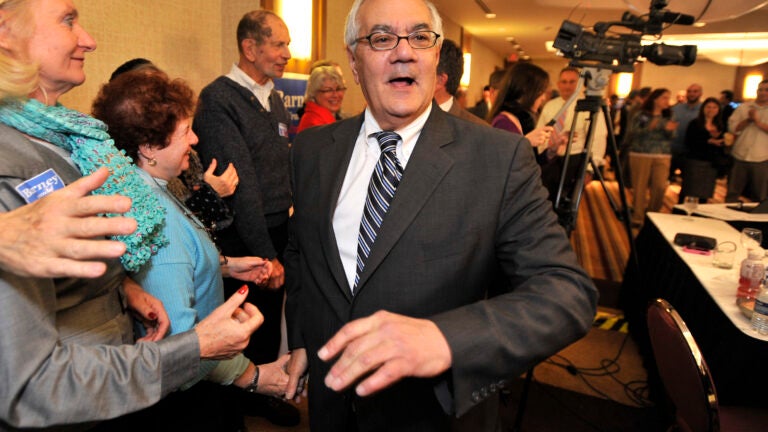
Former Rep. Barney Frank, a staunch advocate of LGBT rights, said the mass shooting at a gay nightclub in Orlando was more about Islamic radicalism than a reflection of increasing anti-gay hatred.
“It’s an attack against gay people but it does not reflect a general deterioration of our standing in America,” he said in an interview with The New York Times on Monday. “It reflects the virulence of the hatred in this sector of Islam.”
Frank, who in 1987 became one of the first Congressman to openly come out as gay, spoke a day after a gunman killed 49 people and injured 53 more at a gay nightclub in Orlando before being killed in a shootout with police. FBI officials said the shooter pledged allegiance to the Islamic State in a call with 911 operators during the terror attack.
Family and friends of the shooter said he had expressed anti-gay bigotry in the past, and Massachusetts Gov. Charlie Baker, among others, put their immediate focus on the shooter’s anti-gay animus rather than his allegiance to radical Islam.
But Frank said he did not think the terror attack reflected an increasing issue with America’s LGBT community.
“I disagree with some of the people quoted who see this as a broader problem for us,” he told the Times. “I think that one vicious person doesn’t create a general problem.”
Instead, Frank said the “Islamic element” of the attack could not be ignored.
“Yes, the overwhelming majority of Muslims don’t do this, but there is clearly, sadly, an element in the interpretation of Islam that has some currency, some interpretation in the Middle East that encourages killing people — and LGBT people are on that list,” he said. “And I think it is fair to ask leaders of the Islamic community, religious and otherwise, to spend some time combatting this.”
Frank also argued for significant surveillance of people who appear to adopt these “angry Islamic hate views,” a position he admits “may be the most controversial.”
The FBI had conducted a 10-month investigation into the shooter back in 2013, but the case was eventually closed.
“If they had continued to surveil him, that would have led to some ACLU criticism – and they would have been wrong,” he said. “I wish they had surveilled him more, not less.”



To comment, please create a screen name in your profile
To comment, please verify your email address
Conversation
This discussion has ended. Please join elsewhere on Boston.com