
How the snowstorm could impact election turnout in New Hampshire
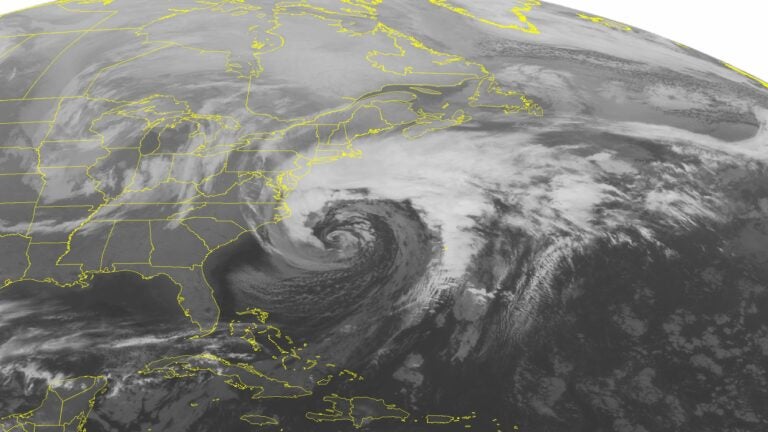
The winter storm hitting New England won’t have much of an effect on New Hampshire’s primary election on Tuesday, several experts said.
The National Weather Service issued a winter weather advisory for parts of southern New Hampshire that lasts from Monday at 6 a.m. until Tuesday at 6 a.m. About 3 to 6 inches of light and fluffy snow is expected, with 5-10 mile per hour winds. Cities by the coast are expected to see the storm’s highest wind speeds.
WMUR meteorologist Hayley LaPoint said that shouldn’t cause many problems for prospective voters.
“The bulk of the heaviest stuff comes through during the afternoon, evening, and overnight on Monday into Tuesday,’’ she said. “Voting should go off without too many problems, especially if you go later in the day on Tuesday.’’
Rosemary Radich, a business intelligence manager at AccuWeather, said extremely low temperatures can have an impact on turnout.
But given that Tuesday temperatures will be the low 20s, “We probably won’t see a big suppression,’’ Radich said.
Weather can have statistically significant and meaningful impacts on voter turnout and even swing elections, according to a 2007 study published in Journal of Politics [PDF]. The paper, titled “The Republicans Should Pray for Rain,’’ found that rain and snow cause lower turnout among people who usually vote Democratic.
In a primary election, though, the impact is likely to be more muted. A UMass/7News poll released on Monday morning tested what would happen in the case that snow causes low turnout, and found impacts of just one or two percentage points.
In a snowy scenario, Bernie Sanders’s lead over Hillary Clinton would decrease from 16 percentage points to 15 points. For Republicans, Donald Trump would gain two percentage points, Marco Rubio and John Kasich would gain one percentage point each, and Jeb Bush would lose two points, according to the poll.
“When you have margins [Trump and Sanders] seem to have, it could help insulate them from weather effect on voting,’’ said Wayne Lesperance, a political science professor at New England College.



To comment, please create a screen name in your profile
To comment, please verify your email address
Conversation
This discussion has ended. Please join elsewhere on Boston.com