
Sign up for the Today newsletter
Get everything you need to know to start your day, delivered right to your inbox every morning.
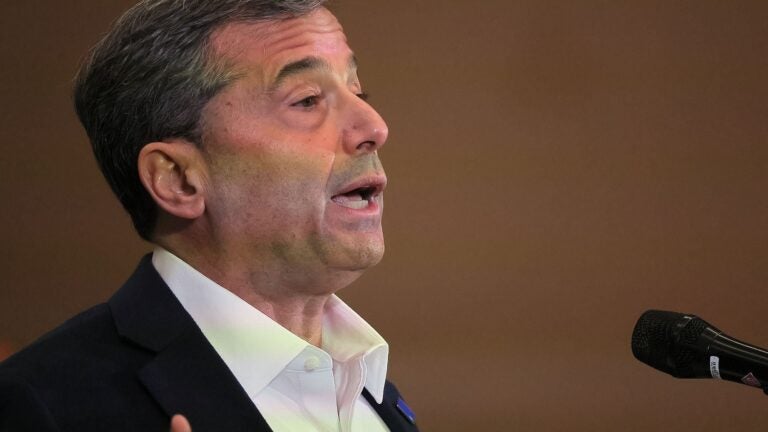
About a week after announcing his run for Boston mayor, Josh Kraft gave details on Feb. 12 about his vision for housing development in the city.
The average price for rental units in Boston has increased exponentially since 2021, with the price of a one-bedroom apartment costing $2,667 per month in June 2024, according to data from Boston Pads. Additionally, rental inventory and vacancy rates have been very low in 2024 compared to figures in 2020 and 2021.
In addressing the housing crisis, Kraft’s biggest push is a form of optional rent control that lets landlords opt in to create more affordable housing units in their buildings to receive tax rebates. Mayor Michelle Wu proposed her own form of rent control in 2023, approved by City Council but downed in the Statehouse, as reported by WBUR.
Kraft’s proposal specifically states that landlords can get up to a 20% property tax refund if they keep annual rent increases to no more than 5% over the next 10 years. Renters would need to make no more than twice the median area income to be eligible.
“The lack of access to housing regular people can afford is the number one challenge facing our city,” Kraft said in a statement emailed to Boston.com. “Today, there are projects ready to be built that would result in more than 26,000 units of housing in Boston, but they are stuck due to regulations imposed by Mayor Wu.”
Wu commented on Kraft’s idea during GBH’s “Boston Public Radio” on Feb. 12, calling the proposal “fake rent control” and saying that, by reducing the requirements for affordable housing units as part of the plan, it will set back the work the Wu administration has put in place.
Adam Guren, associate professor of economics at Boston University with a focus on macroeconomics and real estate, noted that the effects of tax rebates for landlords could be problematic for a city facing a “big budget crunch.”
Guren said if Kraft’s plan takes effect, Boston needs to consider how much it is willing to lose in the form of those tax breaks.
“There’s going to be some people who get a tax break or a subsidy without changing their behavior because they were already planning not to raise rent that much,” Guren said. “Then there are some people who are going to be induced to change their behavior by the policy, and you have to do an analysis to think about the cost to the city in terms of tax breaks.”
In October, Wu officially set the city’s inclusionary development policy’s minimum income-restricted housing unit percentage to 20% for developments with at least seven units. Kraft proposed a less stringent guideline, with a 13% minimum for developments with 10 or more units.
If Kraft were to lower the requirements for affordable housing, advocates said the move would regress years of progress made in the space. Shameeka Moreno, a consultant for the Boston Tenant Coalition, is a recipient of a voucher through the IDP system which took her years to navigate.
“If I hadn’t gotten this IDP unit, I would have been homeless because I had nowhere else to go,” Moreno said. “I couldn’t go anywhere further because I don’t drive and my kids have disabilities.”
Moreno said she feels Kraft has a focus on developing luxury apartments and would price out people who would otherwise qualify for an IDP voucher.
“He’s just thinking about developers,” Moreno said. “He’s not thinking about the little person, the person that is trying to stay in the unit, to be able to get to work, to get to school, to be able to raise a family.”
A spokesperson for Kraft’s campaign said in a statement emailed to Boston.com that the current IDP “is the very reason no new housing is being built, no new affordable housing is being built, no new jobs are being created, and no new tax revenue is being generated.”
“The policy solutions they support are one of the root causes of the current crisis,” the spokesperson said.
Guren said the “devil is always in the details” in how Kraft could implement his policies and benefit Boston renters. With a rise in interest rates and building costs that are deterring the creation of more affordable units, Guren suggested that the city could also look at reducing “problematic” construction costs.
“The city’s budget is tight, but I’m always concerned that if you cut taxes one place, do you either cut services or you raise taxes somewhere else?” Guren said. “You need to be clear about which of those things you’re going to do.”
Guren said the plan’s feasibility is dependent on market rates and the macroeconomic climate.
Armani White, coordinator for the Coalition for Truly Affordable Boston, said his group worked with Wu to raise the affordable housing percentage to 20% and that Kraft’s plan to lower the minimum requirement is a “major step in the wrong direction for housing justice advocates.”
“We have been advocating for policies we care about for the better for the past 10 years and we’ll continue to do that,” White said. “Our job is to educate our community about the candidates’ issues and, as it stands, what we’re seeing currently is a rollback of what our group has worked on in terms of issues.”
Meanwhile, the Boston City Council is considering its own landlord tax break idea. A “good landlord” tax break proposal, sponsored by City Councilor Gabriela Coletta Zapata, was approved by the City Council on Feb. 12 in a 10-0 vote with three councilors absent, according to meeting minutes.
The proposal, unlike Kraft’s, would allow Boston to opt in to a state law allowing cities and towns to give tax breaks to landlords who offer housing at a federally determined rate. The requirements for tenants to rent such properties and the amount of tax exemption is determined by city or state, according to the law.
Get everything you need to know to start your day, delivered right to your inbox every morning.





To comment, please create a screen name in your profile
To comment, please verify your email address
Conversation
This discussion has ended. Please join elsewhere on Boston.com