
They were days from getting engaged. Then they were killed in D.C.
Sarah Milgrim and Yaron Lischinsky met while working at the Israeli Embassy in Washington, D.C., her father said. Lischinsky had just bought an engagement ring, an official said.
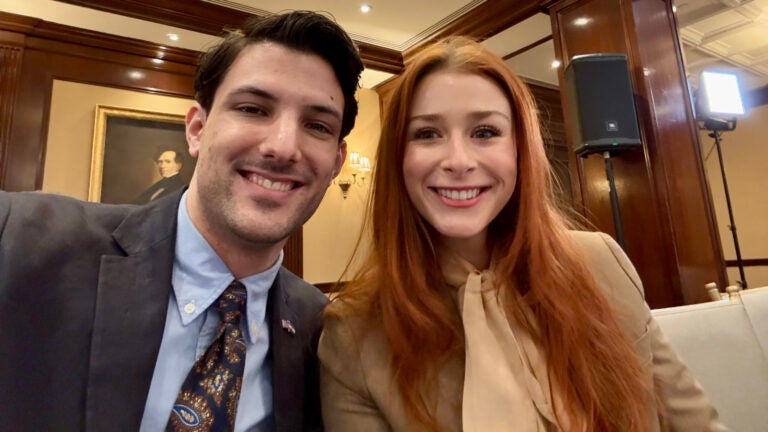
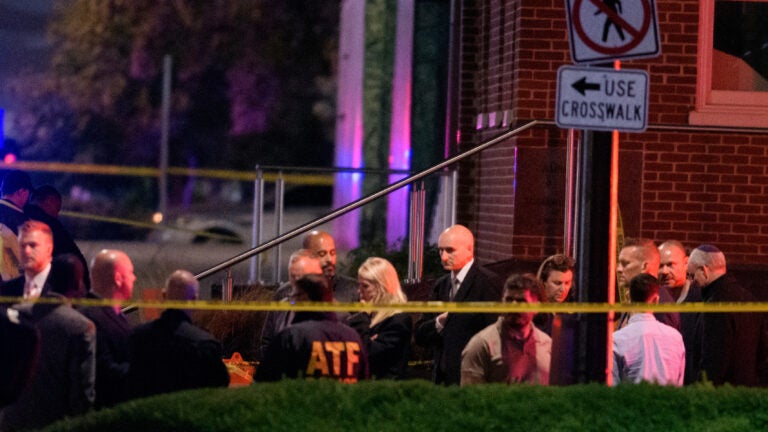
Sarah Milgrim’s parents didn’t know that Yaron Lischinsky was planning to propose to her until after the couple was killed by a gunman in Washington, D.C., on Wednesday night.
Her parents had assumed that marriage was in the picture. Milgrim, who grew up in Prairie Village, Kansas, had met Lischinsky shortly after joining the Israeli Embassy a year and a half ago to organize missions and visits by delegations. Lischinsky, a researcher at the embassy, had met her parents several times.
“He was incredible,” Milgrim’s father, Robert Milgrim, said in an interview. “He was very much like Sarah: passionate, extremely intelligent, dedicated to what he does, always on the cause of what’s right.”
Yaron and Sarah were our friends and colleagues. They were in the prime of their lives.
This evening, a terrorist shot and killed them as they exited an event at the Capital Jewish Museum in DC.
The entire embassy staff is heartbroken and devastated by their murder. No words… pic.twitter.com/2HytKDp8Fr
— Embassy of Israel to the USA (@IsraelinUSA) May 22, 2025
A few months ago, Sarah Milgrim, 26, told her parents that she planned to travel with Lischinsky, 30, to meet his family in Jerusalem for the first time. What they didn’t know, and would only learn after the shooting, is that he had bought an engagement ring before the trip.
With the couple set to fly to Israel on Sunday, Milgrim’s mother, Nancy Milgrim, planned to travel Friday to Washington from Prairie Village, a Kansas City suburb, to take care of her daughter’s dog, a goldendoodle named Andy.
On Wednesday night, Robert Milgrim was getting ready for bed when news alerts on his cellphone appeared, describing a deadly shooting in Washington outside an event for the American Jewish Committee, where his daughter was a fellow. He immediately called the FBI and the local police station, but neither could provide any information.
Nancy Milgrim opened a family locator app on her cellphone and looked for her daughter’s location. It showed her at the Capital Jewish Museum, where the shooting had taken place.
“I pretty much already knew,” Robert Milgrim said. “I was hoping to be wrong.”
Then Nancy Milgrim’s phone rang. It was Israel’s ambassador to the United States, Yechiel Leiter. He said Sarah Milgrim and her boyfriend had died, and gave his condolences.
It was a horrific moment, Robert Milgrim said. He pointed to rising antisemitism since Israel went to war in the Gaza Strip following the Hamas-led attacks on Israel on Oct. 7, 2023.
“What went through my mind is, I feel the antisemitism that has surfaced since Oct. 7 and also since the election of President Trump,” Milgrim said. “It’s just an extension of my worst fears.”
It was the ambassador who told them that Lischinsky had planned to propose in Jerusalem. Leiter separately told reporters that Lischinsky had bought the ring this week and intended to propose next week.
“The ironic part is that we were worried for our daughter’s safety in Israel,” Milgrim added. “But she was murdered three days before going.”
Sarah Milgrim and Lischinsky both held master’s degrees and were passionate about their work at the embassy, according to others who knew them. Lischinsky, originally from Germany, moved to Israel when he was 16 and had known from a young age that wanted to be a diplomat for Israel, said professor Nissim Otmazgin, one of his teachers at the Hebrew University of Jerusalem.
“He saw that as his calling,” said Otmazgin, dean of the university’s faculty of humanities. Lischinsky studied there from 2018 to 2021, earning a bachelor’s degree in international relations and Asian studies.
Lischinsky specialized in Japanese studies and was an outstanding student, according to Otmazgin. “He was an idealist,” he said. “He wanted to build bridges between Israel and other countries, especially in Asia.”
He grew up in a culturally mixed family with a Jewish father and a Christian mother, and was a practicing Christian, according to Ronen Shoval, dean of the Argaman Institute for Advanced Studies in Jerusalem, where Lischinsky participated in a yearlong program in classical liberal conservative thought after earning a master’s degree in government and diplomacy.
“He was a devout Christian,” Shoval said, “but he had tied his fate to the people of Israel.”
This article originally appeared in The New York Times.




To comment, please create a screen name in your profile
To comment, please verify your email address
Conversation
This discussion has ended. Please join elsewhere on Boston.com