
Education dept. gives schools two weeks to eliminate race-based programs
The announcement gave institutions 14 days to comply. It built on a major Supreme Court ruling in 2023 that found that the use of race-conscious admissions practices at colleges and universities was unlawful.
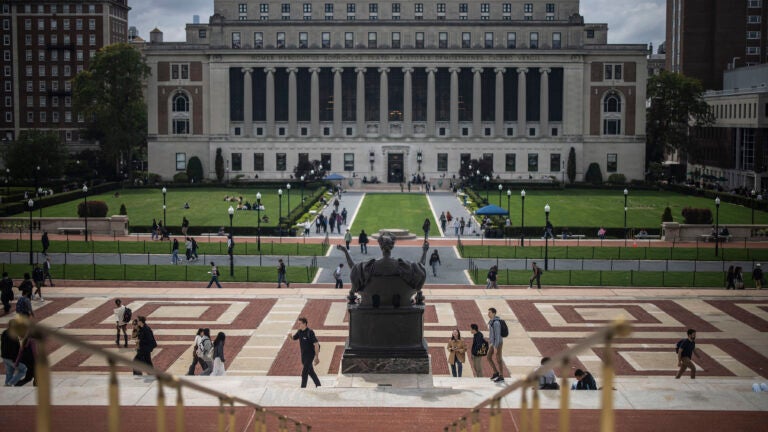
WASHINGTON — The Education Department warned schools in a letter Friday that they risked losing federal funding if they continued to take race into account when making scholarship or hiring decisions, or so much as nodded to race in “all other aspects of student, academic and campus life.”
The announcement gave institutions 14 days to comply. It built on a major Supreme Court ruling in 2023 that found that the use of race-conscious admissions practices at colleges and universities was unlawful. But it went far beyond the scope of that decision by informing schools that considering race at all when making staffing decisions or offering services to subsets of students would be grounds for punishment.
The letter was the latest step in the Trump administration’s push to recast programs intended to level the playing field for historically underserved populations as a form of racial discrimination. It also appeared to be an extension of the broadsides President Donald Trump has delivered to purge diversity, equity and inclusion initiatives from the federal government, which critics have assailed as veiled racism.
Craig Trainor, the Education Department’s acting assistant secretary for civil rights, said that related programs and scholarships, many of which have historically sought to help Black and Latino students attain college degrees or find community, had come at the expense of “white and Asian students, many of whom come from disadvantaged backgrounds.”
“At its core, the test is simple: If an educational institution treats a person of one race differently than it treats another person because of that person’s race, the educational institution violates the law,” Trainor wrote.
On Monday, the department said it had also canceled $600 million in grants focused on training teachers in “inappropriate and unnecessary topics” such as critical race theory, social justice activism, anti-racism and “instruction on white privilege.”
The sweeping guidance caused alarm in academic circles and raised pressing questions about how much it would disrupt campuses.
Many colleges offer scholarships and grants specifically for students of certain ethnic backgrounds or maintain program houses, professional societies, and fraternities and sororities on campus tailored to students of specific ethnic heritages or races.
Some colleges have already preemptively taken steps to bar any clubs or student organizations that could run afoul of the department’s interpretation of civil rights law.
This article originally appeared in The New York Times.





To comment, please create a screen name in your profile
To comment, please verify your email address
Conversation
This discussion has ended. Please join elsewhere on Boston.com