
Extra News Alerts
Get breaking updates as they happen.
A congressional investigation into campus antisemitism blamed university officials for failing to stop or adequately discipline students engaging in disruptive protests over the Israel-Gaza war, and called for reconsideration of federal support for institutions that have failed to protect Jewish students, faculty and staff.
The 325-page report released Thursday found a widespread lack of accountability for “antisemitic harassment, assault, trespass, and destruction of school property” from some university leaders. It charged school officials with making “astounding concessions” to protesters in tent encampments, deliberately withholding support for Jewish students, failing to enforce rules and discipline those who broke them – and for treating the congressional inquiry with impatience or outright hostility.
The report, led by congressional Republicans, was the culmination of a nearly year-long investigation into multiple schools, including Harvard and Columbia universities, by the House Education Committee, an inquiry prompted by heated protests over the Israel-Gaza war on campuses across the country. It arrived days before an election that could decide which administration would enforce possible repercussions for the schools, such as withholding federal funding.
The campusdemonstrations gave rise to complaints at some schools that protesters’ calls for intifada, chants decrying Zionists and other actions left some Jewish students frightened, isolated and uncomfortable on campus. Some protesters and others have countered that university administrators have been repressing freedom of speech and unfairly cracking down on peaceful demonstrations.
The investigation brought in more than 400,000 pages of documents, and subpoenaed officials at two Ivy League universities – a legal move the committee said was necessary after schools were not sufficiently responsive, and whichsome experts called an unprecedented intrusion into the private schools’ autonomy.
During months of high-profile hearings and numerous requests for documents, some praised the committee for holding school officials to account and protecting Jewish communities, while others criticized lawmakers for what they saw as a partisan witch hunt aiming to score political points.
The resulting report draws on internal emails, texts, chats and edits to documents that show administrators feeling vulnerable to criticism on multiple fronts. (“Please do not forward. I think this isn’t going to work,” one university president reportedlywrote.) It includes disciplinary notices sent to protesters, an internal analysis of why the discipline process was broken at one school, and debate over how to handlepublic statements about the conflict and divisive slogans such as “from the river to the sea.”

It includes details about negotiations and discussions about protesters’ demands at Columbia and elsewhere. And it contains many lists of complaints reported to university police or other officials of antisemitic and other incidents. In many cases, it appeared, no action was taken because of insufficient information, according to the report.
In a statement, a Columbia spokesperson said Thursday that the university “strongly condemns antisemitism and all forms of discrimination” and remains “resolute that calls for violence or harm have no place at our University.”
The university has established an office of institutional equity to address reports of discrimination and harassment, appointed a new rules administrator and strengthened the capabilities of its public safety office since interim president Katrina A. Armstrong took the helm in August.
The House committee’s findings “indicate the need for a fundamental reassessment of federal support for postsecondary institutions that have failed to meet their obligations to protect Jewish students, faculty, and staff, and to maintain a safe and uninterrupted learning environment for all students,” the report says.
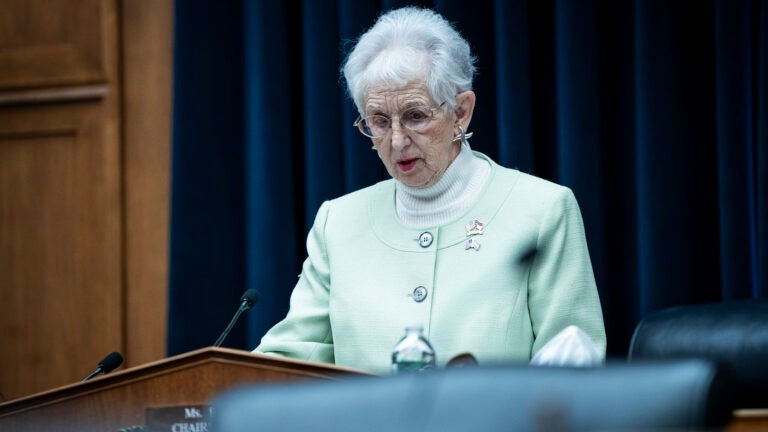
“For over a year, the American people have watched antisemitic mobs rule over so-called elite universities, but what was happening behind the scenes is arguably worse,” Rep. Virginia Foxx (R-North Carolina), the committee’s chairwoman, said in a statement Thursday.
Foxx praised Jewish students for their courage and called university officials “cowards” who failed the students they were supposed to serve, allowing chaos on campus that threatened public safety and “likely” violated the law. “It is time for the executive branch to enforce the laws and ensure colleges and universities restore order and guarantee that all students have a safe learning environment,” she said.
The Education Department oversees federal funding that colleges receive and enforces Title VI, a provision of federal civil rights law that requires colleges to prevent and alleviate hostile environments based on race, color or national origin. The report criticizes the department for not doing enough to hold institutions accountable for their handling of antisemitism allegations.For instance, the committee accused the department of failing to “meaningfully pursue action” against UCLA despite “overwhelming evidence” of discrimination against Jewish students.
In a statement, UCLA said it has “learned valuable lessons from the events of last spring, and ahead of the start of this academic year, instituted reforms and programs to combat discrimination and enhance campus safety.” The institution launched new policies for public expression activities on campus and is working with campus offices and stakeholders, including UCLA Hillel, to promote safety and protect civil rights.
The Education Department said it is reviewing the committee report and is committed to investigating complaints of all forms of hate to the full extent of its authority. All of the 11 colleges and universities mentioned in the committee’s report are under evaluation or investigation by the department’s Office of Civil Rights or are subject to proceedings in federal court, the department said.
As of Thursday, the Office of Civil Rights had launched 154 cases involving discrimination based on heritage at K-12 schools, colleges and universities. It has struck recent agreements with several universities, including Brown and Drexel universities.
“This is not the end,” AnnMarie Graham-Barnes, a spokeswoman for the committee, said in an email, adding that lawmakers would continue to demand better from universities. “In the meantime, the executive branch needs to step up and enforce the laws that are on the books to protect against antisemitism and ensure a safe learning environment for all students.”
The Biden administration is taking accusations of antisemitism on college campuses very seriously, Ethan Ris, associate professor of higher education administration at the University of Nevada at Reno, wrote in an email. If the committee suspected otherwise, then it would investigate the Education Department for failing to enforce federal laws, he said – but no such claim has been made.
“Instead of grandstanding and claiming a form of investigative power that is not supported by precedent or Constitutional law, Representative Foxx should be doing her actual job, in the form of reauthorizing the Higher Education Act – a task that is now more than a decade late,” Ris said. “Doing amateur detective work while failing to actually legislate is a dereliction of duty.”
While the Education Department plays a tremendous role in enforcement, Congress could push amendments to existing laws to force changes in the way the agency conducts its oversight and enforcement, said Peter Lake, the director of the Center for Excellence in Higher Education Law and Policy at Stetson University and an alumnus of Harvard College and Harvard’s law school.
The committee’s report lobbed specific criticisms at 11 schools.At George Washington University, according the report, only one student was suspended and others faced lesser sanctions for participation in an encampment that the school’s president said in a public statement included people surrounding and intimidating students with antisemitic images and hateful rhetoric.
GW officials did not immediately respond to a request for comment Thursday.
The committee claimed that at both Harvard and Columbia, faculty intervened on numerous occasions to prevent “meaningful” discipline from being enacted against students.
“Harvard is steadfast in our efforts to create a safe, inclusive environment where students can pursue their academic and personal interests free from harassment and discrimination,” Harvard spokesperson Jason Newton said Thursday.
At the same time, Newton said, the university has taken steps to clarify rules for use of campus spaces and disciplinary policies and procedures, as well as to engage its community around civil dialogue to bridge divides.
The committee summoned university leaders to testify about the protests last December, and the investigation was launched after theexplosive hearing, at which presidents of three of the most prestigious schools in the country declined to unequivocally say that calls for genocide of Jews would violate their codes of campus conduct.
Their cautious responses generated outrage from some and touched off an ongoing national debate over the boundaries of free speech and campus safety.
The presidents of the University of Pennsylvania and Harvard resigned not long after the hearing. But protests continued – and the investigation had begun.
This year has been punctuated by flare-ups, as the committee summoned leaders from institutions such as UCLA, Columbia and Northwestern universities to Congress for heated questioning in public hearings.
During a hearing in April with Columbia leaders, protesters erected tents on campus. After New York police were called in to clear the area, similar encampments popped up at schools across the country – and police crackdowns followed, further inflaming tensions as the school year drew to a close. Columbia’s president, Minouche Shafik, resigned in August.
Get breaking updates as they happen.




To comment, please create a screen name in your profile
To comment, please verify your email address
Conversation
This discussion has ended. Please join elsewhere on Boston.com