
Goose bumps build for the Webb’s 1st snapshots of the universe
“What I have seen moved me as a scientist, an engineer and a human being.”
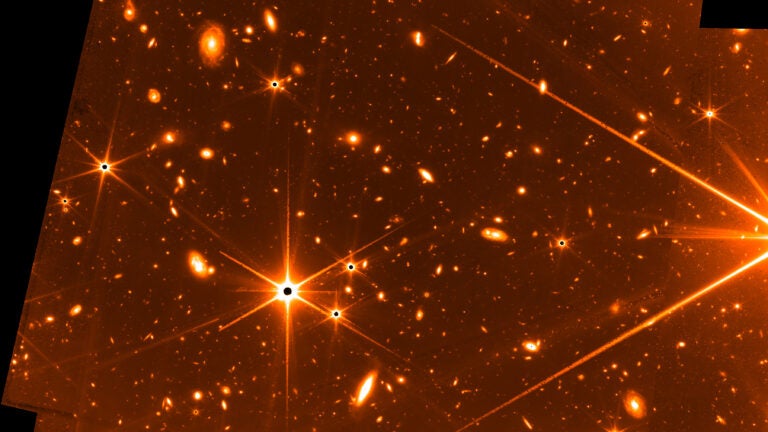
On Tuesday morning, NASA will show off the first pictures and data from the new James Webb Space Telescope. That will bring to an end some 30 years and $10 billion of planning, building, testing and innovating, followed by six months of terror, tension and anticipation.
The pictures constitute a sightseeing tour of the universe painted in colors no human eye has seen — the invisible rays of infrared or heat radiation. Infrared rays are blocked by the atmosphere and so can only be studied out in space. Among other things, they can penetrate the clouds of dust that encase the cosmic nurseries where stars are born, turning them into transparent bubbles that show the baby stars nesting inside.
The first image will be revealed Monday at 5 p.m. by President Joe Biden at the White House in an event streamed on NASA TV or the agency’s YouTube channel. NASA will then show other pictures at 10:30 a.m. Eastern time Tuesday in a live video stream.
Only the tiniest sliver of the world’s astronomers have gotten a look at what the Webb has seen. But the NASA officials who were granted an early peek at the new images could only gush during a news conference in late June.
Pamela Melroy, NASA’s deputy administrator and a former astronaut, said she could hardly contain herself.
“What I have seen moved me as a scientist, an engineer and a human being,” she said.
Webb is the largest space telescope ever launched. Its mission is to explore the earliest days of the universe, when galaxies and stars were just congealing out of the fog of the Big Bang, reaching farther into time and space than the Hubble Space Telescope can. Just as the Hubble defined astronomy during the past 30 years, NASA expects that the Webb will define astronomy for a new generation of astronomers.
The telescope is the fruit of the combined effort of some 20,000 engineers, astronomers, technicians and bureaucrats, according to Bill Ochs, the telescope’s project manager. It is now orbiting the sun at a spot called L2, 1 million miles from Earth.
The pictures to be revealed on Monday and Tuesday were cherry-picked by a small team of astronomers and science outreach experts to show off the capability of the new telescope and to knock the socks off the public.
This article originally appeared in The New York Times.




To comment, please create a screen name in your profile
To comment, please verify your email address
Conversation
This discussion has ended. Please join elsewhere on Boston.com