Shinzo Abe to become first Japanese leader to visit Pearl Harbor
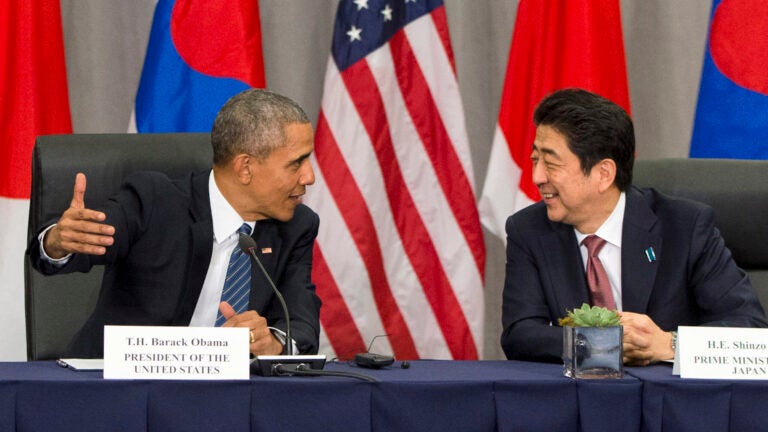
TOKYO — Prime Minister Shinzo Abe will become the first sitting Japanese leader to visit Pearl Harbor, he said Monday, making a symbolic visit this month to the site of the Japanese attack 75 years ago that pulled a stunned United States into World War II.
Abe said in a televised news conference that he would travel to the American naval base with President Barack Obama during a trip to Hawaii on Dec. 26 and 27.
By visiting Pearl Harbor, Abe will in effect be reciprocating a trip earlier this year by Obama to the Japanese city of Hiroshima, where the United States dropped a nuclear bomb at the end of the war with Japan in 1945.
“We must never repeat the horror of war,” Abe said. “I want to express that determination as we look to the future, and at the same time send a message about the value of U.S.-Japanese reconciliation.”
Abe’s visit will come just a few weeks after the 75th anniversary of the attack, which occurred on Dec. 7, 1941. Carried out by Japanese bombers and fighter planes launched from a fleet of aircraft carriers that had quietly slipped within striking distance of Hawaii, the attack killed more than 2,000 Americans and sank a number of U.S. warships, including the battleship Arizona, whose wreck has become a memorial to the battle.
Obama’s trip to Hiroshima in May was also a first: No sitting U.S. president had previously visited the city. In August, Abe’s wife, Akie, paid a quiet visit to Pearl Harbor and the Arizona memorial, fueling speculation that her husband would follow, although Japanese officials had maintained that there was no plan for him to do so.
In Hiroshima, Obama spoke of the perils of modern warfare and sought to comfort aging survivors of the atomic blast, which, along with the subsequent bombing of Nagasaki, killed more than 200,000 people, mostly civilians.
Abe did not elaborate Monday on his plans for the Pearl Harbor visit, which will be carefully choreographed with U.S. officials. He said he hoped to “comfort the souls of the victims.”
The visit will take place in the thick of a U.S. presidential transition that has threatened to inject new instability into international relations in Asia, including questions over the U.S.-Japan relationship, and has unsettled policymakers in Tokyo.
President-elect Donald Trump often took aim at Japan during the campaign, on issues including trade and defense. Abe’s visit to Trump’s New York penthouse last month — Abe was the first foreign leader to meet with Trump after the election — looked to many like a pre-emptive effort to soothe the bilateral relationship.