
8 things we’re reading this weekend
Welcome to the latest installment of a new weekly series where we point you to what we’ve found fascinating, amazing, entertaining, and interesting all for your reading enjoyment.
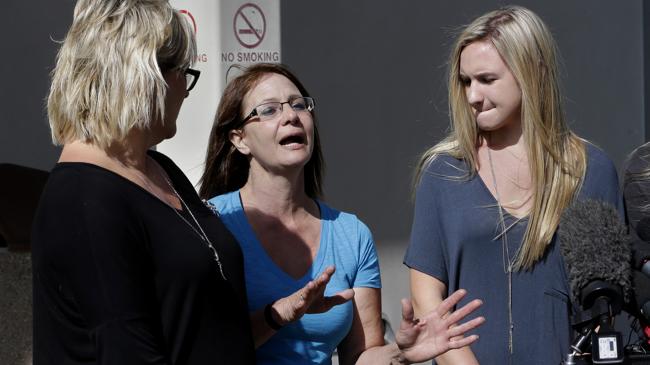
Talking about what happened: Unfortunately, profiles of those lost in mass shootings have become far too common. What’s less common are tales of survivors and the trauma they face, especially in the days right after the shooting. This Washington Post profile looks at the youngest survivor of the Roseburg, Oregon community college shooting. It’s clear from the profile that both Cheyeanne, the survivor, and her mom wanted to talk about what happened. Eli was there to listen. Hopefully, the rest of the country is, too. [The Washington Post] –Allison Pohle
Disinfecting after death: This profile of the workers who clean up after gruesome deaths is both fascinating and disturbing. And it’s definitely not for the faint of heart. That is, unless you think you can handle learning everything there is to know about “decomps’’ and “hair soup.’’ [MinnPost] –Eric Levenson
Talking to a former terrorist about current terrorist attacks: Vice published an interview with one of the men convicted for the 1993 terrorist attack on the World Trade Center. The Q&A style is raw and insightful. It creates a space for understanding horrific conflict on a personal level while allowing for a world view. [Vice] –Nina Godlewski
Is there any evidence trigger warnings are actually a big deal? As more and more people cite the anecdotal increase in demands for college professors to warn students of potentially troubling content, surely someone should ask how common of an issue this is? No concrete data exists yet, but this New York magazine article offers an initial glimpse into what’s really happening. [New York magazine] –Lloyd Mallison
Campbell’s soup tackles phones at the dinner table: Maybe you’ve managed to ban technology from your dinner table, in which case, you have my deepest admiration. But for those of us floating in a sea of ambivalence about sharing family time with our phones, social media, and the Internet, life is full of guilt and uncertainty. Our culture says it’s all or nothing, especially when it comes to family dinner. Either you are all present, interacting and far away from your phone, or you might as well be alone. Let’s all acknowledge we don’t really know what we are doing when it comes to sharing life, loved ones, and dinnertime with technology. [The Kitchn] –Heather McDonald
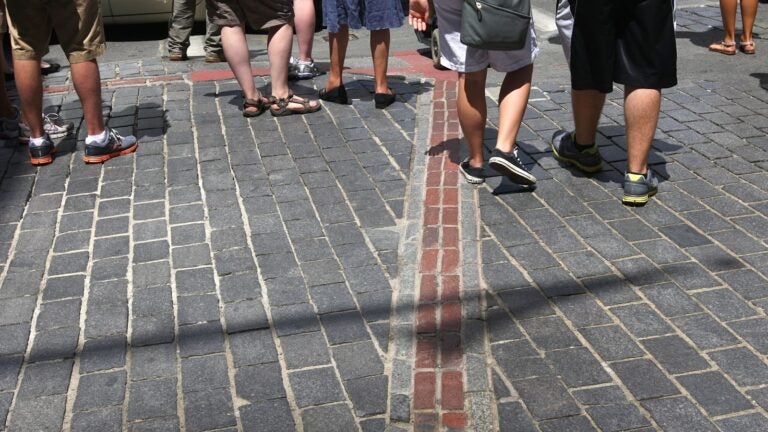
History nuggets: History geeks (like me) will enjoy Boston magazine’s piece covering 400 years of Boston through 13 objects. It gave this city’s history the texture and feel that sometimes gets lost in textbooks and classrooms. [Boston magazine] –Roberto Scalese
A finance executive and a 9-year-old walk into a school: It’s not everyday a Goldman Sachs executive finds himself having something in common with a 9-year-old student at a Dorchester Catholic school. But that’s just what happened last week when Jack Sebastian, who had helped the school with fundraising, crossed paths with Devin Allen, a straight-A student at Saint John Paul II Catholic Academy. [The Boston Globe] –Hilary Sargent
Our Facebook likes, ourselves: “The idea that everybody thinks they’re specialists with voices that deserve to be heard has actually made everyone’s voice less meaningful.’’ In a digital age where we’re all developing an online voice and an online persona, is the need to like and be liked coming at a cost? [The New York Times] –Brian Burns



To comment, please create a screen name in your profile
To comment, please verify your email address
Conversation
This discussion has ended. Please join elsewhere on Boston.com