
The last scathing front-page New York Times editorial had deep Massachusetts ties
On Saturday, The New York Timespublished its first front-page editorial since 1920, calling for an end to America’s gun epidemic.
“It is a moral outrage and a national disgrace that civilians can legally purchase weapons designed specifically to kill people with brutal speed and efficiency,’’ The Times’ editorial board wrote.
Scathing language also had its place in the paper’s last front-page editorial, in which the staff used a series of withering burns to lament the Republican party’s nomination of Warren G. Harding as its presidential candidate. The editorial also referenced Massachusetts politicians.
In expressing their shock at the nomination, The Times said Harding “has never been a leader of men or director of policies.’’ Instead, the so-called “Ohio politician of the second class’’ was “an undistinguished and indistinguishable unit in the ruck of Republican Senators who obediently followed Mr. Lodge in the twistings and turnings of that statesman’s foray upon the Treaty and the Covenant.’’
The Mr. Lodge they’re referring to is Henry Cabot Lodge, a U.S. senator from Massachusetts who was the first Senate Majority Leader, though the title didn’t exist then. Lodge vehemently opposed the Treaty of Versailles, specifically citing the section regarding the League of Nations.
Although there was no requirement that the U.S. must declare war along with the other member governments, article X of the league required the United States to “respect the territorial integrity of member states.’’ This meant the U.S. might need to impose an economic embargo or sever diplomatic relations with other countries.
This concerned Lodge, who believed the U.S. would give up too much by joining the league. He wanted Congress to be able to control its own declarations of war. Many senators, including Harding, agreed with him, and, as a result, the treaty was never ratified, much to President Woodrow Wilson’s dismay.
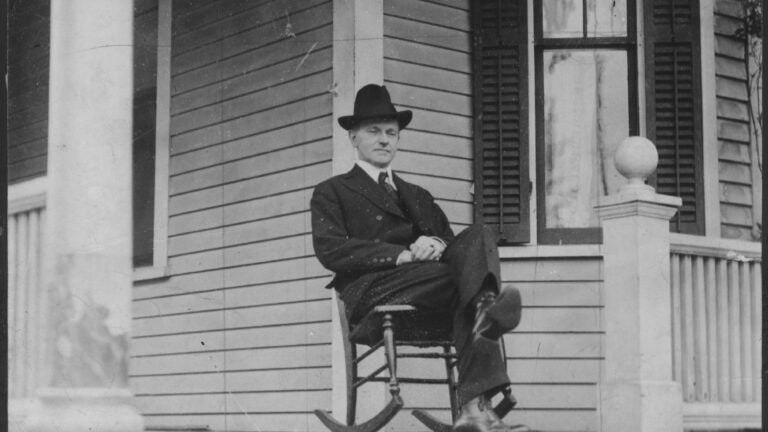
The Times burned Lodge, but they didn’t criticize all Massachusetts politicians. The editorial praised Massachusetts Gov. Calvin Coolidge as Harding’s vice presidential candidate.
“He at least is a man of achievement,’’ The Times wrote. “He is known to the party and to the nation.’’
They went on to laud his role in the Boston Police Strike of 1919, when three-quarters of policemen walked off the job because their commissioner, Edwin Curtis, told them they couldn’t form a union. Very few people sided with the strike. The nation was in the midst of the Red Scare, and many people opposed organized labor because they feared a communist take-over.
When a union leader blamed the strike on Curtis, Coolidge publicly responded and said that “there is no right to strike against the public safety by anyone, anywhere, any time.’’
“He met that menace of public safety with courage and determination, and the nation rang with praise of him,’’ The Times wrote.
Still, the editorial staff said “that does not compensate for the lack of achievement, for the colorlessness of the candidate for the first place.’’
The U.S. electorate disagreed. Harding was elected in 1921, and, after he died of a heart attack in 1923, Coolidge became president. He was re-elected in 1924.



To comment, please create a screen name in your profile
To comment, please verify your email address
Conversation
This discussion has ended. Please join elsewhere on Boston.com