
Alison Parker could be the first woman journalist killed on the job in the U.S. since 1992
Updated 2:40 p.m.
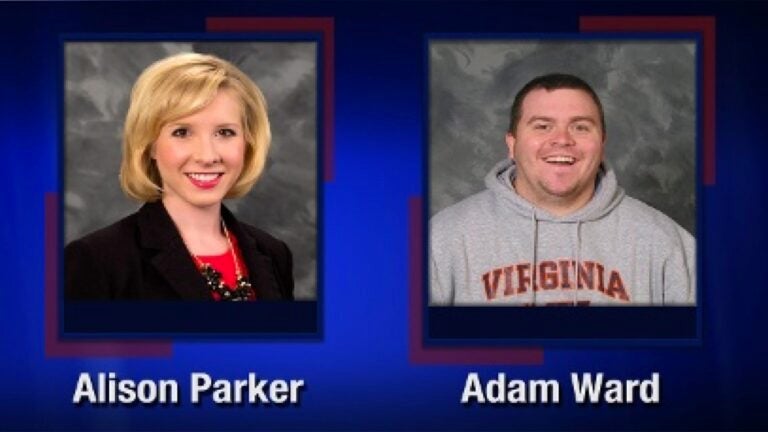
Alison Parker and Adam Ward could be the sixth and seventh journalists to be killed in the United States as a direct result of their work since 1992, according to data released by the Committee to Protect Journalists.
“We’re still looking into it,’’ said Carlos Lauria, senior Americas program coordinator for The Committee to Protect Journalists, which investigates the death of every journalist to determine if it is work related.
If confirmed by CPJ, Parker would be the only woman out of the seven journalists killed since 1992, the year they started collecting data.
The WDBJ television reporter and cameraman were shot to death in Virginia on live television by a suspected gunman described as a disgruntled station employee, Vester Lee Flanagan II, 41.
Parker had been interviewing an economic development official about tourism when the gunshots were fired, and the camera fell. Flanagan’s social media profiles were quickly removed by Twitter and Facebook after video and other updates from the killings were posted to his accounts.
“We consider a case ‘motive-confirmed’ only if we are reasonably certain that a journalist was murdered in direct reprisal for his or her work; was killed in crossfire during combat situations; or was killed while carrying out a dangerous assignment such as coverage of a street protest,’’ CPJ explained on their website. “Our database does not include journalists killed in accidents such as car or plane crashes.’’
Prior to the Virginia shooting, the last motive-confirmed killing of a journalist that took place in the U.S. was in 2007 when Chauncey Bailey, the editor-in-chief of the Oakland Post in Oakland, California, was gunned down on his way to work by a cook from Your Black Muslim Bakery, a business his staff had been covering.
Charles Sennott, founder and executive director of The GroundTruth Project at WGBH, which is partly dedicated to protecting reporters overseas, said the risk to journalists around the world is rising on many fronts.
“Today, as this terrible tragedy reveals, we have to be thinking about security even on assignments that seem as safe and risk-free as covering tourism right here in the U.S.,’’ Sennott said. “Journalists have to think about their own safety, they have to think 360 degrees all the time and, sadly, that is just the reality of the world we live in.’’



To comment, please create a screen name in your profile
To comment, please verify your email address
Conversation
This discussion has ended. Please join elsewhere on Boston.com