
What we know about the security guard in the new Gardner heist video
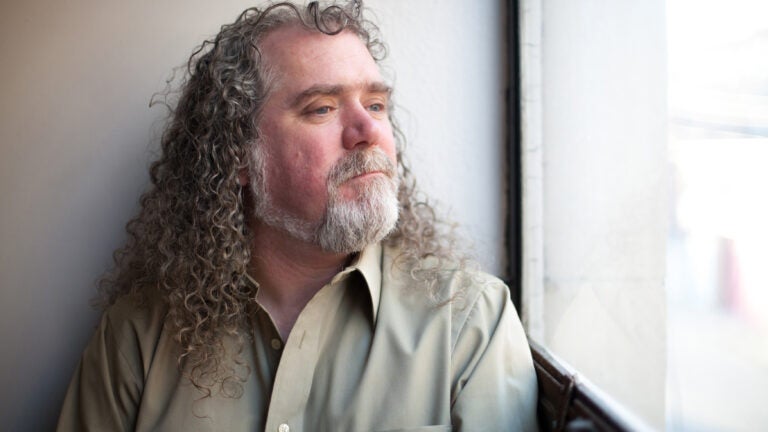
For the past 25 years, former night security guard Richard Abath has publicly maintained his innocence in the largest art heist in history. But investigators say a newly discovered video suggests Abath might know more about the robbery than he has let on.
On March 18, 1990, Abath was a 23-year-old working the night shift at Boston’s esteemed Isabella Stewart Gardner Museum when, he said, two men posing as police officers tricked him into opening a side door. Eighty-one minutes later, the thieves had stolen more than half a billion dollars worth of artwork from the museum.
On Thursday, the U.S. Attorney’s Office released a video filmed the night before the heist and is asking the public to help identify one of the two individuals captured in the footage. A source close to the investigation confirmed that the other individual is Abath. Investigators are now questioning whether the video shows a potential practice run — a staged rehearsal — of the museum heist.
Abath did not return a request for comment on Thursday. He has kept a low profile as the years passed, seldom agreeing to speak with reporters.
In an interview with NPR’s StoryCorps earlier this year, Abath recounted how the robbers handcuffed him and left him in the museum’s basement. The bottom of his chin was duct-taped to the top of his head, he said. Feeling panicked, he calmed himself by singing Bob Dylan’s “I Shall Be Released.’’
“I don’t know how long I was singing that damn song for, but it was quite some time,’’ he told StoryCorps.

Boston police took these photos of Richard Abath upon finding him in the museum basement.
Investigators have said they discounted Abath as a suspect for many years because they believed his judgment was poor that night due to his history of drug and alcohol use.
In 2005, then under a condition of anonymity, Abath told The Boston Globe that he used marijuana and drank alcohol before work. In 2013, he said he occasionally used LSD and cocaine in the past, too. But he insists he was sober on that fateful night.
“I totally get it. I understand how suspicious it all is,’’ he said in 2013. “But I don’t understand why [investigators] think . . . I should know an alternative theory as to what happened or why it did happen.’’
Abath has passed two lie detector tests about the heist. And yet, many questions remained unanswered.
• Why didn’t motion detectors record the thieves’ footsteps in the museum’s Blue Room, where Manet’s “Chez Tortoni’’ was taken? The only footsteps detected there were at 12:27 and 12:53 a.m., which were the times Abath said he walked through the room on his patrol.
• Why did Abath open the museum’s side door 20 minutes before the thieves arrived? Investigators wonder: Was he signaling them to come in? “I did it to make sure for myself that the door was securely locked,’’ Abath told TheGlobe in 2013. “I don’t know what the others did, but I was trained to do it that way.’’
• Why didn’t he push the museum’s sole panic button, which was located near the desk where he was standing guard? Abath said he was overwhelmed because one of the robbers posing as an officer told him he was under arrest and asked for his ID.
• Why was the frame that held the stolen Manet painting found on the security chief’s chair? Abath told TheGlobe he felt investigators accused him of stealing the Manet. “They wanted to know if I had taken the painting and stashed it somewhere,’’ he said. “I told them as I’ve said a hundred times before and since, I had absolutely nothing to do with the robbers or the robbery.’’
Even as investigators tracked leads to notorious art thieves and alleged mobsters, they kept an eye on Abath. He and his wife moved to Brattleboro, Vermont in 1999, where he works as a teacher’s aide. When FBI agents met him for coffee in Brattleboro in 2009, they told him they had never eliminated him as a suspect.
“I don’t want to be remembered for this alone,’’ he told StoryCorps. “I’d like to be remembered for the good things I’ve done. I’m a husband, I’m a father to two really cool kids. But they’re saying it’s half a billion worth of artwork. And ultimately I’m the one who made the decision to buzz them in. It’s like doing penance. It’s always there.’’
Related gallery: Art stolen in the Gardner heist
[bdc-gallery id=”115823″]





To comment, please create a screen name in your profile
To comment, please verify your email address
Conversation
This discussion has ended. Please join elsewhere on Boston.com