
Church shooting not a relic of the past, leaders say
“It never went away.’’
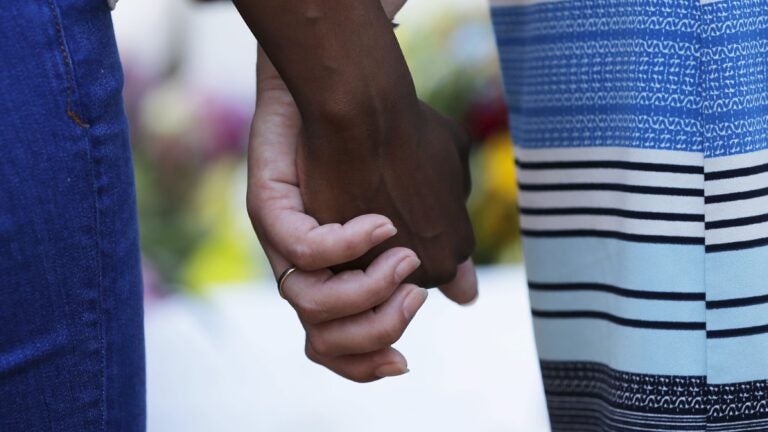
Four girls murdered in a church bombing in Birmingham in 1963. Nine people murdered in a church shooting in South Carolina in 2015.
The violence in Charleston on Wednesday seems shocking, a throwback to an era when Birmingham was called Bombingham and mobs threw rocks at children going to school. But those who lived through it say the anger and racial animosity didn’t disappear. It just went underground.
“It’s not a relic,’’ said activist Sarah-Ann Shaw. “It never went away.’’

Sarah-Ann Shaw, asking the late Mayor Menino a question.
Civil rights leaders in the 1960s made major progress, she said, but they never achieved a level playing field.
And today, it’s not just racial differences. It’s religious, sexual and gender differences, said Shaw.
“You don’t have the kind of wholesale acceptance of other people,’’ she said.
Shaw, the first black female news reporter on Boston television, wondered why people today feel like the work is done.
“You’re not settled,’’ Shaw said. “If they were you wouldn’t have this man feel he had to go into a black church and shoot and kill people.’’

Kenneth Guscott
Kenneth Guscott was president of the Boston chapter of the NAACP when the little girls in Birmingham were killed, serving from 1963 to 1968. He, too, sees the division between others. He thinks the accused shooter in Charleston is just a tool of racist propaganda.
“He probably listened to it, went out and said he wants to be the hero of the confederacy,’’ he said. “The people who talked that nonsense are the ones that are more guilty than him.’’
The anger at others might not be as visible as it was 50 years ago, Guscott said. But it’s still there, percolating, with flare ups like the violence in Charleston.
“I would argue that it’s never gone away,’’ said Michael Curry, current president of the Boston NAACP.
He thinks not only of the Birmingham bombings, but another, more local and recent hate crime.
Keith Luke was 22 in 2009 when he devised a plan to kill as many nonwhites as possible. He murdered two people and raped and shot a third.
Luke, of Brockton, was arrested before he completed the last part of his plan: attacking a Jewish synagogue.
He killed himself in prison in 2014.
“That was a hate crime,’’ Curry said. “We still have deep racial hatred in this country. Combined with the mental health crisis, that’s a recipe for these kinds of violence.’’
Through his frustration, Guscott said he sees hope. People today are more enlightened. They’re more likely to band together, recognize the wrongs and try to right them.
“I feel disappointed,’’ Guscott said, “that in this day and age we are still carrying out activities like what went on last night. I can’t really say that it’s going to end today. It’s a disappointment that’s still going.’’
Guscott will turn 90 years old next month. He’s not sure if he’ll see our world get any better, but he hopes.




To comment, please create a screen name in your profile
To comment, please verify your email address
Conversation
This discussion has ended. Please join elsewhere on Boston.com