
Spring Your Clocks Forward: Daylight Saving Time Returns Sunday
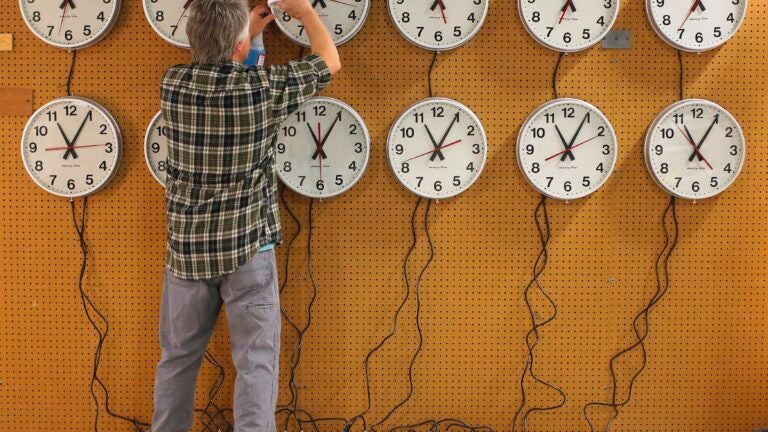
Spring itself may seem like a long way off, but with daylight saving time returning at 2 a.m. Sunday, it’s time to spring forward — your clocks, at least.
Setting clocks ahead one hour will cost you an hour of sleep, but later sunsets could cure you of the cabin fever you likely developed during 2015’s epic winter.
Or not. While the idea of daylight saving is just that — to take advantage of natural sunlight — the benefits of changing clocks has been highly contested, as we wrote when we turned the clocks back in November.
Not every country in the world — or even every state in the United States — follows it. Hawaii, Arizona (except for the Navajo Nation) and several U.S. territories don’t. And a Rasmussen poll conducted in March 2014 shows that 33 percent of respondents don’t even see its purpose.
Research shows they have good reason to wonder: Having more sunlight during our waking hours is great, but messing with clocks also messes with our sleeping habits, affecting work productivity, physical and mental health, and accident rates.
[fragment number=0]
The situation isn’t always so dire, however. Here are a couple other facts about daylight saving:
The U.S. first implemented daylight saving to save fuel during World War I, but it wasn’t put into law until 1966. Today, its impact on energy use is a mixed bag: Turning the lights on later may help lower your electricity bill, but climate control use goes up slightly during daylight saving, according to Vox.
Though many Americans believe daylight saving was put in place to help farmers, National Geographic reports that they were the only consistent lobby against it, as it impacted how they sold crops.
Instead, 9-to-5 workers (and others who benefit from the extra hour of evening sun) can be counted amongst its biggest supporters.
While this Time article speculates that daylight saving may be part of a conspiracy to get consumers to spend more money, that conspiracy only applies to certain industries. Airlines don’t like it, and neither do television executives, according to The Washington Post.
Apparently, people would prefer to be outside during primetime.
Whatever you think about daylight saving, it’s here, so don’t forget to change your clocks — or have an extra cup of coffee Monday morning.





To comment, please create a screen name in your profile
To comment, please verify your email address
Conversation
This discussion has ended. Please join elsewhere on Boston.com