
Sign up for the Today newsletter
Get everything you need to know to start your day, delivered right to your inbox every morning.
Last week, Boston Mayor Michelle Wu released a new five-year climate action plan, which seeks to reduce greenhouse gas emissions by 50 percent by 2030 and completely eliminate them by 2050.
The administration is pivoting its approach, focusing more on short-term implementation rather than longer-term goals, Wu said. The new plan has a deliberate “all-of-city” ethos that heavily incorporates collaboration with outside partners.
The 217-page plan contains dozens of strategies for reducing emissions and improving the city’s resilience in the face of accelerating climate change. Some of these strategies have already been implemented and officials are only beginning to study others.
Here are just a few highlights.
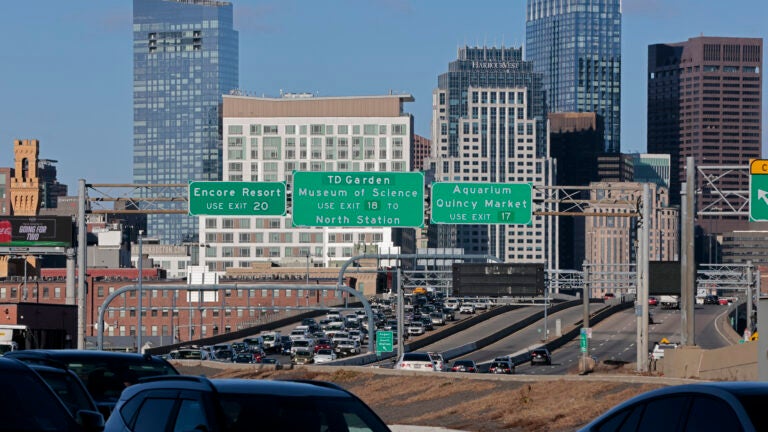
Perhaps the most divisive proposal in the new climate plan is the administration’s intent to study congestion pricing, the practice of imposing fees on drivers who enter particularly busy areas during particularly busy times of the day. The practice, proponents say, reduces traffic and greenhouse gas emissions while raising revenue that can help fund better transit infrastructure. Opponents are balking at the idea of imposing new fees when so many are already struggling to get by in one of the most expensive places to live in America.
The plan itself is light on specifics. It says that the city will study “financial mechanisms to discourage vehicle trips into Boston.” This could include updates to parking pricing structures, parking freeze permit fees, tolls, and “congestion-related fees.”
The specific group of actions is categorized as “evaluate and explore,” meaning that the city will assess them for their feasibility and how they could be implemented in the future. The city will also study how it could reinvest revenue generated from these actions into other “decarbonization programs” and strategies that expand “low-or-no carbon travel options.”
“The large volume of trips taken by private vehicles into the City of Boston congests our roads, renders bus service unreliable, and contributes to greenhouse gas emissions,” the plan states.
When asked about congestion pricing during a radio appearance on GBH last week, Wu said that it could be “win-win” if done right. However, she stressed that the city is only committing to exploring congestion pricing, not enacting it at this time. Governor Maura Healey did not take a clear stance on the issue, saying that she would see what comes out of the study.
Massachusetts lawmakers have proposed studies into congestion pricing before. Last year, New York City became the first US city to implement congestion pricing despite notable opposition. Officials say that it has been a success: traffic in the affected area is down 11 percent, air quality is improving, and there is $550 million in net revenue to help fund transit improvement projects.
Three MBTA bus routes have been free for all riders since 2022. Routes 23, 28, and 29 serve residents living in neighborhoods like Roxbury, Dorchester, and Mattapan, and officials say the pilot program has been a big success.
Ridership grew by 35 percent on these routes during the first year of the program, more than double the MBTA system average. The routes are carrying 16 percent more riders than before the COVID-19 pandemic, and “dwell times” have been decreased through all-door boarding. According to surveys, 26 percent of riders save at least $20 a month, according to city officials.
Earlier this year, the Wu administration announced that the program would extend through the end of June. But, the city has been reliant on federal pandemic relief funding to support the program since its inception, and that money is expected to dry up later this year. About $340,000 a month has been allocated to reimburse the MBTA, and the Wu administration says it is “discussing the long-term future of the program” with MBTA officials.
The climate plan lists the continuation of fare-free buses as something that should be continued and scaled up. It notes that the program has helped reduce car dependence, and that most riders who use the fare-free routes are low-income. The city is looking to make the 23, 28, and 29 routes permanently free, and officials are exploring sustainable funding options that could add additional fare-free routes. The plan does not specify where this funding could potentially come from.
The city is set to study the impacts of switching from gas stoves to electric ones. Gas appliances pose “significant indoor air quality risks,” as pollutants like nitrogen dioxide can make asthma worse and have other negative health effects. Not only does switching to electric stoves improve air quality, it can lower energy costs and reduce overall emissions, according to the climate plan.
Officials are continuing a pilot program that funds the transition from gas to electric stoves in public housing in Dorchester. The administration is partnering with Boston University to study the effects of this transition. The city says it could explore additional funding for more stove replacements once the pilot ends next year, with an eye towards communities that are “disproportionately affected by pollution and energy burden.”
As the city works to meet its decarbonization goals, some types of properties are more tricky to improve than others. Restaurants, for example, typically rely heavily on gas appliances and face high upfront costs for the transition to electrical ones. So officials are convening a “restaurant decarbonization task force” made up of industry representatives and technical experts to work out solutions. A report on how to transition commercial kitchens from gas to electric is expected in 2027.
The administration is also convening a task force to focus on decarbonizing historic properties. Owners of these properties can apply for historic tax credit programs, and the city intends to advocate for changes like expanding eligibility and increasing caps. At the same time, the task force will study how best to decarbonize these buildings while maintaining “cultural, architectural, and community value.”
“Acquiring land is one of the most direct ways a city can permanently protect open space and ensure it serves the public good,” the plan reads.
As such, officials want to continue pursuing land acquisitions opportunities, especially in places of the city that lack green space or face greater risks from climate change.
The administration wants to undertake a comprehensive update of its Urban Wilds Program, which protects wild areas around Boston. Officials will study national best practices and gather community feedback to craft a long-term strategy for the program. They will review staffing and budget needs while exploring how to expand priority sites and acquire new ones.
Officials are invested in increasing the number of trees in Boston. Adding more trees reduces heat exposure, improves air quality, sequesters carbon, and helps better manage stormwater, they say. There was a net increase of 151 acres of tree canopy between 2019 and 2024, according to a recently-released study, driven in large part by increases on public lands.
However, many of the gains on public land were offset by tree loss on private land, according to the climate plan. The administration wants to find ways to prevent private tree loss, particularly on small residential properties and developments not subject to Article 80 review. This could involve zoning updates and expanding incentives for private tree planting and maintenance.
The city remains committed to its Urban Forest Plan to keep adding tree coverage to parks and streets. Officials are exploring the wider use of permeable pavement and green stormwater management practices, while modernizing tree-planting specifications to ensure trees planted on streets grow healthily without negatively affecting accessibility.
Get everything you need to know to start your day, delivered right to your inbox every morning.






Be civil. Be kind.
Read our full community guidelines.To comment, please create a screen name in your profile
To comment, please verify your email address