
Sign up for the Today newsletter
Get everything you need to know to start your day, delivered right to your inbox every morning.
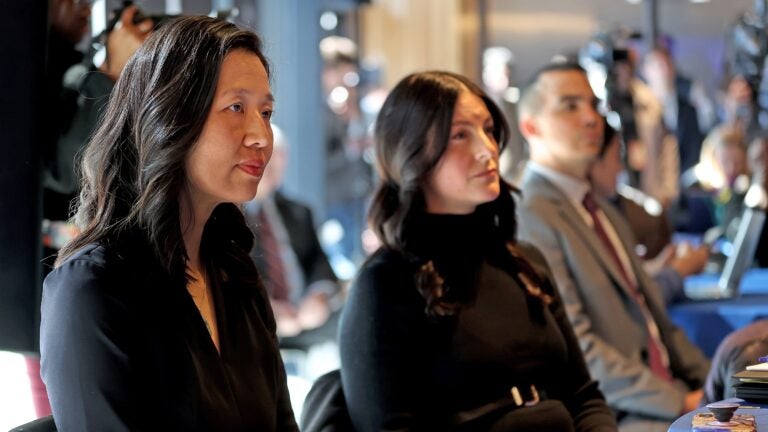
Boston Mayor Michelle Wu officially unveiled her $4.9 billion budget proposal for fiscal year 2027 Wednesday.
The budget proposes an increase in spending of just 2.1 percent, one of the lowest increases since the aftermath of the global financial crisis in fiscal year 2010, officials said. Last year, the budget grew by 4.4 percent.
Wu first detailed the proposed budget, as well as the $4.4 billion five-year capital plan, in a letter to the City Council on Monday before presenting them to councilors and members of the media Wednesday morning.
While total expenditures would increase by 2.1 percent in the proposed budget, departmental appropriations actually stand to decrease by 1.3 percent “when health insurance and other central accounts are separated out,” Wu wrote in her letter.
The city is facing a “challenging” financial moment brought on by inflationary pressures, rising costs, and slowing revenues, Wu said. “Difficult, but needed decisions” have been made to protect staffing levels and keep services running smoothly, she added. As such, the budget reduces or removes funding from many discretionary grant programs after four years of federal relief funding.
Major factors weighing on the city’s finances include police overtime pay, snow removal costs after a particularly nasty winter, and “rapidly” rising health care costs, officials said. The same factors were used to explain the $48.4 million budget deficit the city is facing in the current fiscal year. The administration is delaying hiring and freezing some spending in an effort to close that gap before the fiscal year ends on June 30.
Health insurance costs are projected to increase by $97.3 million, which officials say is driven by a 20.3 percent rate hike for all non-Medicare health plans. The popularity of expensive GLP-1 weight loss drugs has been a significant driver of these spikes, Wu said. The city moved to limit coverage of the drugs last month.
The mayor said Wednesday that she wants to find a way to preserve access to GLP-1 drugs. The administration will soon begin negotiating with all municipal unions on healthcare costs in an effort to set a new five-year insurance plan that addresses “unsustainable growth.”
“It’s something that we want employees to be taking advantage of, and going to the doctor and getting the treatments and supports that you need to be the healthiest version of the public servant that you can be. But we do have to find a way to manage those costs so that they’re not eating up every other bit of service delivery we’re trying to do,” Wu said of GLP-1 drugs.
The administration sees public safety overtime spending as a “long-term challenge.” Policy changes over the past four years have decreased overtime hours, and this trend is expected to continue “in the right direction” as officials reduce the use of mandatory overtime to cover staffing shortages.
Before this year, Boston experienced a spate of mild winters and limited snowfall. As such, the city underspent budgeted funds for snow removal and used that surplus to bolster its reserves. An allocation from the reserves will be used to cover the snow removal costs associated with the heavy storms Boston saw this winter.
Officials are planning for a future with less frequent, but more intense snow storms. The new budget does not include a proposal to increase funding for snow removal, but officials will explore the creation of a special snow stabilization fund for emergencies.
The city has about $1.2 billion in reserve funds that it is contemplating using to help close the current budget gap. Wu stressed that the city is not planning on using reserve funds to cover operating expenses for fiscal year 2027.
“With years of careful management and intentional decisions about the tough tradeoffs, we are uniquely positioned in Boston to weather the storm,” she said.
With residential property values increasing and commercial property values decreasing in recent years, individual homeowners have seen large tax spikes in order to make up the difference in revenue. Residents experienced a 13 percent property tax increase earlier this year after Wu failed again to shepherd a plan through the State House that would have shifted more of the city’s tax burden onto commercial real estate owners.
A state law restricts the amount that municipalities can levy in property taxes each year. Local governments can only increase the total amount they collect on property taxes by 2.5 percent each year.
Wu called on state lawmakers to repeal the law last year. But, the mayor said Wednesday that she would not ask voters to override the law, describing such a move as a last resort.
“Property taxes for our residents are already too high and have been going up too many years in a row at an unsustainable rate,” Wu said. “To ask for an additional increase on the ballot is not something that we would pursue unless there were truly no other option.”
Last month, the Boston School Committee unanimously approved a $1.7 billion budget for fiscal year 2027 — proposed by Wu — that calls for hundreds of layoffs. This appropriation reflects a 5.4 percent year-over-year increase for BPS funding. The district is contending with decreasing enrollment, and officials are moving to “align staffing levels with a smaller student body.” This will maintain a 10-to-1 ratio of students to teachers, Wu said.
The mayor spoke about how the changes to BPS are necessary to fix a “broken status quo” where officials were hesitant to make disruptive changes that aligned with decreasing enrollment.
“We’re really putting our dollars in BPS to what children need, to what our students and families need,” Wu said. “Honestly, we’re taking some actions that should have happened long ago.”
The proposed budget will be the subject of around 40 City Council hearings and working sessions over the next six weeks, Councilor Ben Weber, Chair of the Ways and Means Committee, said.
“In a world filled with rage-baiting, we can’t take definite action without working together,” Weber said.
Council President Liz Breadon emphasized the “seriousness” of the moment and echoed concerns the Wu administration has over health care costs, the rise in inflation, and the unpredictability of the federal administration.
“This year’s budget season is going to be more perilous than usual,” she said.
Get everything you need to know to start your day, delivered right to your inbox every morning.





Be civil. Be kind.
Read our full community guidelines.To comment, please create a screen name in your profile
To comment, please verify your email address