
Sign up for the Today newsletter
Get everything you need to know to start your day, delivered right to your inbox every morning.
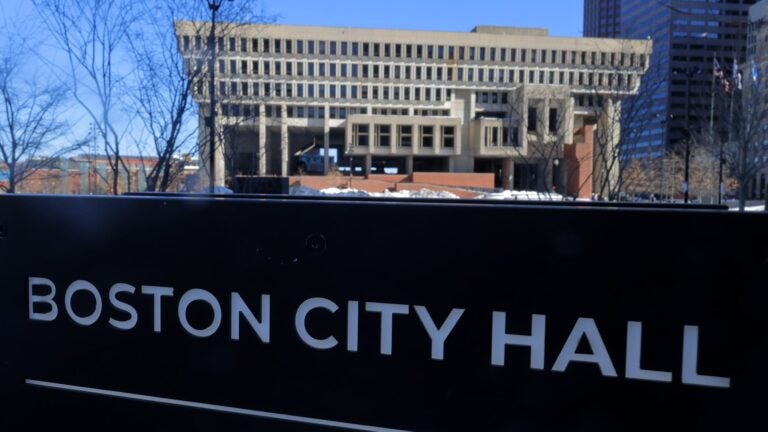
The city of Boston is facing a projected budget deficit of $48.4 million for the current fiscal year, as the Wu administration delays hiring and freezes some spending in an effort to close the gap before the fiscal year ends on June 30.
The deficit was detailed by Chief Financial Officer Ashley Groffenberger in a letter to the City Council earlier this week. “External cost pressures” that are outside of local control are largely to blame, she said. Groffenberger cited the costs of snow removal, police overtime, and employee health insurance as major factors.
Councilors grilled Groffenberger during a hearing last week, pressing her on the specifics of a budget deficit that city officials have been warning about for months. Groffenberger said that her team finalized revenue and expenditure projections following that hearing and shared the numbers in her letter.
The $48.4 million deficit is about one percent of the city’s $4.8 billion operating budget. The city has about $1.2 billion in reserve funds it could tap to close the gap, something officials have said that they are contemplating. But, Groffenberger told councilors, the administration is expecting to close the gap through the measures it has already taken.
In December, Mayor Michelle Wu said that she was asking department leaders to propose budgets for fiscal year 2027 that are two percent below their current budgets. Last month, the administration froze spending on food, travel, and office supplies. It also limited spending on building and equipment repairs.
Separately, Boston Public Schools are also facing a projected $53 million budget deficit. BPS officials implemented a partial hiring freeze earlier this year. The Boston School Committee recently unanimously approved a $1.7 billion budget for the next school year that could cut as many as 400 positions across the district.
The BPS shortfall is unrelated to the deficit outlined by Groffenberger, she said. The administration has “strengthened expenditure controls” for the remainder of the fiscal year, and is “tightly managing all discretionary expenditures and hiring through the final quarter,” she said.
Groffenberger warned that financial challenges are likely to remain in place in fiscal year 2027.
“We are preparing to enter FY27 in an environment of constrained revenue growth. With fewer resources available to absorb rising costs, targeted reductions and careful prioritization will be necessary as we work to deliver a balanced budget,” she said.
Some elected officials expressed their alarm at the news of the deficit. Councilor Ed Flynn blasted the Wu administration, saying that it should have implemented a hiring freeze, used surplus revenue, and examined the city’s reliance on property taxes. He criticized the administration for increasing its budget, hiring more employees, and committing $135 million for the White Stadium renovation.
He advocated for the creation of a commission that would study the impact of office vacancies and address decreases in revenue.
“With this fiscal crisis, over 70% dependence on property taxes, and over 50% of city land absorbed by large nonprofits or untaxable – it’s long past time for Boston to establish the Blue Ribbon Commission that my colleagues and I passed twice as a unanimous City Council resolution,” Flynn said in a statement.
Councilor Erin Murphy also criticized the administration. She called for an independent audit of the city’s operations and cast doubt on Groffenberger’s explanations for the deficit.
“This is not just about snow or overtime. This is a structural problem. Revenue is slowing, costs are rising, and the gap is getting harder to manage. At the same time, departments were quietly told to freeze spending, limit hiring, and cut back across the board. That information was not shared upfront with the City Council or the public,” Murphy said in a statement. “That is not transparency. That is managing a problem behind closed doors.”
Get everything you need to know to start your day, delivered right to your inbox every morning.




Be civil. Be kind.
Read our full community guidelines.To comment, please create a screen name in your profile
To comment, please verify your email address