
Sign up for the Today newsletter
Get everything you need to know to start your day, delivered right to your inbox every morning.
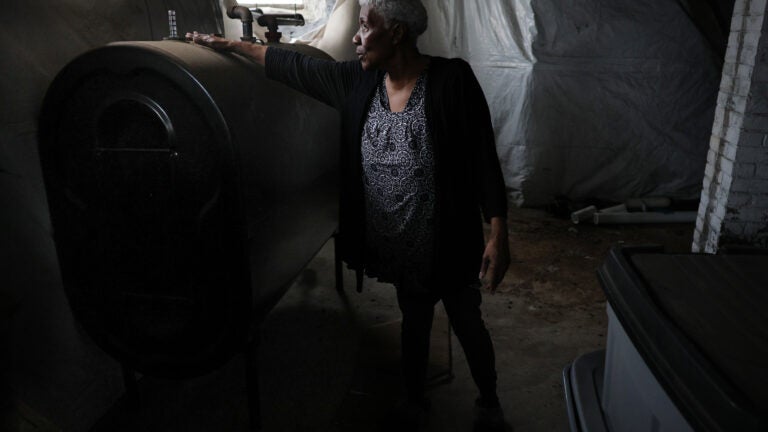
After a long, bitter winter left many fuel-assistance recipients running low, a sudden oil-price surge tied to the war in Iran has pushed costs even higher, sending thousands scrambling to refill their tanks as the cold weather persists.
“The American people are paying for Donald Trump’s illegal war in Iran every time they pull up to the gas pump and every time they try to heat their homes,” U.S. Sen. Ed Markey said in a statement to Boston.com. “Because of Trump’s reckless war, home heating oil prices have surged 30% in a single week.”
Statewide, close to 170,000 households applied for assistance and nearly 96,000 received fuel assistance so far this winter. Already, over 70% of the more than 18,000 ABCD’s clients have reached their maximum fuel-assistance benefits.
“Usually it’s not that high,” said Sharon Scott-Chandler, ABCD’s president and CEO. “That’s because we had such a cold, brutal winter early on, even so it’s still cold.”
She added, “We are at a record high in terms of people exhausting their benefits.”
Many of the people ABCD helps are seniors on fixed incomes, as well as working families with young children. ABCD is only one of over a dozen action committees across the state that help deliver the federal fuel-assistance funding.
Right before the conflict, it would cost $1,158 to fill a standard residential heating oil tank of 275 gallons at $4.21 per gallon. With today’s prices averaging at $5.84, it would cost $1,606.
The federal Home Energy Assistance Program helps people on a sliding scale from 60% to 100% of the federal poverty level up to $1,400.
Even in a good year, the assistance program cannot cover the full cost of heating oil, with families typically having to refill their tanks three times.
“It’s astronomical,” Scott-Chandler said. “It’s an increase that our families cannot absorb.”
With the cold weather lingering, Scott-Chandler said calls for help are still coming in.
Unlike utilities like natural gas or electricity, if a household can’t pay for it, it won’t be delivered. So instead, many are resorting to other unsafe measures to heat their homes, whether by opening their ovens or using space heaters.
There is a state moratorium on utility companies’ ability to shut off supplies from Nov. 15 to March 15, however the state approved an early start which began Oct. 27 and extended it to April 1.
“We’ve seen dangerous methods of heating, and we’ve seen sacrifices that our seniors and our families with young children shouldn’t have to make,” Scott-Chandler said. “The oil jump has put them at such risk.”
The timing couldn’t have been worse, she added.
The cost of food, rent, and other basic expenses has also risen and will continue to rise as oil prices rise.
To help stem the bleeding, the Healey administration announced last week it would raise the maximum benefit to $1,400 from $1,000 for delivered fuels due to the recent spike in prices.
Markey secured $146 million in fuel assistance funding for the state in December, with funds still funneling in. The last 10% of the expected federal Low Income Energy Assistance Program funding will total about $15 million, according to the U.S. Department of Health and Human Services.
There is also a push to get state legislatures to pass a $35 million supplemental budget to help fund the program.
Even so, with prices rising each week, Scott-Chandler said they will have to stretch the extra funds, and it may not be enough.
“For a senior on a fixed income or a low-income family, that means choosing between heating their home or paying for their medication,” Markey said in a statement. “No one should have to make that choice.”

Get everything you need to know to start your day, delivered right to your inbox every morning.




To comment, please create a screen name in your profile
To comment, please verify your email address
Conversation
This discussion has ended. Please join elsewhere on Boston.com