
Sign up for the Today newsletter
Get everything you need to know to start your day, delivered right to your inbox every morning.
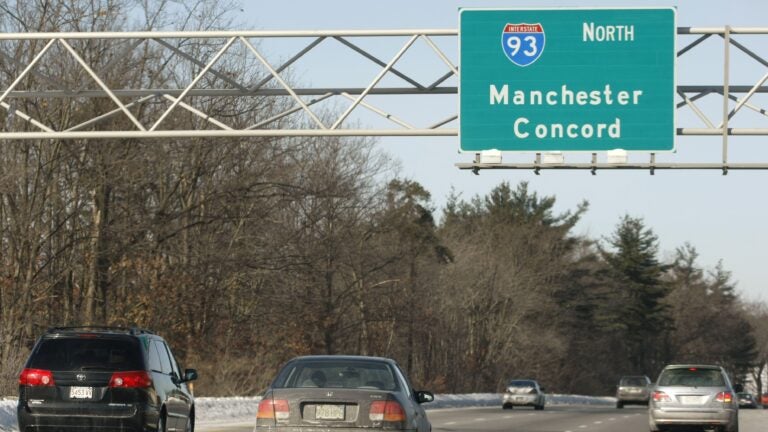
The New Hampshire state Senate approved a proposal last week that would increase toll costs for out-of-state drivers.
The move represents a break between Gov. Kelly Ayotte, a Republican, and members of her own party who control the state Senate. Ayotte “has made it clear that she is a no on toll hikes,” a spokesperson for the governor said in a statement.
But the legislation passed the Senate with the backing of a bipartisan group of lawmakers who say that increasing toll costs is necessary to raise money for critical transportation infrastructure. It now heads to the state House of Representatives for further review.
Sen. Mark McConkey, chair of the Senate Transportation Committee, said last week that the proposal was aimed at getting “the best of both worlds”: protecting New Hampshire drivers from rising costs while funding safety improvements to highways. It would “free up” between $560 million and $580 million for regional projects that may not be covered by the state’s recently-completed 10-year plan, he said.
That plan is “overprogrammed” by around $400 million, meaning that the state lacks enough revenue to pay for projects like the reconstruction of Exits 6 and 7 off I-293 in Manchester.
The toll increases would generate about $53.3 million in revenue in fiscal year 2027 and $72.9 million in fiscal year 2028. The Department of Transportation projects that the revenue could rise to $81.4 million by fiscal year 2036.
Drivers without a New Hampshire E-ZPass would pay $1 more when going through toll plazas on I-93 in Hooksett, I-95 in Hampton, and on the F. E. Everett Turnpike in Bedford. They would pay 75 cents more when taking Exit 2 off I-95 in Hampton and on the Spaulding Turnpike in Dover and Rochester. They would pay 50 cents more at the Exit 11 toll plaza on I-93 in Hooksett.
“Not only does this make sure that we have good roads and can fund projects… but also can very much mean that we can get more money towards municipalities and I think that this, in a way, is a bill that really does address affordability by getting us our roads built and not raising any fees on the people of the state of New Hampshire,” Sen. David Watters, a Democrat, told the Transportation Committee in January.
The last time New Hampshire instituted a general system-wide toll increase was in 2007, according to Watters.
Historically, the Executive Council have been the ones to set toll rates in New Hampshire. Asked on the Senate floor if this legislation takes away that power, McConkey said that it, as currently amended, does not.
The costs of maintaining transportation infrastructure have continued to increase, while it has “not been possible” to get a toll increase approved by the Executive Council, Watters said during his January testimony. He believes that revenue-raising is in the purview of the Legislature.
“In this context, we’re the ones who have to pass the 10-year highway bill, and we know what those projects are and how they’re going to affect our districts and what it’s going to mean,” he said. “Why shouldn’t we be the ones who make the decision on funding sufficient for the plan?”
David Rodrigue, assistant commissioner for the New Hampshire Department of Transportation, told the Transportation Committee that the COVID-19 pandemic led to a lack of funds for capital projects. The turnpike system recorded 123.7 million transactions in 2019, compared to an estimated 120.2 in 2025, he said.
“As traffic was growing, revenue was growing. We weren’t doing great, but we were keeping up. But since 2019, we’ve had all these pressures driving up costs, and we’ve had decreased revenue because we don’t have the volume,” he said.
Get everything you need to know to start your day, delivered right to your inbox every morning.




To comment, please create a screen name in your profile
To comment, please verify your email address
Conversation
This discussion has ended. Please join elsewhere on Boston.com