
Sign up for the Today newsletter
Get everything you need to know to start your day, delivered right to your inbox every morning.
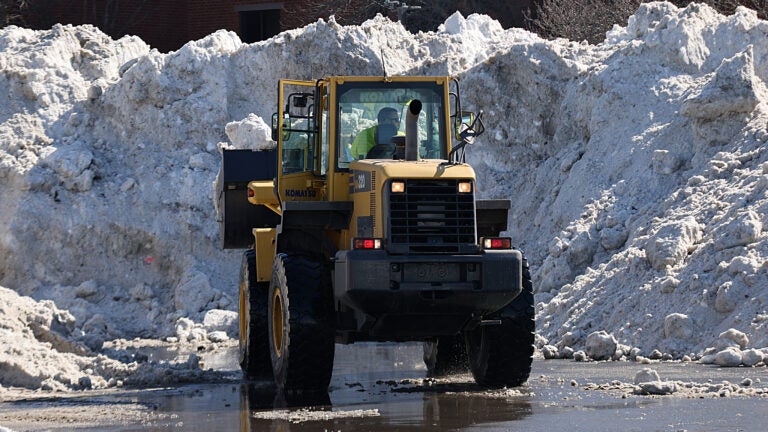
After Boston was hit with its most impactful winter weather in years, residents and some City Council members said they were frustrated with the city’s snow cleanup efforts during a hearing Tuesday.
The City Council hearing was convened to discuss a series of proposals, including ones focused on purchasing snow melting machines and the creation of a seasonal “snow corps” that matches volunteers with seniors and people with disabilities. Members of the Wu administration attended, as well as a number of residents and advocates for people with disabilities.
Boston was hit with two major snowstorms this winter, and many attendees conceded that the city’s cleanup efforts after the second storm were a marked improvement. But comparisons to other cities, especially Montreal and New York City, were common. Multiple people who testified called on the Wu administration to better study and potentially emulate strategies that those two cities employ.
Councilor Erin Murphy praised city workers for putting in long hours under difficult conditions, but called for officials to take a “hard look” at the decisions made surrounding snow removal this winter.
“I heard from many residents across every neighborhood during and after the storms. It is clear they were frustrated with the snow removal response. When sidewalks are not cleared promptly, when bus stops are buried, and when streets remain difficult to navigate, that affects our seniors, families, small businesses, and especially residents with disabilities,” Murphy said.
Cassandra Xavier, who is blind, said that she had to walk in roadways instead of sidewalks, exposing herself to traffic. Snow on sidewalks throughout the city was not cleared widely enough to allow for visually impaired people to adequately use their white canes, she said. Xavier and others highlighted issues with “curb cuts” not being made in snowbanks on street corners, preventing the use of crosswalks.
“The lack of having things shoveled, and the sidewalk access being completely absent, it just made me feel like my disabilities were not ever going to be seen as important or worth anything,” she said.
Daniela Depina, who is also visually impaired, told councilors that her Dorchester neighborhood is not adequately shoveled, hindering her ability to run basic errands and get to work.
“I’m asking you now to not just brush this under the table,” she said. “This is an emergency, this is a safety issue. What if something happened and I can’t get out with me and my 11-year-old at home?”
Disability Commissioner Kristen McCosh said that the city puts a “tremendous amount of work” into compliance with the Americans with Disabilities Act, with a heavy focus on public rights of way like sidewalks. Boston, as an old and crowded city, has a lot of inherent challenges when it comes to snow removal, she said.
McCosh said that most of the issues raised with her office this year concerned blocked curb ramps, parking spaces, and plows creating huge snow mounds. Snow removal on sidewalks involves coordination between businesses, residents, and officials at the city, state, and federal levels.
Councilor Brian Worrell said that officials need to address a seeming “stalemate” between the city and the MBTA over whose responsibility it is to clear bus stops and commuter rail stations. Councilor Miniard Culpepper expressed interest in the idea of a volunteer snow corps, saying that “we can’t put everything on the city.”
In 15 years on the job, McCosh said that she has been involved in multiple efforts to create unique snow removal programs for seniors and people with disabilities. But implementing these programs requires substantial budget and staffing investments.
“It may seem like a simple, straightforward solution, but it really isn’t. It’s not that we can’t do it, but it just takes a lot of work to think it through,” she said.
McCosh’s office worked with the city’s Age Strong Commission on a pilot snow corps program over the previous three years. Officials identified residents who might need assistance, and dispatched staffers to help them when snow came. The city was not able to collect much data on the efficacy of such a program because the past few winters have been so mild, she said. In addition, many of the targeted areas were already cleaned by the time shovelers arrived. They determined that the program, at least in that incarnation, was not “scalable” due to a lack of staffing and reliable volunteers.
Interim Chief of Streets Nick Gove said that the city has removed more than 10,000 truckloads of snow from city streets this winter, which was deposited to as many as 14 “snow farms” across Boston. The city rented four snow melting machines, which cost between $2,500 and $4,800 an hour to rent and operate. The machines can cost as much as $500,000 to buy, something the city has so far resisted doing.
Boston police have issued close to 6,700 snow emergency parking violations this winter, and towed more than 1,600 vehicles. The city has issued more than 5,800 snow removal violations, more than 4,300 of which came during the major storm in January, Gove said.
Get everything you need to know to start your day, delivered right to your inbox every morning.



To comment, please create a screen name in your profile
To comment, please verify your email address
Conversation
This discussion has ended. Please join elsewhere on Boston.com