
Sign up for the Today newsletter
Get everything you need to know to start your day, delivered right to your inbox every morning.
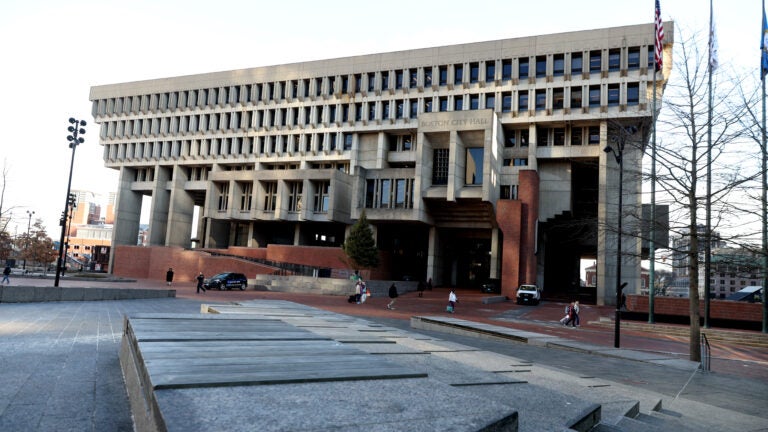
A Boston City Council member’s effort to request information from the Wu administration about immigration detainer requests that the city has received from ICE was rejected Wednesday.
The request, pushed by Councilor Ed Flynn, would have given the administration one week to provide information about detainer requests dating back to the beginning of 2024. Flynn sought to have the administration provide details about how many detainers the city received, the reason for them, and how the Boston Police Department responded. He hoped to have the Wu administration provide specific details about any open criminal cases tied to the subjects of the detainers.
Immigration detainer requests, or detainers, are used by ICE when the federal government becomes aware that local law enforcement has detained a person that can be deported. ICE sends these detainers to local police departments, asking them to hold the detainee for up to 48 hours beyond when they would ordinarily be released from custody. This is so that ICE agents can respond and assume custody of the person directly from local police, without having to go out into communities to find them.
Many municipalities have so-called “sanctuary” laws that limit cooperation between local police and federal immigration authorities. Boston’s version is called the Trust Act. It prohibits BPD from detaining people solely because ICE has filed a detainer request. The department does not enforce immigration law and officers do not ask about the immigration status of people they interact with.
The Trust Act was originally enacted in 2014 and amended in 2019. The City Council unanimously reaffirmed its support for the Trust Act in December 2024, in anticipation of the immigration crackdown that President Donald Trump campaigned on.
Under the Trust Act, BPD leaders are already required to provide some of the information that Flynn was seeking. At the end of each calendar year, BPD Commissioner Michael Cox submits a report to the City Council that lists each detainer received by the department that year. The report includes details about when the detainer was received, which ICE office sent it, and the reason given by ICE for sending the detainer.
BPD received 57 total detainers in 2025, Cox reported last month. In accordance with the Trust Act, the department ignored all of them. The reason given for each detainer was that the Department of Homeland security had “determined that probable cause exists that the subject is a removable individual,” according to Cox’s report.
In reporting detainer numbers from 2024, Cox and ICE provided wildly different figures. ICE said that it sent BPD 198 detainers that year, while Cox said that the department only received 15. The confusion arose from fax machines and the ways in which ICE was sending the detainers to BPD.
While introducing the “17F request” during the City Council meeting Wednesday, Flynn said that he was seeking “basic information.”
But Councilor Ben Weber objected to Flynn’s request. He said that Trump administration policies have led to the persistent violation of constitutional rights and to cities being “terrorized” through wanton acts of violence. This, Weber said, is the result of a “false narrative” that cities like Boston are unsafe because of immigrants. Trump doubled down on this message in the State of the Union address this week, Weber said.
“I, personally, do not want to give any oxygen to that false narrative, and I do feel like this 17F is aimed at that,” he said.
Nine councilors eventually voted to reject the request. Only three joined Flynn in supporting it: Councilors Miniard Culpepper, John FitzGerald, and Erin Murphy.
In a statement after the vote, Flynn described the 17F request process as a “standard tool” that has been used for many years to maintain transparency in the city government. The rejection of his request was extremely abnormal, he said.
“For decades, it has always been within the Council’s authority as a legislative body to request relevant information from the city administration through a 17F request. In my experience over the last eight years, 99.99% of the time it’s approved as a standard practice, although the City Council chose to block this information request. In recent weeks and months, colleagues also requested similar information and data that was approved by the Council; however, the body still has yet to receive an update at this time,” Flynn said.
Get everything you need to know to start your day, delivered right to your inbox every morning.




To comment, please create a screen name in your profile
To comment, please verify your email address
Conversation
This discussion has ended. Please join elsewhere on Boston.com