
Sign up for the Today newsletter
Get everything you need to know to start your day, delivered right to your inbox every morning.
A man convicted in the 2009 stabbing death of another man outside an Allston bar has been granted parole after serving 16 years in prison.
Corey Patterson, now 38, was paroled on Jan. 20, according to a Massachusetts Parole Board decision. Patterson was convicted of second-degree murder in 2012 and sentenced to life in prison with the possibility of parole.
The stabbing occurred as Patterson — 23 years old at the time — and a group of friends were leaving a bar in Allston at closing time in 2009, according to the decision.
Authorities said Patterson made a comment toward a woman who was with 24-year-old Gregory Phillips and others. When Patterson was told to leave her alone, a fight broke out between the two groups.
During the altercation, Patterson approached Phillips with a knife and stabbed him in the chest, according to the decision. Phillips later died from injuries.
After the stabbing, Patterson discarded the knife beneath a parked vehicle, and later retrieved it while being driven by his cousin. Police stopped the vehicle shortly after, and Patterson was arrested following a struggle, the board said.
Police recovered the knife, and DNA testing confirmed that blood found on the weapon and Patterson’s shoes matched Phillips, according to the board.
Patterson appeared for an initial hearing before the Board in 2025, where he was not represented by a counsel.
In granting parole, the board cited Patterson’s sustained sobriety throughout his incarceration, his demonstrated insight into and accountability for the offense, and his educational investments, including earning a Bachelor of Arts degree from Boston University.
The board also noted that Patterson has established community support and employment plans, and has worked with legislators on issues related to structural racism, which he intends to continue.
While incarcerated, Patterson became a member of the African American Coalition Committee, a group of incarcerated people at MCI-Norfolk dedicated to addressing systematic racial inequalities.
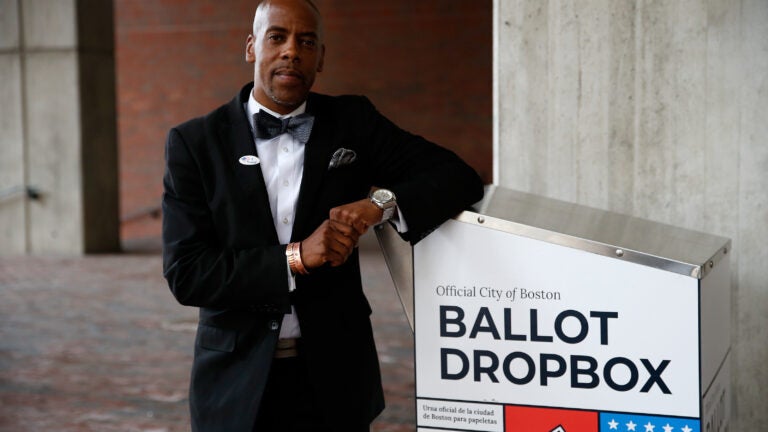
Patterson directed the committee’s voting rights initiative while in the prison. “I can be accountable, but at the same time hold agencies and institutions accountable,” he told Boston.com at the time.
As part of his parole, the board imposed several conditions, including six months of electronic monitoring, a two-week waiver for work, drug and alcohol supervision, and a nightly curfew requiring Patterson to be home between 10 p.m. and 6 a.m., at his parole officer’s discretion. The conditions also require that Patterson have no contact with the victim’s family and to participate in mental health counseling.
Get everything you need to know to start your day, delivered right to your inbox every morning.





To comment, please create a screen name in your profile
To comment, please verify your email address
Conversation
This discussion has ended. Please join elsewhere on Boston.com