
Sign up for the Today newsletter
Get everything you need to know to start your day, delivered right to your inbox every morning.

Since 2017, immigrant advocates and allied lawmakers have been trying to pass the Safe Communities Act, a bill that would limit how local law enforcement can collaborate with federal immigration enforcement authorities across the state.
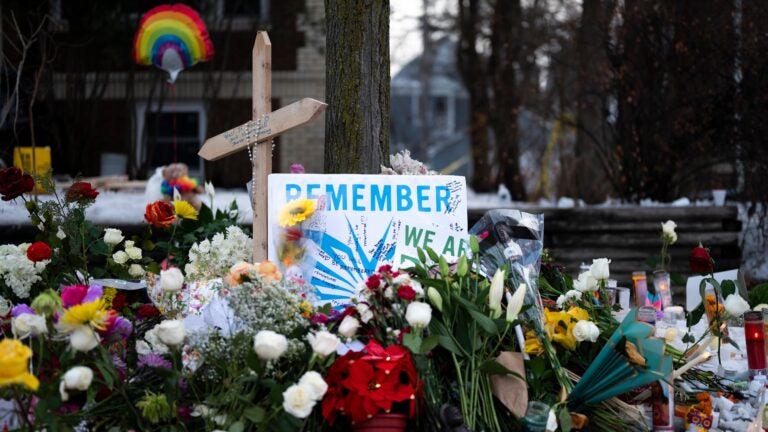
As the Trump administration implemented its mass deportation agenda last year, supporters made a renewed push for the legislation to finally be passed. That has not yet happened, but the shootings that occurred in Minnesota and Oregon this week appear poised to become major flashpoints in the national debate over ICE’s actions. Growing public outrage directed at ICE in Massachusetts could inject the debate over the Safe Communities Act with more urgency as lawmakers get back to work in the new year.
In November, a Boston Globe/Suffolk University poll found that 54% of voters “strongly disapprove” of how ICE has handled arrests and deportations. Hundreds of people, spurred by the recent shootings, took to downtown Boston Thursday night to protest ICE. Leaders from across the state, including Senate President Karen Spilka, expressed their outrage at the killing of Renee Good, the 37-year-old Minnesota mother who died at the hands of an ICE officer Wednesday. It remains to be seen exactly how public polling in Massachusetts will be affected by recent developments.
Local law enforcement officials, immigrant advocates, lawmakers, and others testified before the Legislature’s Public Safety Committee for hours in November, advocating for the bill’s passage.
What follows is a refresher on the Safe Communities Act and the ways in which it could change the landscape of immigration enforcement in Massachusetts.
The legislation has four core components. First, it would prohibit court and police officials from questioning people, including victims and witnesses of crimes, about their immigration status unless that line of questioning is legally required by another state or federal law.
Immigrants who may have crucial information regarding a potential crime may be disinclined to call 911 out of fear that doing so will result in their own detainment or deportation by ICE, supporters say. With this provision, workers, tenants, domestic violence survivors, and others will be more inclined to work with local authorities in their investigations.
Second, the bill would require local authorities to obtain written consent from anyone in their custody before that person is subject to questioning from ICE or other Department of Homeland Security personnel.
This would be done through a consent form that would explain the nature of the interview, that any information provided in the interview can be used against the person, that the person may decline to sign any documents presented during the interview, and that the person can choose to decline the interview or be interviewed only with an attorney present. Modeled after common “Miranda” warnings, this is meant to be a safeguard against people unwittingly jeopardizing their immigration cases or even signing their own deportation orders.
Third, the legislation would bar police, court, and correctional officials from contacting ICE about a person’s impending release from custody, except at the end of a sentence of incarceration for a criminal conviction. The current system encourages ICE to detain people before they have their day in court, which denies justice to both victims and defendants, supporters of the bill say.
Fourth, the legislation would ban 287(g) agreements. These are contracts that deputize local law enforcement officers so that they can enforce certain aspects of immigration law, which is typically only the purview of the federal government. Different models of 287(g) agreements exist that focus on routine police activity, jails, and administrative warrants.
There are more than 1,300 of these agreements that are active across the country, according to ICE data. Only 135 agreements were in place at the beginning of President Donald Trump’s second term. The Massachusetts Department of Corrections is the only entity in the state with an active agreement, but immigrant advocates worry that new enticements from the federal government could incentivize more agencies to enter into these agreements.
Ragini Shah, a law professor who leads Suffolk University’s Immigrant Justice Clinic, said that the expansion of 287(g) agreements throughout 2025 was unprecedented.
“I do think that is quite astounding, to have that level of expansion in such a short amount of time,” she told Boston.com.
“Agencies are always looking for more funding, they always feel like they don’t have enough funding to do what they’re doing,” she added when asked about the possibility of new incentives further increasing the number of agreements.
Shah is supportive of the legislation, but pointed out a few areas that it could go even further in directions that other states have pursued.
She pointed to laws like one passed in New Jersey in 2021 that prohibits state and local agencies, as well as private detention facilities, from entering into agreements to detain people for ICE. Last year, a federal appeals court found that the aspect of that law barring private detention contracts was unconstitutional.
Shah also referenced laws that would provide a system of representation for detainees so that they can better navigate the complexities of the legal process. In New York, lawmakers are debating a bill that would guarantee immigrants the right to legal counsel in deportation cases, even if they cannot afford a lawyer.
Still, Shah believes that the Safe Communities Act is ready to be enacted.
“I think it’s time,” she said. “The Safe Communities Act has been batted around the State House for many years. I don’t know what is preventing legislators from taking it seriously, but I really do hope that this time they do take it seriously.”
Get everything you need to know to start your day, delivered right to your inbox every morning.




To comment, please create a screen name in your profile
To comment, please verify your email address
Conversation
This discussion has ended. Please join elsewhere on Boston.com