
Sign up for the Today newsletter
Get everything you need to know to start your day, delivered right to your inbox every morning.
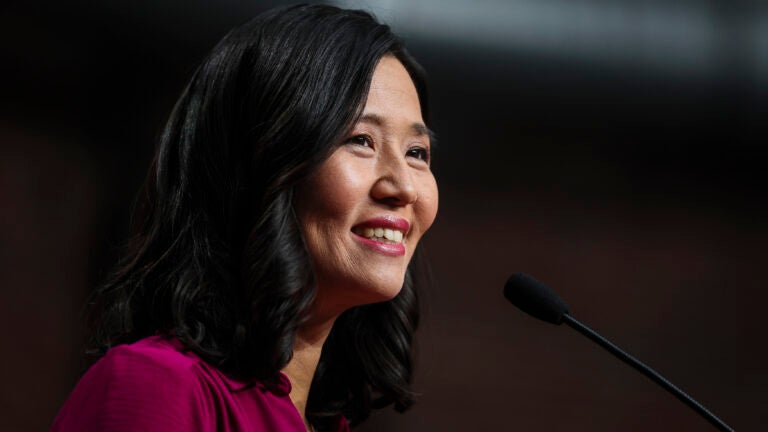
Boston Mayor Michelle Wu is going all out in her efforts to push legislation in the State House that would shift more of the city’s tax burden onto commercial real estate. This is needed to prevent residential property owners from seeing significant tax spikes in the new year, Wu says.
But despite Wu’s efforts, the prospects of her plan winning approval on Beacon Hill appear to be dimming considerably.
This is Wu’s third try at passing a plan like this. Previous attempts made their way through the City Council and the House of Representatives twice last year, only to be thwarted in the Senate. Fresh off a dominant reelection campaign, the battle is a renewed test of Wu’s political capital.
A third version of the mayor’s plan was passed by the City Council back in February, but Wu made little mention of it throughout the rest of the year as she focused on her campaign.
That changed last week. Warning that the average single-family homeowner in Boston is set to see a 13% hike in their property taxes beginning in January, Wu publicly called on business groups to affirm their support for the plan and began speaking about it more frequently during media appearances.
Wu leaned in even more over the past few days. She hosted an “ask me anything” thread on Reddit, her first as mayor, to go through the plan’s details. She posted an explainer-style video on social media, personally walking viewers through a summation of recent events about the legislation. In both instances, Wu urged residents to contact their state lawmakers and advocate for the plan’s passage.
Amid Wu’s messaging frenzy, Senate President Karen Spilka threw cold water on the mayor’s ambitions. Spilka issued a statement Monday night highlighting alternative tax relief legislation from state senators Nick Collins and William Brownsberger, while also criticizing Wu for not wanting to work with lawmakers enough before now.
“The Senate is deeply committed to making Massachusetts more affordable and there are many ways to provide meaningful relief — including proposals from Senators Brownsberger and Collins that would support the most vulnerable residents without placing burdens on small businesses that will ripple throughout the state — and the City should have engaged with the Senate on these options well before now,” Spilka said in a statement.
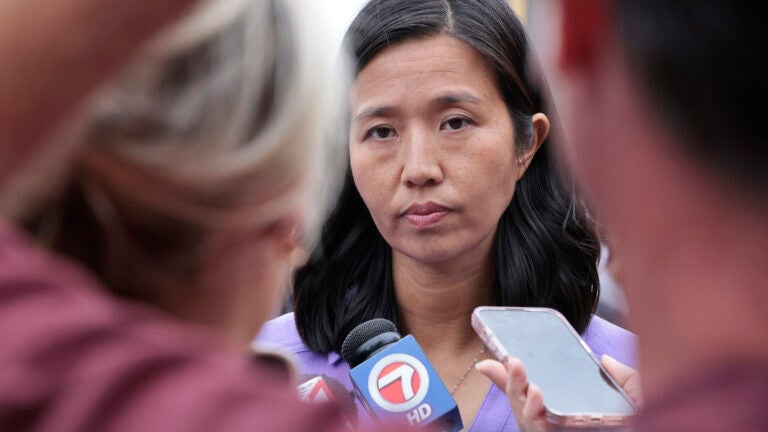
When asked for a response to Spilka, Wu shot back with a terse statement.
“We’ve been waiting for nearly two years for the State Senate to take a vote on our bill. If they have additional proposals, we’re not the ones stopping them,” she said.
Along with the pushback in the Senate, timing is not necessarily on Wu’s side. The City Council is set to hold its final meeting of the year Wednesday, when councilors must approve property tax rates and vote on the residential exemption amount. The timing of these actions is inflexible because city staff must have enough time to mail out bills by Jan. 1. Therefore, any potential action by the Legislature later in December could still come too late to prevent tax hikes.
“If the city wished to work something out with the business community and persuade the Senate to adopt this legislation, the time to do so was approximately six months ago,” Brownsberger, whose district includes parts of Boston, told The Boston Globe this week.
Brownsberger published a deep-dive into Boston’s property tax rates on his website in February, noting that almost half of all Boston taxpayers already pay less than the statewide average residential tax rate.
The city is very reliant on property taxes, funding more than 70% of its budget through them. When the COVID-19 pandemic supercharged a shift to remote work, commercial property values declined. In order to make up the difference in revenue, Boston had to collect more in property taxes.
Boston already taxes commercial properties at 175% the residential rate. Any changes to this residential tax formula must go through the State House. Wu’s plan would temporarily raise the cap on the commercial property tax rate before gradually returning to the current formulation over a number of years.
The pattern of decreasing commercial values and rising residential property values appears to have continued this year. Residential values went up by 2%, while commercial values fell by 6%, city officials project, according to Wu. This accounts for the anticipated 13% spike for homeowners, who already saw a 10.4% average year-over-year increase in property taxes this year.
Amid the larger battle over Wu’s tax plan, a more personal feud is developing between Wu and Collins. The latter, who represents South Boston and parts of Dorchester and the South End, used a procedural move to help kill Wu’s proposal last year. He blamed Wu and her team for waging a “campaign of fear and manipulation,” taking issue with discrepancies between initial projections given by the city and the final property valuations certified by the state.
Wu called out Collins by name in her Reddit thread. She included a screenshot in her recent social media video of a WBUR article from last year that centered on donations Collins reportedly received from real estate developers and groups. Wu accused Collins of being “either badly misinformed or purposely misleading voters,” per the Globe.
In a statement Tuesday, Collins said that he stands ready to work with Wu to deliver taxpayer relief. But he accused Wu of playing politics and warned of a “manufactured conflict.” The fact that Wu began her public push for the legislation last week indicates this, he said.
“That timing does not show a serious effort to advance legislation. It looks like setting up a fight and preparing to point the finger when tax bills go out in January,” Collins said. “On the other hand, the Senate is advancing legislation that would give the Mayor the authority to issue rebates and drive down taxes for homeowners. These bills would provide real relief for residential taxpayers while protecting small business owners and not putting our economy at risk.”
The mayor is facing other headwinds as well. The business groups and fiscal watchdogs Wu reached out to last week have offered mixed reactions, but no enthusiastic support or announcements of deals with the city. Wu struck a compromise deal with the groups last year as she tried to win support in the Senate.
NAIOP CEO Tamara Small said last week that, even if the property valuations do confirm Wu’s take spike projections, the solution is not to “further punish the business sector by increasing its tax burden.”
The Small Property Owners Association of Massachusetts also blasted Wu’s proposal, saying that she is wrong to target a business community beset by already high taxes and increasingly empty office spaces.
“Here we are one year later, and Mayor Wu is doubling down on her failed, anti-competitive property tax shift while pushing Boston’s economy over the cliff,” SPOA Vice President Amir Shahsavari said in a statement. “Mayor Wu’s tax plan will only slightly lower the city’s residential tax rate, just like her failed plan last year. While offering miniscule savings on the residential side, her plan would devastate small businesses and property owners who will continue fleeing Boston because of its high taxes and hostile attitude toward business.”
Wu is being backed by allies on City Council and some labor unions, who held a press conference in City Hall Monday to show their support for the proposal.
“The Council, Mayor, & House passed a fair, responsible, & temporary proposal to rebalance the tax structure between commercial property owners & residents. Now, we need a couple of senators to act to prevent thousands of families from facing unaffordable bills,” Councilor Gabriela Coletta Zapata wrote on social media.
At the press conference, Adonika Chaplin of the Massachusetts Senior Action Council blamed state lawmakers for not being more proactive, according to State House News Service.
“We elected them to act on our behalf, not on their behalf. One day, they will be where we are. We are struggling to make ends meet at the grocery store, at the prescription lines,” she said.
Get everything you need to know to start your day, delivered right to your inbox every morning.





To comment, please create a screen name in your profile
To comment, please verify your email address
Conversation
This discussion has ended. Please join elsewhere on Boston.com