
Sign up for the Today newsletter
Get everything you need to know to start your day, delivered right to your inbox every morning.
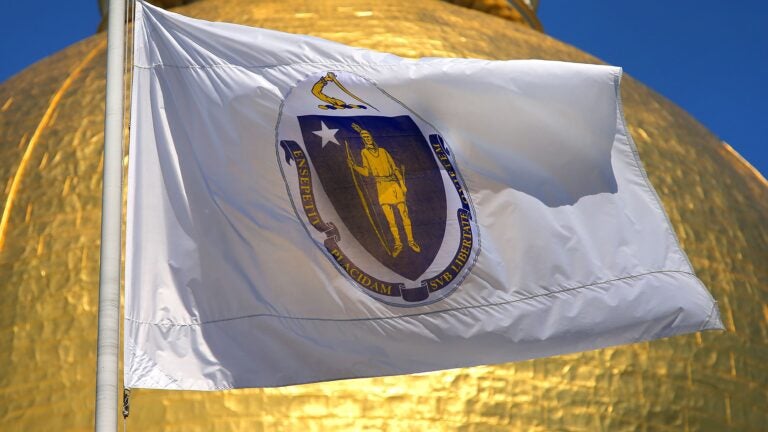
The group tasked with producing an official recommendation for a new Massachusetts state flag, seal, and motto is seeking another extension for it to complete its work ahead of a deadline later this month.
The Massachusetts Seal, Flag, and Motto Advisory Commission was given a Dec. 15 deadline to produce recommendations. But the full body has not met since late August, and a round of public hearings that must occur before final recommendations are given have not been scheduled.
The commission itself is the second such group to try to tackle the contentious topic in recent years. The first commission was created by state lawmakers in 2021, but disbanded by the end of 2023 without offering any concrete proposals.
The current commission was created by the Legislature last year and given a July 2025 deadline. It failed to meet that mark, and was given an extension of about five months by lawmakers. Now, the commission is pursuing a second extension and hoping to convene its next full meeting sometime this month.
“The Seal, Flag and Motto Advisory Commission has been hard at work engaging experts and the public about what they want to see in our state’s symbols,” a spokesperson for the commission said in a statement to Boston.com. “We believe that more time is needed to ensure robust community engagement.”

Despite years of fits and starts, the commission appeared to be making progress earlier this year, when it released three flag, seal, and motto ideas to the public for review. These were chosen from more than 1,000 ideas submitted by the public, but commission members stressed that they were not set-in-stone finalists and still subject to change based on public hearings and other feedback.
Even after the commission produces its final recommendations, the governor must submit legislation to codify the new designs and lawmakers would need to vote to approve them.
The current Massachusetts seal, which is in turn emblazoned on the flag, depicts an Indigenous man underneath a disembodied arm that holds a sword. The Latin phrase “ense petit placidam sub libertate quietem,” meaning “by the sword we seek peace, but peace only under liberty,” encircles the seal.
The current seal and motto were last updated in 1898, but their roots date back to a 1629 design that featured an Indigenous man and the words “come over and help us.”
Critics have said that the current seal glorifies the violence that colonists inflicted against Indigenous peoples. This is reflected by the sword’s position above the man’s head and the motto’s evocation of violence, they say. The sword depicted was modeled on one used by Myles Standish, a commander from the Plymouth Colony who committed brutal violence against the Indigenous people of the area in the 17th century.
The current seal was formulated by a small group of people who operated without transparency, and with open disdain for Indigenous people, the previous commission wrote in a lengthy report it issued before it disbanded.
“Members of that group expressed hostile views about Indigenous people even as they appropriated images of Indigenous people without soliciting input or participation from Indigenous residents,” the previous commission wrote.
Despite the concerns about the current seal’s depiction of Indigenous people, some see efforts to change it as an erasure of the history of Indigenous people in Massachusetts.
“There’s a public misunderstanding about why the current flag is not appropriate, and I’ve received lots of feedback from people who think removing the symbolisms and symbols on the current flag is harmful to the Indigenous communities,” Kate Fox, the executive director of the state’s Office of Travel and Tourism and the commission’s co-chair, said during a September meeting.
Fox and commission members met during subcommittee meetings this fall to discuss public education about the seal’s history and the ongoing efforts to update it. There were three meetings in September and one in October.
During another September meeting, members discussed the need to improve the public’s understanding of where the push for new designs are coming from. Some have argued that Massachusetts is just a “Liberal state” pursuing changes even though Indigenous communities don’t actually want changes, commission member Summer Confuorto said. But in fact Indigenous leaders have been talking about the need for updated designs for decades, she added.
There is evidence of a generational divide among Indigenous people in how they view imagery like this, with younger residents being more inclined to favor updated designs, commission member Rhonda Anderson said during the October meeting. She stressed that Indigenous people in Massachusetts should not be viewed as a monolith.
“We’re not a static people, we all don’t have the same experiences,” she said.
As the commission continues its work, the debate about new designs is becoming more present in statewide politics.
Gov. Maura Healey, who is running for reelection next year, has been generally supportive of the commission’s efforts to rethink the state’s iconography. When asked about the topic during a September press conference, Healey said she anticipated more public discussion but that she was more focused on pressing concerns like immigration enforcement and bringing down housing costs. Healey’s office did not respond to a request for comment Monday.
Two prominent candidates in the Republican primary hoping to face off against Healey weighed in this week after reports about the latest extension. Mike Kennealy called the commission’s statement “absurd” and said that Healey is trying to force through new designs despite public disagreement.
“This committee should be dissolved, and Massachusetts must refocus on the real challenges facing our residents: soaring energy costs, declining affordability, and the urgent need for transparency from our government,” Kennealy said in a statement.
Brian Shortsleeve, another Republican, said in a social media post that the flag should not be redesigned and that the current saga is a “prime example” of “wasteful government spending.”
Get everything you need to know to start your day, delivered right to your inbox every morning.





To comment, please create a screen name in your profile
To comment, please verify your email address
Conversation
This discussion has ended. Please join elsewhere on Boston.com