
Sign up for the Today newsletter
Get everything you need to know to start your day, delivered right to your inbox every morning.

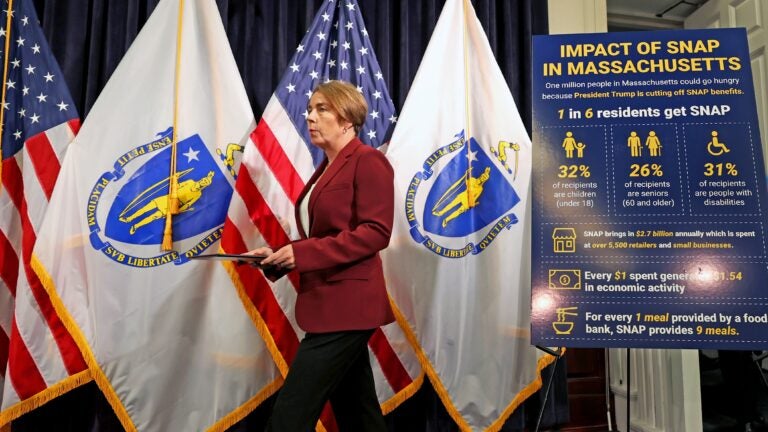
When the Trump administration announced last month that it would not pay full Supplemental Nutrition Assistance Program benefits due to the government shutdown, many faced uncertainty about how they would feed their families.
In Boston’s Allston-Brighton neighborhood, for many, the cuts sparked not just fear — but action.
A group of neighbors launched an improvised but effective mutual aid network to connect people who could provide food with those who needed it. What began as a small idea has now helped over 80 households access fresh meals and groceries, offering immediate relief and a sense of community.
With the government reopened, SNAP benefits are beginning to resume nationwide — but delays persist, and many in Mass. remain food insecure.
The Allston-Brighton Food Train was organized by Claire and Sofia, both social workers who have lived in the neighborhood for several years. Boston.com is using just their first names to protect their privacy. Each had created separate Google Forms to coordinate donations through local Facebook groups before realizing they were working toward the same goal.
“Our motivation was just to get as many people fed in the neighborhood as possible,” Sofia said. “It really just came from the fear of our neighbors going hungry, and we definitely didn’t want that,” she added.
The system is simple: people sign up online to donate or receive food. Claire or Sofia matches a donor to a recipient, and the donor coordinates a drop-off with their recipient. No ID, proof of address, or explanation is required.
“People are ready and willing to give and to receive. People are excited. People are grateful. People are motivated,” Claire said. “Generally, people are of the belief that mutual aid and collaborative work is going to need to supplement everything institutionally. I think we’ve heard that pretty resoundingly.”
The Food Train has made a tangible impact on individuals like Aurora, 41, a Brighton mother of two who is using a pseudonym to protect her privacy. Her children have medical needs that require healthy meals — something that has become harder to afford.
“Both my kids have pre-diabetes, and my son has liver disease inherited from his father. So getting nutritious meals has been really difficult,” Aurora told Boston.com in an interview. “It’s serious to try and get healthy food despite not having a lot of money,” she added.
Through the Food Train, Aurora received a meal tailored to her family’s dietary needs: chicken, baked vegetables, and fresh fruit.
“It was just really, really sweet,” she said.
The House voted on Nov. 12 to approve a bill to end the shutdown. As a result, SNAP funding has been restored. November benefits have already been fully dispersed in Massachusetts.
But the instability around SNAP is just one part of what Aurora described as a broader climate of fear for marginalized and/or poor people under the current administration.
“I’m very fearful for the future of my family,” she said. As a queer parent in Section 8 housing with biracial children, she said she fears the loss of housing and state benefits. “Food stamps is the tip of the iceberg that you see, but there’s so much underneath.”
Still, Aurora contributes to the local community fridge when she can, ensuring that others benefit from the food she doesn’t use.
“There’s always a way that we can all help each other,” she said.
Karen Jou, a long-time Brighton resident, grew up in the restaurant business and now caters on the side. It’s part of the reason she signed up to donate for the Food Train.
“I can’t cook for small quantities,” she said with a laugh. “So I figured whoever my orders are, the lovely recipient will have extra servings, versus me eating the leftover food.”
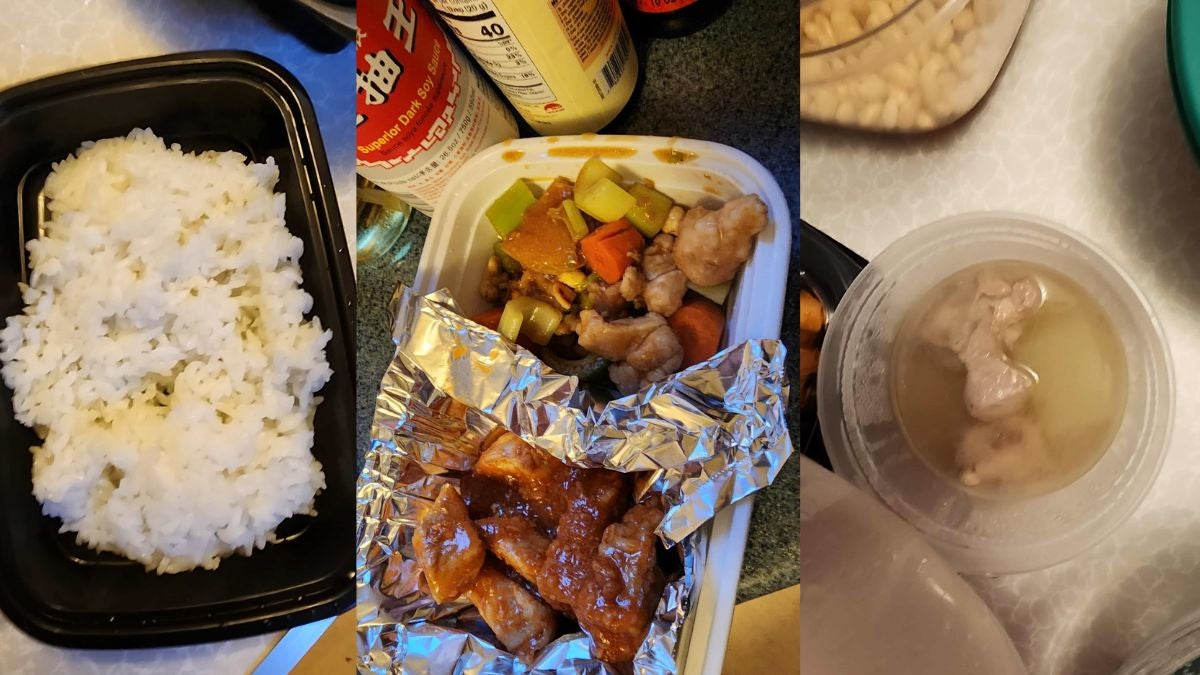
When Jou was matched with her Food Train recipient, delivered a five-course meal: spare rib and melon soup, bok choy and mushrooms, and a few meat dishes. When they met, he confirmed exactly what she’d warned him about: “He says, ‘Oh my God, you weren’t kidding me that you really can’t cook small.’”
Jou said she’ll continue to donate and rescue food because she sees the need up close.
“Even people with SNAP benefits, it is still not enough money to live off of, especially those who don’t know how to cook or don’t want to cook,” she said. “I’m gonna continue [donating] to whoever needs it.”
For Claire and Sofia, the Food Train isn’t just a stopgap.
“We are still working on how we can make this sustainable more long-term, because … it’s been well utilized. That’s exactly what we wanted,” she said.
They emphasized that the initiative belongs to the neighborhood, not to them alone.
“This isn’t, ‘our effort’ or ‘our work’ or ‘our activity,’ but a community effort, a community work, a community-led initiative,” Claire said.
Aurora agreed.
“There has been so much help in the community on so many different levels. I can’t say enough good stuff about our community.”

Get everything you need to know to start your day, delivered right to your inbox every morning.




To comment, please create a screen name in your profile
To comment, please verify your email address
Conversation
This discussion has ended. Please join elsewhere on Boston.com