
Sign up for the Today newsletter
Get everything you need to know to start your day, delivered right to your inbox every morning.
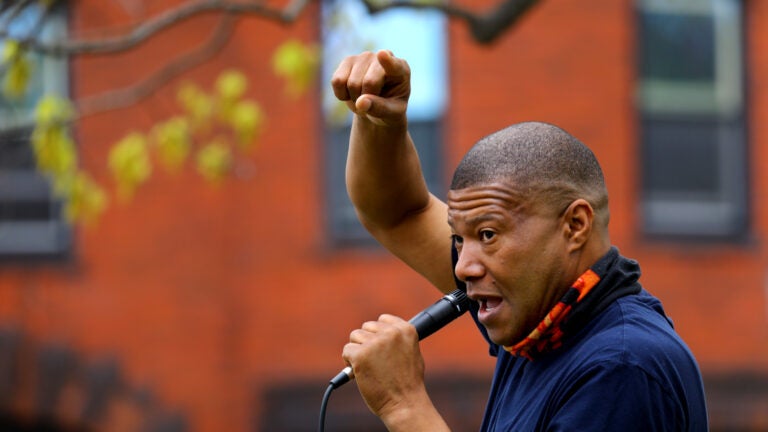
Gerald Alston, a onetime Brookline firefighter whose yearslong legal battle against the town pulled back the curtain on racial discrimination, has died at age 57.
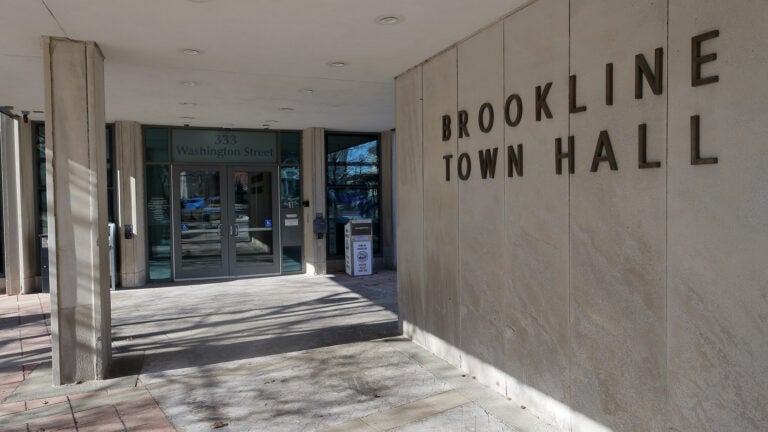
Four years ago, Brookline reached a landmark $11 million settlement with Alston, who was fired after he complained of racial bias in the workplace and reported a supervisor who left a racial slur on his voicemail.
He died Oct. 13, according to a notice from Davis Funeral Home, which did not specify a cause. Brookline.News first reported Alston’s death.
“Gerald Alston was a courageous and selfless firefighter who never gave up in his fight for justice and fairness,” the Brookline Justice League said in a statement shared by Brooks Ames, Alston’s longtime attorney. “For eleven years, he sacrificed his health and well-being to challenge discrimination both in court and in the public arena.”
Alston’s sprawling legal saga began in 2010, when a Brookline Fire Department lieutenant accidentally left him a voicemail using the n-word. The lieutenant was moved to another station and received a brief suspension, though he was promoted to captain just weeks later.
Meanwhile, Alston — a Black man — said he faced years of workplace racism and retaliation. The town placed him on leave in 2013 after alleging he made threatening comments at work. He was ultimately fired in 2016 after town officials said he refused to cooperate and comply with return-to-work conditions.
In 2021, after the state’s Supreme Judicial Court affirmed a Civil Service Commission ruling ordering Alston reinstated, Brookline approved an $11 million settlement to close the case for good.
Still, Alston’s crusade left an inedible mark on the town.
“Over the course of a decade, he really held up a mirror to Brookline in a way that just hadn’t been done before,” said Raul Fernandez, executive director of Brookline for Racial Justice and Equity and a former Select Board member.
“He forced our town to reckon with our own inadequacies — and there’s really no other way to put it — that allowed racism to infect town government, to infect the ways that employees were treated in Brookline, and frankly, the ways that residents and visitors had long been treated in Brookline,” Fernandez continued.
As vice chair of the town’s Select Board, Fernandez sat across the table from Alston when negotiating the 2021 settlement. He noted Alston could have walked away at multiple points and found another job elsewhere or settled with Brookline earlier, and for far less money.
“At every decision point — and he was very clear on this — he wanted to make sure that there was a reckoning, and that he would do everything in his power to try to ensure that what happened to him wouldn’t happen to anybody else,” Fernandez explained.
He added: “It wasn’t about giving $11 million to Gerald; it was about making sure that this felt like a meaningful lesson to the powers that be in the town of Brookline.”
Today, Fernandez said, Brookline is still learning its lesson.
He pointed to several other high-profile cases, including the two police officers fired in 2017 after reporting racial bias and, more recently, the Brookline Police Department veteran paid $1.8 million earlier this year to settle complaints of gender discrimination and retaliation. The town is also facing another lawsuit from a police sergeant who says she was retaliated against after serving as a witness in the earlier gender discrimination case.
“I think certainly there’s a financial argument to be made that by not addressing the root causes of these issues, you’re actually costing taxpayers money by having to pay out these settlements or costly legal fees,” Fernandez said. “But more importantly, people lose faith.”
Righting those wrongs will take sustained effort over time, he acknowledged, “but I think that there are enough folks in the community — because of Gerald’s story in particular — that will remember, and the next time will stand up even more so against these injustices.”
The Brookline Justice League said Alston’s perseverance “made the Town of Brookline a fairer and more humane place.”
According to Ames, Alston bought a home on the South Shore after settling his case and enjoyed making improvements to it, also spending time with his family and traveling in the U.S. and abroad. On one of his trips, Ames said, a shop worker in Greece recognized Alston from his days in the 1990s R&B group Classic Example.
“He remained invested in social justice issues,” Ames said by email. “I remember getting updates from him about the court battles of a man he was supporting who had been recently freed from prison after 28 years.”
Still, one of the biggest takeaways from Alston’s long march toward justice is that “people who suffer from racial and other forms of discrimination truly suffer,” Fernandez said.
“There’s no question that those 11 years took their toll on Gerald,” he added. “This man had to go through 11 years of struggle just to get to a place that was right. The reality is, it should have been right on day one.”

Get everything you need to know to start your day, delivered right to your inbox every morning.




To comment, please create a screen name in your profile
To comment, please verify your email address
Conversation
This discussion has ended. Please join elsewhere on Boston.com