
Sign up for the Today newsletter
Get everything you need to know to start your day, delivered right to your inbox every morning.
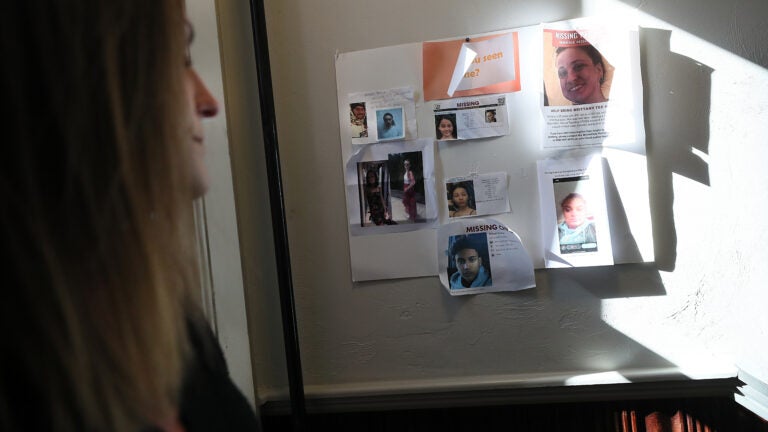
To Audra Doody, the red flags were abundantly clear: the stream of male callers, the bruises, the large volume of discarded condoms, and the hotel bills paid in cash.
But even amid increasingly obvious signs of sex trafficking, Doody alleges, staff at several Massachusetts hotels continued to turn a blind eye to her abuse, leaving her to suffer in silence. Now, the survivor is suing a handful of major hotel chains in federal court, accusing them of failing to help curb the trafficking happening right under their noses.
“They are hosting most of it, whether or not they know what’s happening,” said Doody, co-executive director of Worcester-based nonprofit Safe Exit Initiative.
“They profit so much off of this industry that they should be held accountable a little bit and just have better safety precautions for people,” she added in an interview. “I know for me, there’s a few times where I just was completely ignored by [hotel] staff.”
An outspoken survivor and advocate for other prostituted women, Doody filed her lawsuit in federal court in Boston last year under the Trafficking Victims Protection Reauthorization Act, which allows people to file civil lawsuits against anyone who knew — or should have known — they were profiting from human trafficking.
While she said she doesn’t hold the hospitality industry solely accountable for all that she experienced, Doody believes hotels “hold some type of responsibility on who’s coming in and out of their properties, and what’s happening on their properties.”
According to her lawsuit, three men trafficked Doody through numerous hotels between 2014 and 2015, controlling every aspect of her life and forcing her into prostitution. She alleges hotel staff ignored clear warning signs of abuse, with front desk workers avoiding eye contact and housekeeping staff rolling their eyes when they passed her in the halls.
Even when Doody ran screaming for help after a sex buyer pulled a gun on her at an Econo Lodge in Framingham, she alleges a housekeeper shoved her and closed a door in her face. According to her lawsuit, she was left to cower in her underwear in the parking lot without staff calling the police or offering to help.
“A lot of them know what’s happening, but they just choose to look the other way,” she said of hotel chains. “And maybe they think it’s because people are consenting to this. But again, I don’t think prostitution is a choice for the people with the fewest … choices.”
According to her complaint, “rather than taking timely and effective measures to stop profiting from this epidemic” of sex trafficking, the hotels “generally failed” to implement and enforce companywide policies or to train staff in how to respond.
The chains mentioned in Doody’s lawsuit include Choice Hotels, Wyndham Hotels & Resorts, Red Roof Inn, Extended Stay America, and InterContinental Hotels Group, the parent company for Crowne Plaza and Holiday Inn. The complaint specifically cites a number of hotel locations throughout eastern and central Massachusetts, such as Lexington, Westborough, Shrewsbury, Woburn, Newton, and Framingham.
“A lot of people don’t realize that trafficking happens in their backyard, and they’re like, ‘Oh my god, that happens here?’” Doody said. “And it’s like, that happens everywhere in the whole world.”
The hotel chains named in Doody’s lawsuit tried unsuccessfully to have the complaint dismissed, court records show.
“Plaintiff has sufficiently alleged that Defendants had commercial dealings with the traffickers and had constructive knowledge of the trafficking at their hotels, yet failed to implement policies to combat such trafficking,” U.S. District Court Judge Myong J. Joun wrote in an order Tuesday, rejecting the hotels’ request for reconsideration.
Several of the named hotel chains did not respond to requests for comment. In an emailed statement, InterContinental Hotels Group said while it could not comment on pending litigation, “we want to underscore that IHG strongly condemns all forms of human trafficking and has long-standing commitments to keep trafficking out of IHG-branded hotels and support its survivors.”
Doody also had support for survivors at the top of her mind; she explained part of the reason she’s going public with her lawsuit is to help raise awareness and shift the perception of sex trafficking survivors.
“I just want other people that may have experienced this to know that they’re not alone, too,” she said. “I just want people to know it’s not for us to hold the shame, right? It’s for the people that purchase us to hold the shame. It’s for us to take our power back and have control of our own narrative.”

Her complaint seeks compensation that includes past and future medical expenses, lost wages, emotional distress, and pain and suffering, among other damages.
Doody’s attorney, Mike Glennon of Brody, Hardoon, Perkins & Kesten LLP, said the purpose of the TVPRA lawsuits is to compensate survivors for the long-term effects of sex trafficking.
“You have survivors here who have had their entire lives upended by being dragged through the sex trafficking industry,” he explained. “And what happens is, for the period of time that they’re in it, they’re having to deal with the repercussions for the rest of their lives of the mental, the physical, and the emotional abuse of being subjected to sex trafficking.”
The ultimate goal, he added, is to see the sex trafficking industry wiped out entirely.
“And the hotels will either do it voluntarily, or we’ll make it too expensive for them to not do it,” Glennon said.
While both Glennon and Doody noted incremental signs that the hospitality industry is already changing for the better, they urged hotel workers to pay attention.
“If you think something’s off, something’s probably off and just call whoever you need to call, whether that’s your supervisor at the hotel, law enforcement, whoever you need to call,” Doody said. “Just pick up the phone, because you could save somebody’s life really quickly.”
She recalled staying at a hotel in Baltimore sometime after she left the sex trade and seeing a sign by the door advertising a human trafficking hotline. She speculated what she would’ve done if she’d had that kind of lifeline in 2015, when she desperately wanted out.
“I would bet — and I’m not a betting woman — but I’d bet I would’ve called it,” Doody said. “You know, something just as simple as that can really help somebody.”

Get everything you need to know to start your day, delivered right to your inbox every morning.



To comment, please create a screen name in your profile
To comment, please verify your email address
Conversation
This discussion has ended. Please join elsewhere on Boston.com