
Sign up for the Today newsletter
Get everything you need to know to start your day, delivered right to your inbox every morning.
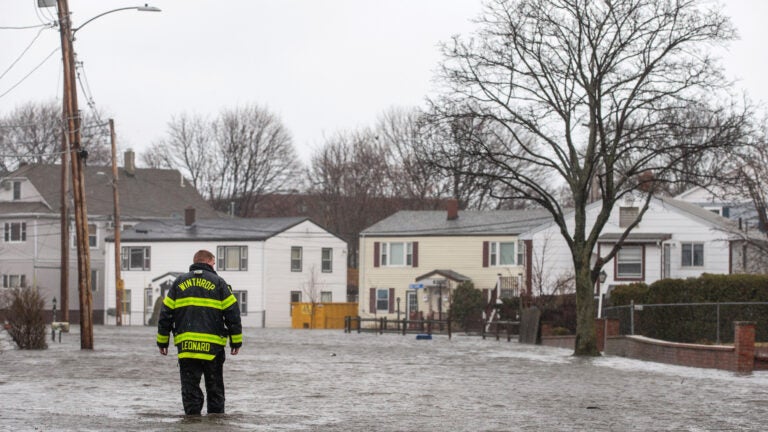
Winthrop has been informed that its refusal to comply with the MBTA Communities Act has resulted in the loss of two state grants, totaling roughly $1.2 million. These funds were crucial for addressing severe flooding issues in the Morton and Pico/Fisherman’s Bend neighborhoods – two of the city’s most vulnerable areas.
On Aug. 18, the Executive Office of Energy and Environmental Affairs (EEA) notified Winthrop that it would not receive the $819,829 grant for Morton Street, nor a $405,020 grant for Fishermen’s Bend, due to noncompliance with the MBTA Communities Act. The state law mandates that municipalities with MBTA transit access establish zoning that allows multi-family housing as-of-right, but Winthrop has long-resisted compliance.
Town Manager Anthony Marino confirmed the loss of the funding in a report dated Sept. 2. The notification from the EEA clarified that participation in the grant program requires certification of compliance with Massachusetts General Laws, including the MBTA Communities Act.
“To be eligible to participate in MVP, Winthrop would need to remediate this noncompliance,” the EEA wrote to the city in an email shared with Boston.com.
Communities that don’t comply with the MBTA Communities Act automatically lose access to certain state funds, like: MassWorks grants for local infrastructure projects; HousingWorks grants for housing development, preservation, and rehabilitation; grants for communities with a “Housing Choice” designation; and state money for the Local Capital Projects Fund. The state has also warned that compliance with the law will also be considered when distributing other types of local aid.
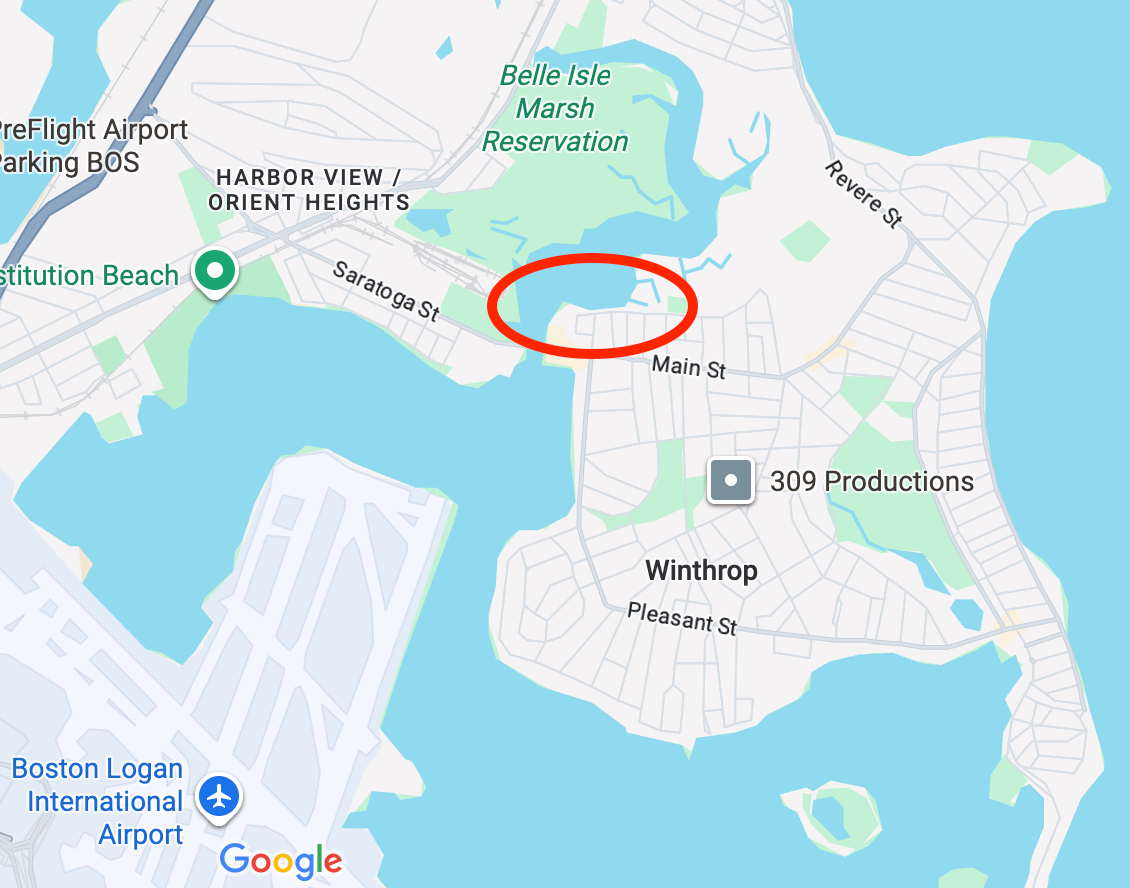
The Morton Street area is the lowest point along the shoreline of the entire Belle Isle Marsh, according to the city’s grant application.
Plans had been in place to use the grant funding to raise roadways, create stormwater chambers, and construct protective berms—barriers made of soil—to mitigate flood risks at Morton Street. While the town had already received around $1 million in MVP grants over the past decade, a $1.2 million grant for engineering and permitting was denied last year.
Councilor Joe Aiello, whose district includes Fishermen’s Bend, told Boston.com the consequences of this loss are significant.
“To lose this money is horrid,” Aiello said.
He noted that the situation isn’t just about preventing future floods; it’s also about protecting Winthrop taxpayers from footing an even greater bill to make up for lost state grants.
“It’s really a sin and disrespectful behavior to taxpayers that they’re paying their state taxes to support programs … and they’re going to end up being asked to pay higher taxes all over again because the Council won’t come into compliance with 3A,” he said. “It’s really an awful, awful and disrespectful situation for people living in those neighborhoods.”
In June, the Town Council rejected a zoning proposal that would have brought the town into compliance with the 3A law. The plan, submitted by the Planning Board, aimed to create overlay districts in already developed areas, and it would not have resulted in the construction of new units, Aiello said. The Town Council’s split vote, 4-4, did not meet the required majority of votes (i.e. five) to approve the plan, and therefore it failed to pass.
Aiello, who supported the Planning Board’s proposal, described it as an opportunity to secure future state funding for the town, without a large impact to its existing housing stock or infrastructure.
“We have an absolutely benign 3A plan which produces no negative sides for Winthrop and would keep us eligible for these funds,” he said. “It’s just perplexing that [the anti-3A] narrative has infected the Town Council.”
Aiello said he does not believe the Town Council will bring another 3A proposal to a revote before the end of the year.
As the town grapples with these challenges, the Citizens Advisory Commission on Climate has become a vocal advocate for action. Established in August 2024, the commission serves to advise the Town Council on climate resiliency and flood mitigation efforts.
Co-chair of the Commission, Ana Leary, lamented the loss of the MVP funds, which she said were especially important for the two vulnerable neighborhoods.
“The MVP awards were so critical, because they were going to serve hot spots number one and three,” Leary explained, referencing the Commission’s climate action plan. The plan identified 10 of the city’s hotspots that experience consistent flooding, storm surge, and erosion.
Morton Street on the Winthrop side of the marsh is listed as number one, while number three is Fisherman’s Bend and the Pico Beach neighborhoods.
Leary, who volunteered to write one of the grants, expressed frustration over the town’s failure to secure funding for these vital projects, noting that she felt her efforts had been undermined by the Town Council’s “no” vote.
“It was highly frustrating, and honestly felt like a slap in the face. I spent weeks, if not months, of my own personal time on something that the town government then turned around and said, ‘No thanks,’” Leary said.
Despite the current deadlock, Leary remains hopeful that the situation could improve after the upcoming municipal election in November.
“The tides very well could change (if I can use that metaphor) with new spokespeople and representatives on the council,” she said.
For now, though, the immediate concern is the flooding that continues to threaten these vulnerable neighborhoods.
“By shutting ourselves off to the state, [we] are not protecting residents who are in the most flood-prone, disaster-prone areas of our community,” she added
Leary, reflecting on the broader implications of the town’s noncompliance, expressed concern about the long-term viability of Winthrop’s partnerships with the state.
“I think it’s a logical fallacy to believe that we exist without the state,” she said. “So my bigger concern is more, how are we making coalitions happen in the future if we put ourselves in this kind of a noncompliance state?” she asked.

Get everything you need to know to start your day, delivered right to your inbox every morning.




To comment, please create a screen name in your profile
To comment, please verify your email address
Conversation
This discussion has ended. Please join elsewhere on Boston.com