
Sign up for the Today newsletter
Get everything you need to know to start your day, delivered right to your inbox every morning.
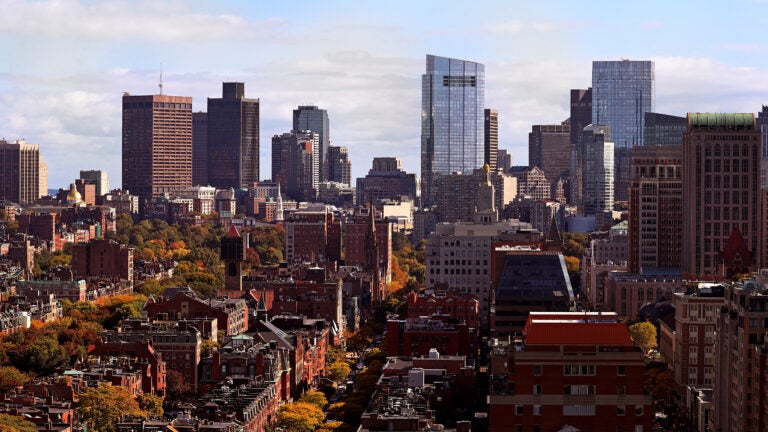
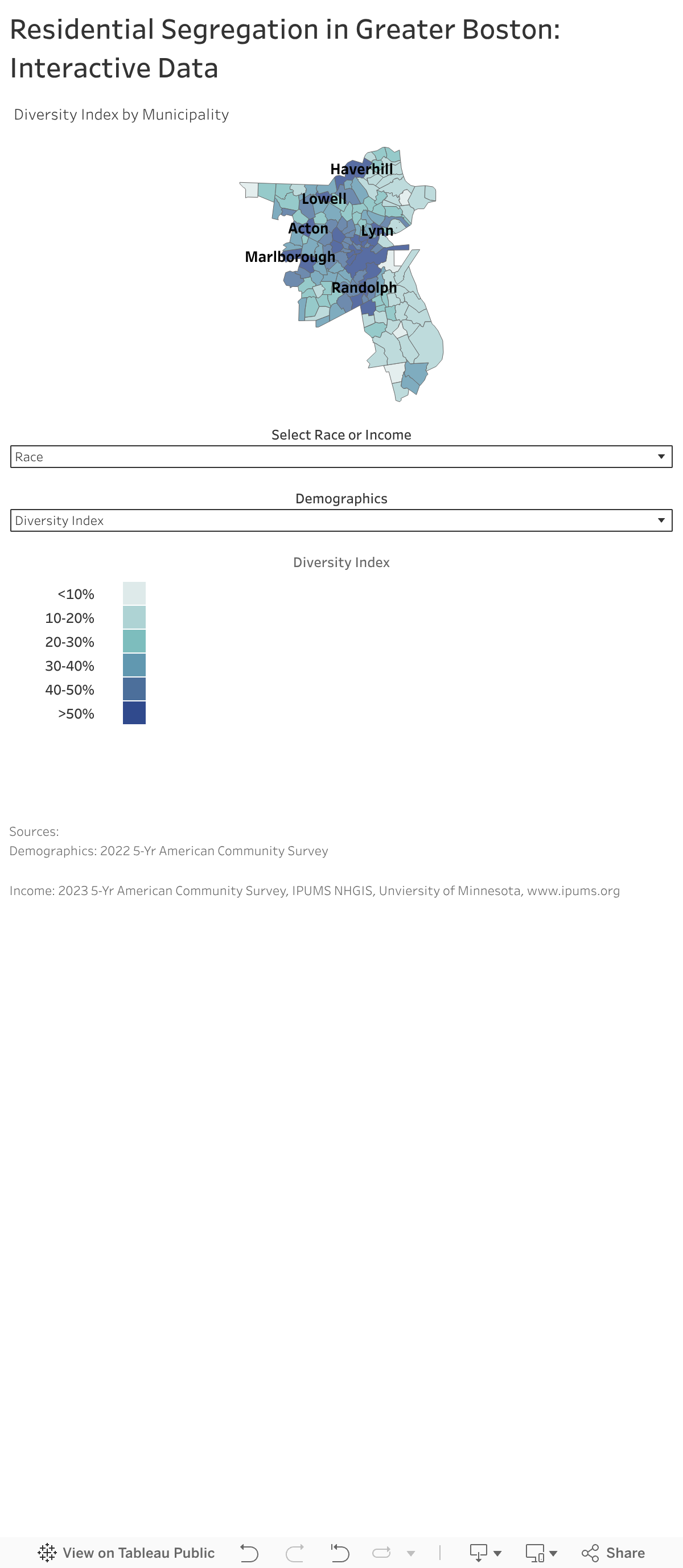
Greater Boston is making progress on racial integration, but economic segregation is worsening, according to a new report from the research center Boston Indicators.
The report found that higher- and lower-income households are less likely to interact today than they were more than four decades ago.
According to the region’s Racial Income Segregation Index, 43% of these households now cluster among others with similar incomes — up from 32% in 1980. That places Boston in the middle of the pack among the 50 largest U.S. metro areas.
Driving this trend is the growing number of high-income households, which tend to cluster together.
Today, the top 20% of earners in the region earn an average of nearly $400,000 —more than 19 times the income of the bottom 20%, who earn less than $21,000. That gap widens at the very top, with the top 5% earning nearly $700,000.
The report also highlights a shrinking middle class. While the region’s median income earners have risen 16% over the past decade (adjusted for inflation), more families now fall far above or below that median.
“Understanding that relationship between how we segregate ourselves versus how diverse our overall population highlights a vital story about who we are as a region,” said Luc Schuster, executive director of Boston Indicators, the research center at the Boston Foundation, in a statement.
He continued, “Where racial and income result in a clustering of resources, power, and access, a region that appears diverse may, in fact, be reinforcing racial and income segregation.”
The region is showing signs of progress in integrating races. The dissimilarity index — which estimates the share of one group that would need to move to match the residential distribution of another — shows declining segregation between white and Black or Asian communities since 1980. However, dissimilarity between white and Latino residents has grown.
The report also found that while white and Black residents are less isolated from other groups today, the share of Asian and Latino residents living in isolation has increased significantly.
“The persistence, and even growth, of isolation of racial groups in Metro Boston is likely caused by a mix of policy and personal choices,” Schuster said. “Isolation can signal greater cohesion and support systems within communities. The issue becomes problematic when policies such as restrictive zoning force groups to cluster, and when those clusters have unequal access to public goods, like quality education, transportation, and health care.”
Schuster added, “It’s a question worth exploring further for Boston and other regions.”

Get everything you need to know to start your day, delivered right to your inbox every morning.



To comment, please create a screen name in your profile
To comment, please verify your email address
Conversation
This discussion has ended. Please join elsewhere on Boston.com