
Sign up for the Today newsletter
Get everything you need to know to start your day, delivered right to your inbox every morning.
At least one member of the Boston City Council, backed by the local branch of the NAACP, is calling for greater transparency surrounding the redevelopment of White Stadium.
Specifically, Councilor Julia Mejia is urging her colleagues to seriously consider an alternative proposal recently put forth by opponents to Mayor Michelle Wu’s current plan to remake the stadium.
Mejia filed a resolution Tuesday that will likely be debated during the City Council’s meeting on Wednesday. It acknowledges concerns about growing costs and highlights issues raised by the Boston NAACP in the past over how the project will impact the city’s students and other residents.
“This resolution is not about stopping the redevelopment of White Stadium but about recognizing that too many questions remain unanswered,” Mejia said in a statement. “Boston deserves transparency around costs, equity in contracting, and a commitment to review all options including a fully public renovation plan. It is our responsibility to ensure that public dollars are used in the public interest, and that student-athletes and communities who depend on White Stadium are not sidelined in the process.”
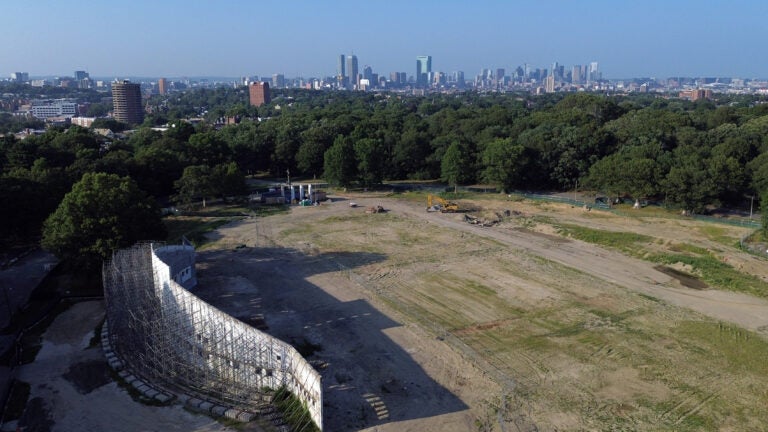
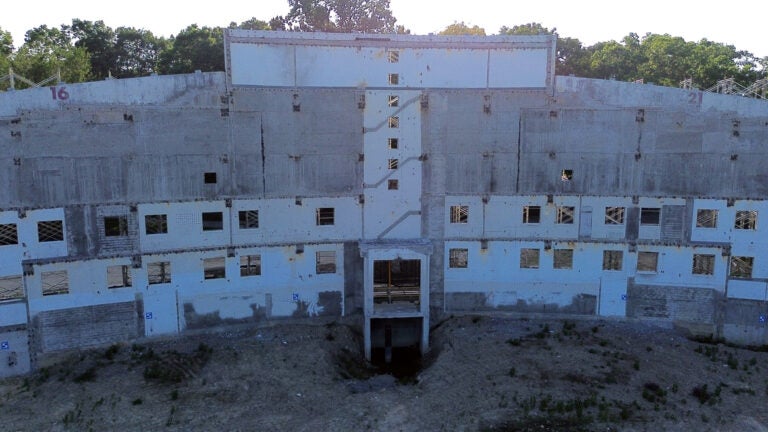
White Stadium, which was built in 1949 and last renovated in the ’80s, sat dilapidated in Franklin Park for years as various proposals for its redevelopment came and went without becoming a reality. Wu’s solution is to have the city partner with a new professional women’s soccer team to remake the stadium. The city will pay for half of the construction costs, while the soccer team will pick up the other half of the tab.
Wu has thrown her full weight behind the project, promoting it as an innovative way to breathe new life into the area and give Boston’s student-athletes much-needed new facilities. The soccer team will use the stadium for practices and home games, while members of the public and student-athletes will retain access for most of the year, according to Wu.
“After extensive community feedback over two years of public meetings, our students will finally get a top notch athletic complex, open year-round to park users, BPS students, coaches, and community for 15 hours per day, more than 345 days of the year. This long-delayed renovation is already well underway, and the City, BPS and Boston Legacy FC have signed a lease that legally codifies the commitments and community benefits that this project and partnership will deliver,” a spokesperson for the Wu administration said in a statement Tuesday when asked about Mejia’s resolution.
The opposition has been fierce and vocal. Organizations like the Emerald Necklace Conservancy and an advocacy group known as the Franklin Park Defenders have led the charge in fighting Wu’s plan.
They argue it will disrupt traffic, change the historic nature of the area, and prioritize private interests to the detriment of Boston’s students. On top of it all, construction cost estimates have already jumped notably and are likely to continue rising. Wu has been hesitant to release updated estimates, acknowledging the project’s growing price tag but saying that hard figures won’t be available until the city opens bids for construction contracts later this year.
“Construction of the new professional soccer stadium in Franklin Park hasn’t started — or even been fully put out to bid. With the public-private stadium proposal facing massive cost overruns, unsolvable transportation concerns, and the team’s inability to secure required construction financing, there is plenty of time for a better path forward,” Roxbury resident and Franklin Park Defenders member Rodney Singleton said in a statement released by the group after Mejia filed her resolution.
Opponents sued the city and the investors behind the team earlier this year, arguing that the project violates state law. A judge ruled in the city’s favor in April, but the conservancy is appealing the decision.
Wu was asked Tuesday about White Stadium during an appearance on GBH’s “Boston Public Radio.” She said that the process for developing the new stadium in accordance with the public-private plan is well underway and said that she wished she could give more specific cost estimates to the public. But the litigation contributed to the delays, she added.
“Believe me, I wish that we could have been even further along in this process if we had not been slowed down by litigation over and over again,” she said. “We would have not only had a clear budget number but also had the bids all the way out.”
Wu is running for reelection, and the debate over White Stadium has become a hot-button issue in the race. Her opponent, Josh Kraft, says the project is evidence of Wu’s mismanagement of the city and frequently hammers her on the topic.
The latest major development came earlier this month, when opponents of Wu’s plan unveiled their own alternative that is designed to be cheaper and fully public. Much of the old White Stadium has already been demolished, but proponents of the alternative plan say that it is not too late to pivot and build something that resembles their idea.
With the City Council largely made up of officials that tend to ally with Wu, Mejia’s move this week is notable. In her resolution, she cites a procurement hearing held by the council’s Government Accountability Committee in July. During that hearing, “testimony highlighted systemic concerns about supplier diversity, fairness in RFP design, and the need for stronger community accountability.” White Stadium was frequently brought up as an example of a project with unresolved issues that should be reviewed, according to the resolution.
The NAACP Boston Branch called for an immediate halt to development of the stadium in June, raising worries about a lack of transparency, community impacts, and the displacement of students. The group said this week that it is still in favor of redeveloping White Stadium in some manner, but that it wants to see the project prioritize public interests.
“Now is the first opportunity for the public to compare the benefits and drawbacks between a less-expensive public option seating 5,000 and a significantly more expensive corporate-led option that seats over 10,000 and would impede the public’s use of Franklin Park. The projected $100 Million in savings could be allocated to specific unmet student needs in the Boston Public Schools,” the NAACP Boston Branch said in a statement issued by Mejia’s office.
There is a “clear need” for councilors to “formally” review the alternative plan, Mejia wrote. It would cost the city $64.6 million, allocating $39.6 million to rebuild the stadium’s west grandstand, $9 million for the east grandstand, $10.1 million for site improvements, and $5.9 million for track and field improvements.
The latest estimate for Wu’s public-private plan has the city paying $91 million for its half of the costs. That estimate was released last December.
Kraft said in a statement Tuesday that White Stadium has been neglected for too long and that students deserve a modern facility. But he said Wu was handing over “one of the city’s greatest recreational spaces to private interests” and upping costs for taxpayers.
“For decades, Black and Brown neighborhoods have been told to ‘wait their turn’ for investments in public infrastructure, only to see public resources diverted to projects that benefit those with power and access,” Kraft said. “As mayor, I’ll work with residents, BPS families, and groups like Boston NAACP to create a renovation plan that keeps White Stadium public, meets the needs of our communities, and delivers real equity—not just in speeches, but in our city’s budget.”
Get everything you need to know to start your day, delivered right to your inbox every morning.





To comment, please create a screen name in your profile
To comment, please verify your email address
Conversation
This discussion has ended. Please join elsewhere on Boston.com