
Sign up for the Today newsletter
Get everything you need to know to start your day, delivered right to your inbox every morning.
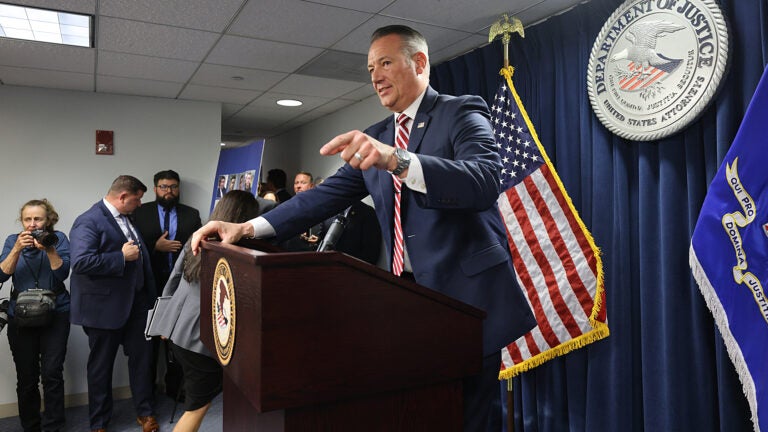
The head of ICE said Wednesday that the agency was preparing to increase its presence in and around Boston, potentially ratcheting up tensions between local leaders and federal law enforcement officials.
Todd Lyons, the acting director of ICE, made the comments during an interview on “The Howie Carr Show” when he was asked to respond to Mayor Michelle Wu’s defiance of the Trump administration’s immigration enforcement agenda.
“100% you will see a larger ICE presence,” Lyons told Carr.
As Lyons oversees ICE’s efforts to enact President Donald Trump’s mass deportation goals, federal officials are targeting “sanctuary” jurisdictions where policies limit the ways in which local police can cooperate with federal immigration agents. Boston is one of these places, and Wu has engaged in a monthslong feud with the Trump administration on the topic.
There is no one set legal definition of what makes a place a “sanctuary jurisdiction.” The Department of Justice recently published a broad list of sanctuary jurisdiction criteria and named a number of cities, states, and counties that the federal government says have “policies that materially impede enforcement of federal immigration statutes and regulations.” Massachusetts as a whole is not on that list, but Boston is.
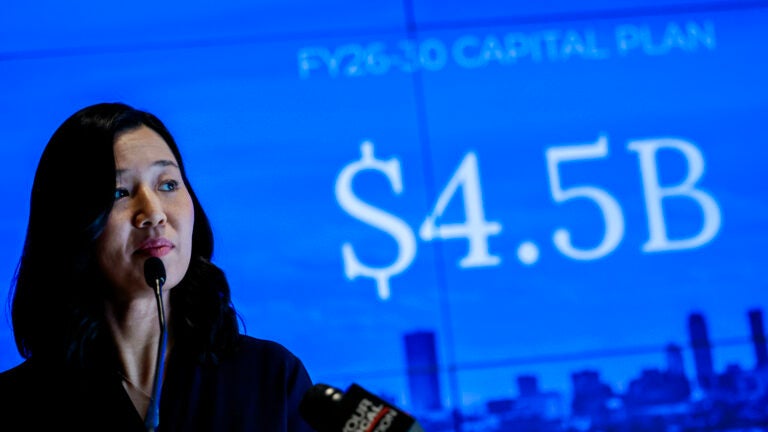
Attorney General Pam Bondi sent letters to leaders of these jurisdictions, including to Wu, demanding that they abandon their sanctuary policies. Wu issued her response during a large press conference she convened outside City Hall on Tuesday.
“Stop attacking our cities to hide your administration’s failures. Unlike the Trump administration, Boston follows the law,” the mayor said.
Carr played clips of Wu’s speech for Lyons and asked him if he would direct ICE to “surge” into Boston and Massachusetts in a similar manner to some of the enforcement activity taking place in Washington, D.C.
“We’re definitely going to, as you’ve heard the saying, ‘flood the zone,’ especially in sanctuary jurisdictions,” Lyons said.
He referenced a monthlong operation ICE conducted in Massachusetts in May, where almost 1,500 people were detained. Earlier in the year, ICE arrested some 370 people through an “enhanced operation” that federal officials directly blamed Wu and local sanctuary policies for.
Wu says that the city regularly works with federal law enforcement to find and detain people with criminal warrants. Lyons maintains that Wu and leaders like her are willingly releasing violent “criminal aliens” back onto city streets.
“We are going to continue to do our mission. We are going to keep making Boston safe, as she’s failing to do with the sanctuary policies,” Lyons said of Wu.
An ordinance known as the Boston Trust Act, which the City Council unanimously reaffirmed in anticipation of Trump’s return to the White House, is Boston’s sanctuary policy. It dictates that Boston police officers cannot ask individuals about their immigration status, make arrests based solely on ICE administrative warrants, or share certain information with ICE. It does allow the BPD to work with ICE on matters of “significant public safety importance,” like human trafficking, child exploitation, and cybercrimes.
Wu and many of her allies in the city say that the Trust Act improves public safety by allowing people to report crimes to the BPD without fearing that doing so could impact their immigration status.
Even if Wu or another Boston mayor were to abandon the Trust Act, state law would still limit how the BPD could interact with ICE. Under a 2017 Supreme Judicial Court decision, local authorities cannot detain someone just because federal immigration authorities believe they are subject to civil removal.
“In Boston we comply with and follow all of the laws: city, state, and federal. We will not back down from the communities who have made us the safest major city in the country,” Wu told reporters at an unrelated event Thursday when asked about Lyons’s comments.
Lyons, who previously served as the head of ICE’s Boston Field Office, told Carr that he still has many friends within the BPD that want to enthusiastically work with ICE but are worried about the repercussions if they do so.
“We have so many men and women on the Boston Police Department and other jurisdictions that are so pro-ICE, that want to work with us, and that are actually helping us behind the scenes,” he said.
Spokespeople for the BPD did not return requests for comment about Lyons’s remarks Thursday.
In June, the Wu administration began to formally request details on people being arrested by immigration agents in the city. ICE said publicly that it would comply.
However, Wu said this week that the agency is not responding to the city’s Freedom of Information Act requests. Boston is now filing an administrative appeal insisting that ICE produce the documents, and Wu said that her administration is prepared to use “every legal tool available” to get the public information.
“It’s been two months without a response and without the real facts,” she said Thursday.
The exact contours of what an increased ICE presence in Boston could entail are unclear. With the passage of Trump’s signature domestic policy legislation earlier this summer, ICE is now the highest-funded federal law enforcement agency. The agency’s annual budget is set to increase from about $8 billion to about $28 billion. Those dollars will help it massively increase detention space, deportation flights, and staffing.
A hiring spree is underway, with ICE offering perks like hefty signing bonuses and student loan forgiveness. The agency’s official recruitment webpage claims that “America has been invaded by criminals and predators,” in its attempts to draw in new recruits.
The number of people detained by ICE nationally has steadily increased since Trump began his second term. About 70% of the current detainees do not have a criminal conviction, according to data compiled by analysts at Syracuse University through the use of public records requests.
“You can see all the success we’re having nationwide, and people are now understanding exactly the law enforcement mission of ICE,” Lyons said.
Get everything you need to know to start your day, delivered right to your inbox every morning.





To comment, please create a screen name in your profile
To comment, please verify your email address
Conversation
This discussion has ended. Please join elsewhere on Boston.com