
Sign up for the Today newsletter
Get everything you need to know to start your day, delivered right to your inbox every morning.
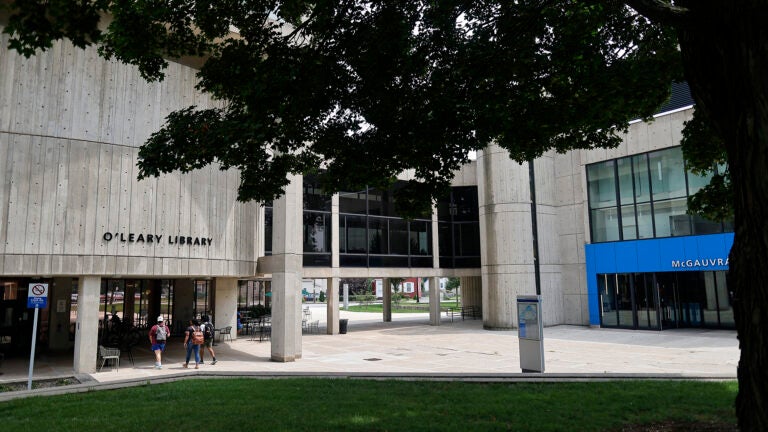
A federal court ruled that a Massachusetts student’s First Amendment rights were violated when he was disciplined for sexual misconduct, including talking about sex and asking coworkers for hugs.
The University of Massachusetts Lowell student, who went anonymously by John Doe, is a 37-year-old Indian national pursuing a doctorate at UMass Lowell and working as a resident advisor in a dormitory on campus, according to court documents.
In 2023, Doe was accused of sexual misconduct by four of his colleagues. After an investigation, the university found that he was “responsible” for sexual misconduct, according to the decision by Judge Lara Montecalvo of the U.S. Court of Appeals.
The student was placed on probation, banned from living in campus-providing housing, or entering any residence hall, the judge wrote.
However, the judge, undoing a lower court’s decision, found that there was not enough evidence that his conduct was disruptive to classwork, warranting restriction. The judge also found that his behavior “falls considerably short of ‘a pervasive pattern.’”
“There was no sexual misconduct, simply because there wasn’t a single thing there that could be considered sexual misconduct because all of it was protected under the First Amendment,” said Ilya Feoktistov, a civil rights lawyer who represented Doe.
However, Montecalvo agreed with the lower court that UMass was entitled to qualified immunity, meaning the public university is protected from paying damages.
Doe’s original case, filed in 2023, demanded more than $2 million, but Feoktistov said “that wasn’t the goal… the main goal is to clear his name.”
After the initial four women reported their “concerns to their supervisor,” the decision said, a university official spoke to additional students recommended to her throughout the investigation. He was accused of soliciting unwanted hugs, readjusting a woman’s feet on exercise equipment, and talking about sexual topics at work, the decision said.
One woman said that she and Doe were cooking and discussing Jehovah’s Witnesses and “religious proselytizing” according to the decision, when Doe said, ‘Oh (woman’s name), do you want me to shove my penis in your face?’”
He, to the woman at the time and to investigators later, clarified he meant to compare the actions of Jehovah’s Witnesses to unwanted sexual conduct. The university accepted this, but still found the comment was “unwelcome.”
In another incident, he commented to another coworkers that “if the food is good, I’d have sex while eating.” Doe acknowledged he “may have” used the word sex, but said he might have been referring to the hashtag “food porn.”
Another coworker reported that Doe had vented to her about “how he’s going to be alone forever,” according to the decision.
“I don’t need someone to have sex with, I just want someone to cuddle with,” Doe said, the woman alleged. “I’ll be alone, so I’ll just jerk off and go to bed.”
Doe was also accused of using his hands and feet to move her feet on a piece of exercise equipment in his dorm room. He also allegedly touched her thigh without consent, according to the university’s report filed in district court.
The same woman said, “on an unspecified number of occasions,” Doe would extend his arms toward her to initiate a hug, the appeals decision said.
Montecalvo wrote that UMass erred in referring to these instances as sexual misconduct, particularly disagreeing that his conduct “caused a substantial disruption to the university RA system.”
Both sides pursued the case as a student discipline case, not employer-employee, the judge wrote.
“Certainly the complainant RAs found Doe’s several utterances unpleasant – enough that they expressed discomfort and the desire not to be alone with him,” Montecalvo wrote. “But the complainants described Doe’s comments and conduct as merely ‘awkward’ and ‘uncomfortable,’ and the record does not suggest that any complainant understood Doe’s conduct as a sexual advance.”
Feoktistov alleged in an interview that the group of women who accused his client of sexual misconduct were caught drinking in the dorm hallways by him the night before they all filed complaints.
In a university report filed in district court, the woman who testified to the university’s panel about the “foodporn” comment admitted to university officials that she was drinking the night before the complaints. However, she “did not make any statements” to Doe and another RA about “snitching” on them, according to the district court decision that agreed with the university last year.
“Anybody reading this story should also read the play ‘The Crucible,’ because the fact pattern is exactly the same,” he said. “A group of young, immature people get caught doing something that they weren’t supposed to do, and then they cause a witch hunt from it.”
Feoktistov said the incident wasn’t included in the complaint because “it’s irrelevant to the First Amendment issue.”
A spokesperson for UMass Lowell declined to comment on “pending litigation.”

Get everything you need to know to start your day, delivered right to your inbox every morning.





To comment, please create a screen name in your profile
To comment, please verify your email address
Conversation
This discussion has ended. Please join elsewhere on Boston.com