
Sign up for the Today newsletter
Get everything you need to know to start your day, delivered right to your inbox every morning.
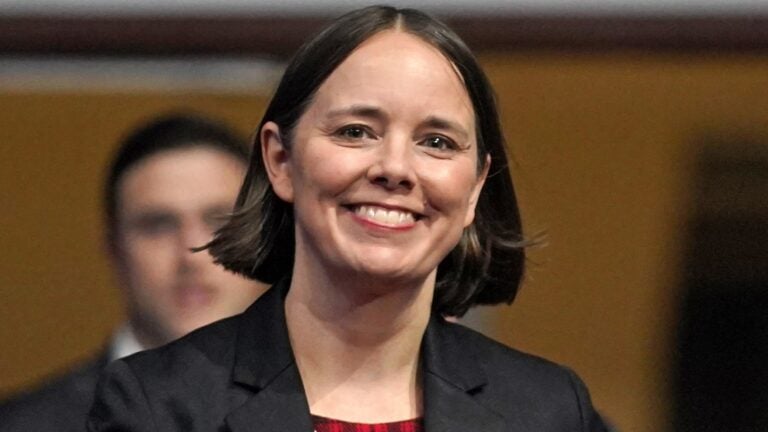
Last week, the Department of Justice sent a letter to Maine Secretary of State Shenna Bellows, asking her to share detailed lists of personal voter information. Bellows convened a press conference Tuesday to issue her response.
“The Gulf of Maine is awfully cold, but maybe that’s what the DOJ needs to cool down. So, here’s my answer to Trump’s DOJ today: go jump in the Gulf of Maine,” she said.
The letter in question was sent by the DOJ’s Civil Rights Division. Federal officials cited the National Voter Registration Act and asked for a complete copy of Maine’s statewide voter registration list. The DOJ also requested a copy of a list of the election officials that are responsible for maintaining voter records.
A number of other states, including New Hampshire, have received similar letters. David Scanlan, the Granite State’s top election official and a Republican, also declined to provide most of the information requested by the DOJ. Federal officials intend to request this information from all 50 states, Bellows said, attributing this to the National Association of Secretaries of State.
Bellows, a Democrat who is running for governor next year, openly speculated about why the Trump administration could be pursuing this information.
“I don’t know if it’s because they’re trying to change the topic away from the Epstein files, or because they’re trying to sow false narratives to undermine voter confidence in our strong election systems,” she said.
In refusing the request, Bellows cited Article I of the Constitution, which gives states the power to oversee elections.
“The DOJ doesn’t get to know everything about you, just because they want to,” she said.
Bellows touted the success of Maine’s elections, saying that the state was third in the nation in voter turnout in 2024. It was number one in 2022. More Maine citizens voted in 2024 than ever before in state history, she said.
“The DOJ should be ashamed of themselves for casting aspersions on our local clerks and our civil service election officials,” she said.
Each year, Bellows’s office submits a report to state lawmakers that tracks the maintenance of voter lists. It shows how duplicate records, deceased people, and those who have moved out of the state are culled from the lists, she said. She offered to share these reports with the federal government.
“Clean voter rolls and basic election safeguards are requisites for free, fair, and transparent elections. The DOJ Civil Rights Division has a statutory mandate to enforce our federal voting rights laws, and ensuring the voting public’s confidence in the integrity of our elections is a top priority of this administration,” Harmeet Dhillon, assistant attorney general for civil rights at the DOJ, said in a statement responding to Bellows.
During his first term, President Donald Trump created a commission to investigate claims of voter fraud in the 2016 election. That commission later disbanded without finding any credible evidence showing widespread election fraud. Matthew Dunlap, Bellows’s predecessor, served on the commission and was a notable critic of the process.
In the leadup to the 2024 election, Bellows attempted to disqualify Trump from the state’s Republican primary ballot under the Constitution’s “insurrection clause,” citing his role in the Jan. 6 attack on the U.S. Capitol. However, Bellows was forced to reverse that move after a Supreme Court ruling.
Get everything you need to know to start your day, delivered right to your inbox every morning.



To comment, please create a screen name in your profile
To comment, please verify your email address
Conversation
This discussion has ended. Please join elsewhere on Boston.com