
Sign up for the Today newsletter
Get everything you need to know to start your day, delivered right to your inbox every morning.
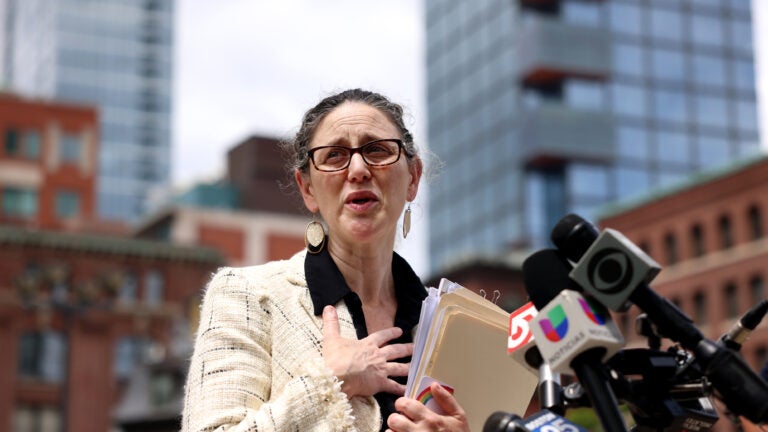
In late May, defense attorneys across Massachusetts enacted a work stoppage, pledging to stop taking indigent cases in an effort to get the state to increase their pay. This week, defendants began being released from jail because they lack representation in court.
At least four people have been ordered to be released so far, including one person who allegedly punched his pregnant wife and put her in a headlock until she lost consciousness. That man, Eliseu Pina, will be issued a GPS bracelet and be required to stay at his mother’s house, The Boston Globe reported.
About a dozen cases were heard in Boston Municipal Court Monday under the Lavallee protocol, which a Supreme Judicial Court justice invoked last week. A judge ordered the release of six people, including Pina, but two will continue to be held on warrants in counties not under the protocol. The Lavallee protocol is only applicable to Suffolk and Middlesex counties at the moment.
But, that still means that hundreds of defendants are without representation. Lavallee hearings are set to continue on a rolling basis in Boston Municipal Court and Lowell District Court.
Everyone accused of a crime has the constitutional right to an attorney. Most of the people facing charges in Massachusetts that cannot afford to hire their own attorney are represented by bar advocates, private attorneys who are paid by the state to represent indigent criminal defendants.
Bar advocates in Massachusetts are paid $65 per hour for district court work, lower than in many nearby states. Their last raise came in 2022, and they are seeking a rate increase of about $35 an hour.
The state’s slimmed-down budget for fiscal year 2026, which was recently signed into law by Gov. Maura Healey, does not include raises for bar advocates. The Massachusetts Association of Criminal Defense Lawyers said in a statement that it was “deeply disappointed” by the lack of funding.
“Despite the vital role bar advocates play in protecting the constitutional rights of everyone in the Commonwealth, we believe that this final FY26 state budget does not reflect the value or urgency of this work. The chronic underfunding of indigent defense not only undermines the right to counsel guaranteed by the Sixth Amendment but also perpetuates systemic inequities in our justice system,” the MACDL said.
The Lavallee protocol was invoked by Associate Justice Dalila Argaez Wendlandt, who outlined her logic in a 25-page order. It came after the Committee for Public Counsel Services filed a case against prosecutors on behalf of unrepresented indigent criminal defendants.
The CPCS oversees bar advocates. If a judge finds that the CPCS has made a good-faith but unsuccessful effort to find a lawyer for a defendant, they must be released from custody after seven days. Those who have not had a lawyer for 45 days must have their charges dismissed without prejudice, meaning they could be refiled in the future.
Wendlandt wrote in her order that, if the current situation holds, hundreds of defendants will have been without representation for 45 days by the end of July. The shortage of bar advocates “will likely continue for the foreseeable future because there are at present no apparent prospects for a significant remediation of the problem,” she wrote.
The number of unrepresented indigent defendants in the courts has “grown significantly” since the work stoppage began, and that figure is expected to continue to rise. At the same time, Wendlandt said that the underlying issue of low compensation will likely need to be addressed through legislative action, a prospect that appears murky at the moment.
All four of the people ordered released Monday had been held for more than seven days and remain charged. The CPCS says it is working to cover cases involving people charged with more serious crimes. The group worked frantically Monday to find representation for Roberto Mercado Falero, a man accused of stabbing a stranger on the street. They did find him representation, averting his release, per the Globe.
That hectic work is likely to continue as attorneys manage what some are calling “a full-blown constitutional breakdown.”
Get everything you need to know to start your day, delivered right to your inbox every morning.



To comment, please create a screen name in your profile
To comment, please verify your email address
Conversation
This discussion has ended. Please join elsewhere on Boston.com