
Sign up for the Today newsletter
Get everything you need to know to start your day, delivered right to your inbox every morning.
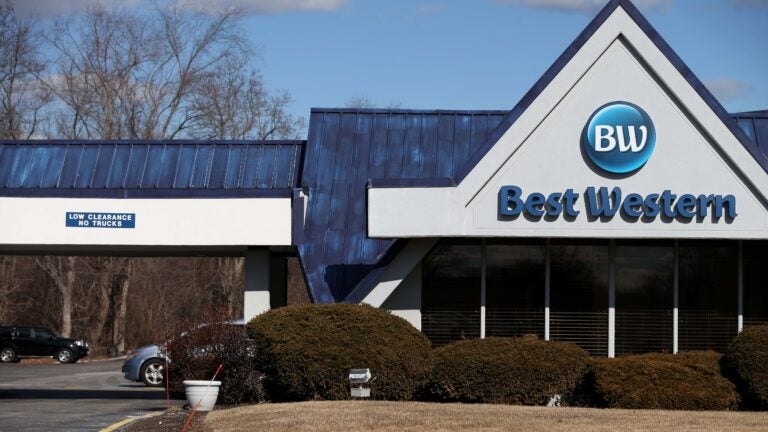
The Healey administration is set to close nearly all of the hotels and motels it has been using as emergency shelters by the end of the day Monday.
Officials announced in May that the state would be closing all of its hotel shelters by the end of the summer. At that time, 32 hotels were being used as shelters. By the beginning of June, 28 were still in use.
The state is closing 24 hotel shelters Monday, and the remaining four will be shuttered by July 31, according to a spokesperson for the Executive Office of Housing and Livable Communities.
With the news comes an end to the widespread use of hotels as emergency shelters, a practice the state relied on to weather the worst of a crisis that has defined much of Gov. Maura Healey’s first term. Beset by surging migration and a persistent housing affordability crisis, the state’s emergency shelter system rapidly filled up a few years ago. Healey declared a state of emergency in 2023 after officials registered an 80% increase in the number of families living in shelters from 2022.
Previous administrations also relied on hotels to supplement the emergency shelter system as it expanded and contracted. Before the spike in recent years, the use of hotels peaked in 2014, when the shelter system had to manage a caseload of around 4,600 families, according to a report released by administration officials earlier this year.
At the time Healey declared the state of emergency in August 2023, the shelter system was servicing around 6,100 families. Shortly after that, officials implemented a 7,500-family cap on the system. It remained maxed out or close to capacity for much of the next year, and around half of the families in the shelter system were staying in hotels. As many as 100 hotels were being used as shelters in late 2023. The state implemented a waitlist and set up overflow sites around Massachusetts to manage the rising need.
Data from the state released last week shows that just 3,740 families are currently enrolled in the shelter system, with around 275 in hotels.
The state spent around $1 billion a year to fund the shelter system amid the recent crisis. Hotels are the most expensive form of shelter in the system, but they are not ideal. Families staying in hotel shelters rarely get access to cooking facilities or laundry services. They are also sometimes far from easy access to public transit.
“These sites reduce family privacy, autonomy, and community connection, which creates additional stress for families. Hotels are neither housing nor appropriate shelter,” the authors of a special report on the system wrote last year.
With the expanded caseload, hundreds of serious incidents were reported at shelters, including hotels. Healey ordered a full inspection of the system earlier this year after a man was allegedly found with a loaded AR-15 rifle and pounds of fentanyl last week at a Revere hotel that was operating as a shelter.
Healey worked with lawmakers to reform the state’s unique right-to-shelter law, prioritizing Massachusetts residents. Advocates for homeless people and immigrants have staged many protests against Healey and her moves to decrease the caseload of the shelter system.
As Healey seeks reelection next year, she will have to contend with the political fallout of the shelter crisis. Last month, the State Auditor said that the Healey administration failed to “adequately assess” the increasing need for shelter services and unlawfully used no-bid contracts to secure food and transportation services. EOHLC Secretary Ed Augustus called the assertions “fundamentally wrong and unfounded.”
A report in The Boston Herald last week shed light on how the Healey administration has increasingly relied on the HomeBASE program to manage the rising caseload. HomeBASE is a state-run program for low-income families that are eligible for shelter stays. It provides families money to pay their rent, buy furniture, and pay for other costs associated with securing an apartment. The HomeBASE caseload increased by almost 500% since Healey took office, the Herald reported.
Healey’s political opponents seized on the news.
“That’s totally unsustainable for the state, and Maura Healey has not been honest with us about the true cost of her migrant shelter program,” Brian Shortsleeve, a Republican running for governor, said.
Mike Kennealy, another prominent Republican seeking to oust Healey, said that the governor engaged in “a deliberate attempt to deceive the public while the crisis continues to spiral.”
The Healey administration recently announced a series of changes to HomeBASE in order to reduce costs and better support families with children. The state is pausing all approvals for year three of HomeBASE support, implementing more consistent annual income checks, and modernizing data collection to better target the services that are best at helping families maintain stable housing.
“Our administration inherited a surge in families and an Emergency Shelter System that was not equipped to handle it. It’s why we reformed the Right to Shelter law, implemented a residency requirement, capped the number of people in the system, limited the length of stay, and conducted criminal background checks on everyone in our system,” Augustus said in a statement. “Now, costs are going down, we are closing all hotels, and the number of families in EA shelter is below the level when we first took office.”
Get everything you need to know to start your day, delivered right to your inbox every morning.





To comment, please create a screen name in your profile
To comment, please verify your email address
Conversation
This discussion has ended. Please join elsewhere on Boston.com