
Sign up for the Today newsletter
Get everything you need to know to start your day, delivered right to your inbox every morning.
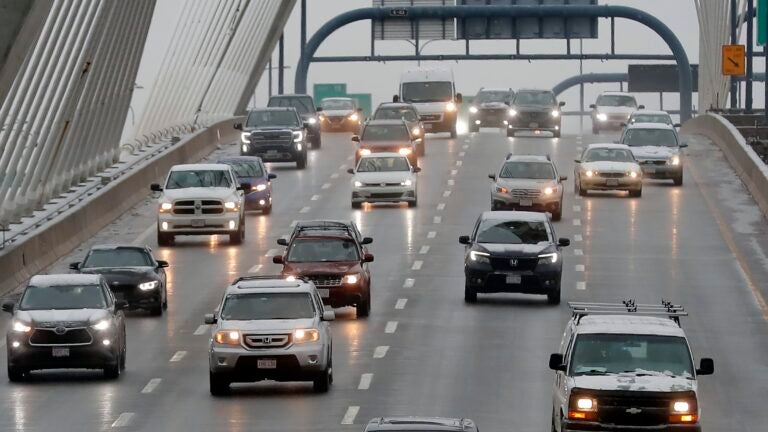
A piece of legislation pending in the State House that seeks to cut emissions by creating a “whole-of-government plan to reduce vehicle miles traveled” is provoking strong opposition from some who see the idea as a potentially costly example of governmental overreach.
The legislation, dubbed the “Freedom to Move Act,” is being pushed by lawmakers who think that simply increasing electric vehicle (EV) usage in Massachusetts is not enough to sufficiently reduce emissions from the transportation sector. Massachusetts officials are attempting to achieve net zero emissions by 2050, and the transportation sector is the largest single source of greenhouse gas emissions in the state.
State Sen. Cynthia Creem, who represents Brookline, Newton, and Wellesley, is the bill’s primary sponsor. While EVs are important, more needs to be done, according to Creem.
“EVs are certainly a major piece of the puzzle, but we should be careful not to rely too heavily on one decarbonizing strategy for the transportation sector,” she said during a hearing last month on the topic. “Now is the time to pursue new strategies, additional strategies for reducing transportation emissions.”
The need for action is now, Creem says, in part because the Trump administration is rolling back emissions standards and withholding funds meant for EV charging stations.
The bill would do three things. It would require the state Department of Transportation to set goals for “reducing the number of statewide driving miles.” Second, it would require that MassDOT’s plans provide a “reasonable pathway” to compliance with emissions limits. Third, the bill would establish an “interagency coordinating council” that would create a plan to reduce vehicle miles traveled and increase access to alternative forms of transportation.
The language of the bill may seem vague, but Creem says that it is intentionally worded to provide the state with “wiggle room.” Its purpose is not to hinder the state with a “precipitative mandate,” but to ensure Massachusetts’ transportation plans broadly “get us where we need to go on climate change and reducing vehicle miles,” she said at the hearing.
Others see it differently. Last month, the watchdog group Massachusetts Fiscal Alliance posted a clip of Creem from the hearing and labeled her proposed policies as “extreme.” The group mocked Creem’s ideas using clips from popular TV shows and said that it is time for her to retire.
It warned that the council created by the bill could impose fines on people that drive “too far.” The language of the bill makes no mention of fines, penalties, or fees. It does say that the council would generally assess potential policies that “may facilitate reductions in vehicle miles traveled.”
The video posted by MassFiscal spread widely on social media and was amplified by some conservative pundits online. State Rep. Mike Connolly, a co-sponsor of the bill, was not happy with the “social media frenzy” and “ignorant characterization” perpetuated by MassFiscal.
“I think the way the Mass Fiscal Alliance and other right wing commentators have portrayed this bill is completely overblown and ignorant and insulting to the bill’s lead sponsor,” he said.
Connolly emphasized that the bill does not set specific limits or establish any “prescriptive formula to punish individual drivers.”
“All it really does is say that we should put the structures in place to consider and refine our policies around vehicle miles traveled,” he added.
Paul Craney, a spokesperson for MassFiscal, said that Connolly was failing to take full ownership of the ideas in the bill.
“I think he would earn more respect if he just defended his positions,” Craney said of Connolly. “They don’t even want to talk about the costs, they don’t want to talk about who’s going to pay for it, and they don’t want to talk about the mechanisms that will be put into place to prevent you from driving.”
When contacted for a follow-up to Craney, Connolly maintained that MassFiscal was misrepresenting the bill, which only seeks to create a “framework” to evaluate many factors associated with transportation and the state’s climate goals.
From a big picture perspective, Craney insists that the goal of becoming net zero by 2050 is a “fantasy” that would be overly expensive for taxpayers and do little to slow climate change. A climate “report card” released by the state earlier this year shows a mixed bag of progress toward the larger goal.
“It’s good to have goals and work around goals, but mandates are painful,” Craney said.
Connolly, for his part, sees achieving net zero by 2050 as a “modest” goal that the state can’t afford to backtrack on now. Those attacking this bill, he said, are urging ignorance in the face of impending climate disaster.
“By attacking this bill so aggressively, its critics are basically telling us to hide our heads in the sand, even as the world continues to burn,” Connolly said.
Get everything you need to know to start your day, delivered right to your inbox every morning.




To comment, please create a screen name in your profile
To comment, please verify your email address
Conversation
This discussion has ended. Please join elsewhere on Boston.com