
Sign up for the Today newsletter
Get everything you need to know to start your day, delivered right to your inbox every morning.
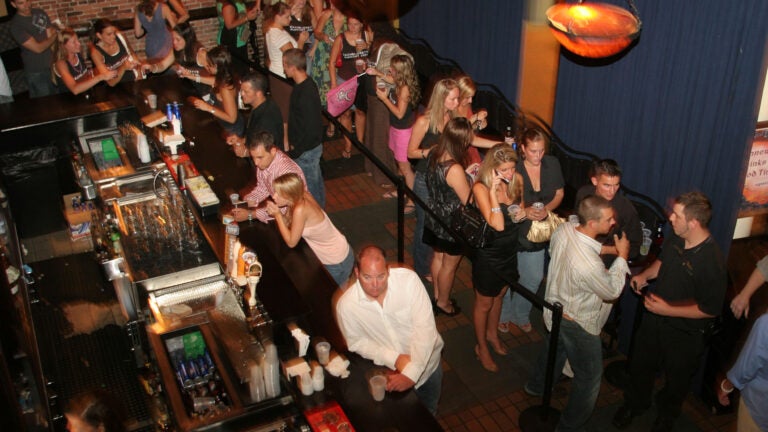
On Thursday, the Massachusetts Senate amended the proposed $61.4 billion budget to allow cities and towns to set their own limits on restaurant and bar liquor licenses.
If passed, this would be a significant shift from the current system, which requires state approval through legislation dating back to the aftermath of Prohibition.
“Local officials understand their communities and local economies better than Beacon Hill does,” Senate President Karen Spilka said in a statement. “By empowering cities and towns to determine their own licensing, we can streamline the approval process and help restaurants continue to serve as the economic and community engines we know they are.”
Under the proposed change, municipalities that want to issue new liquor licenses would need to adopt a local plan, approved by the mayor, city council, or select board, and hold at least one public hearing. They would also be required to notify the Alcoholic Beverages Control Commission (ABCC).
These new licenses would be non-transferable and tied to specific businesses and locations.
While the amendment would shift licensing authority to local governments, the state, through the ABCC, would continue to oversee regulation and enforcement.
Currently, cities and towns must undergo a lengthy and often cumbersome home-rule petition process to request additional licenses from the state Legislature.
The cap is particularly harsh in Boston, where liquor laws date back to 1933. At the time, the Legislature worried that Boston’s majority Irish City Council would allow too many watering holes to open.
Only in the last couple of decades, and after much politicking, have new licenses been added to the cap. Most recently, in 2024, the city successfully petitioned the state for an additional 225 licenses.
The limit on liquor licenses in Boston means it’s almost impossible to get one from the city, even if an operator gets approved for one. Therefore, operators must go to the private market to purchase one, and they can sell for up to $600,000.
The current system has concentrated liquor licenses in wealthier areas like Back Bay and the Seaport, where restaurant groups can afford them. At the same time, neighborhoods like Mattapan and Roxbury have only a few licensed restaurants.
The House and Senate passed different Fiscal Year 2026 budgets. The two chambers must reconcile their bills before sending the governor a final version.
The amendment still faces an uphill battle in the House, where it is unclear whether legislators will keep it.
“By returning control of liquor license decisions to municipalities, we’re giving our cities and towns another tool to support small businesses, revitalize main streets, and streamline the process,” State Sen. Jacob Oliveira said in a statement. “It’s a common-sense step to support economic development across the Commonwealth.”

Get everything you need to know to start your day, delivered right to your inbox every morning.




To comment, please create a screen name in your profile
To comment, please verify your email address
Conversation
This discussion has ended. Please join elsewhere on Boston.com