
Sign up for the Today newsletter
Get everything you need to know to start your day, delivered right to your inbox every morning.
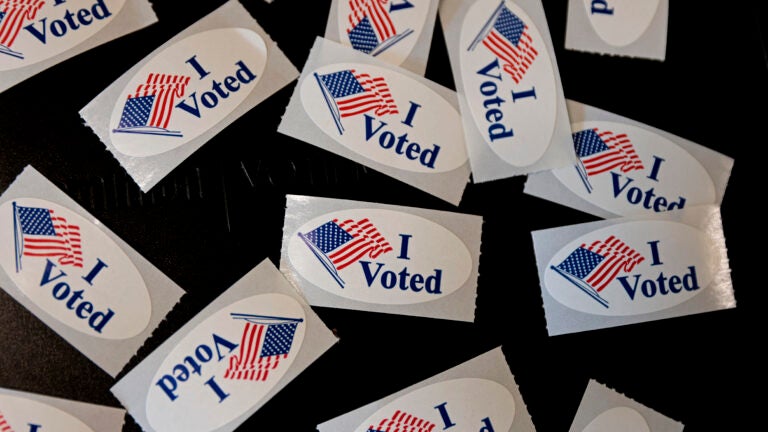
The Boston City Council approved a measure Wednesday that would implement ranked-choice voting in the city’s municipal elections. But despite the support, proponents of ranked-choice voting still have many hurdles to clear before Boston adopts the system.
Ranked-choice voting allows voters to rank candidates in order of preference rather than selecting just a single candidate. Those that receive more than half of the first-choice votes win. If a candidate does not receive more than 50% of votes, then the candidate with the fewest votes is eliminated, and their votes are redistributed to the next-highest ranked candidate on each ballot. The process continues until one candidate earns a majority and is declared the winner.
In multi-winner contests, such as those that determine at-large City Council races, candidates are elected upon reaching a specific threshold. More specifics about how the process would play out in Boston can be found in a committee report filed by Councilor Gabriela Coletta Zapata.
The process may seem complicated at first, but major cities all across the country, from Seattle to New York City, have implemented ranked-choice voting in some capacity. Proponents say that, in practice, it is simple for voters to understand and that it creates an election process that better represents the will of the voters.
The City Council approved a home-rule petition Wednesday by an 8-4 vote. Mayor Michelle Wu plans to sign off on the measure, according to her office. It will then head to Beacon Hill where state lawmakers will weigh in. The governor would have to approve of the measure if it passes through the House and Senate. At that point, the question of implementing ranked-choice voting would be put in front of Boston voters in a ballot referendum.
If the measure clears all those checkpoints, it would likely be implemented in 2028 or 2029, according to Coletta Zapata, who oversaw hearings on the matter.
Council President Ruthzee Louijeune was one of the most outspoken voices in favor of ranked-choice voting. The system, she said, ensures that election winners have the support of the majority of voters.
“This is about making sure that we are building a better democracy by electing candidates who are able to build a broad majority of support, who are not just speaking to their base, who are not just speaking to extremists, but who are doing the work necessary to build broad coalitions and to represent everyone in a district,” Louijeune said.
Ranked-choice voting has been debated in Boston and Massachusetts for years. In 2020, voters had the opportunity to approve of its implementation across the state. The measure ultimately failed, with 51% of voters opposed to the idea, versus 43% who favored it.
But crucially, 62% of voters in Boston approved of ranked-choice voting. This figure is frequently cited by those backing the new measure, who say that it is proof Bostonians are eager to adopt ranked-choice voting.
Not everyone is onboard: Councilors John FitzGerald, Ed Flynn, Erin Murphy, and Sharon Durkan voted against the measure Wednesday. Durkan, an outspoken ally of Wu who often votes alongside the council’s many progressives, instead chose to align with the body’s three more moderate members. The measure has no chance of reaching Gov. Healey’s desk, she said bluntly.
“This has no future at the State House,” Durkan said.
Durkan stressed that ranked-choice voting could work for federal offices, but said that she is specifically against ranked-choice voting in municipal elections for bodies that have “multi-candidate offices and multi-member at-large characteristics concurrently.” The Boston City Council is made up of 13 members: four at-large councilors and nine district-specific councilors.
Some detractors worry that ranked-choice voting overly complicates the electoral process, potentially disenfranchising marginalized groups. Councilor Julia Mejia, who spoke in support of the measure, said that the opposite is true.
“There is a narrative that this particular effort is rooted in white, progressive, liberal standards. But in reality when we think about who stands to benefit most, I want to uplift the people of color who have often been marginalized and disenfranchised when it comes to our vote,” she said.
Complicating matters further is the fact that Secretary of State William Galvin is currently overseeing an overhaul of Boston’s election department. On Election Day last November, precincts across the city ran low or completely out of ballots, forcing police cruisers to rush around Boston delivering more. An investigator appointed by Galvin found that the city’s errors resulted in voters “experiencing needless and unacceptable delays” and, in some instances, disenfranchisement.
Officials within the department have told councilors that they would be able to implement ranked-choice voting if they are directed to do so. But ranked-choice opponents like Flynn say that this is an unnecessary distraction from the important work of improving the election department.
The effort to push ranked-choice voting is also politically motivated, he said.
“I don’t want to set us up for failure,” Flynn said. “That’s what we’re doing if we vote today to implement ranked-choice voting. Yes, there’s an election coming up. Yes, people want to support ranked-choice voting, it helps them politically. I understand that. But at some point we have to do what’s best for the residents of Boston.”
Get everything you need to know to start your day, delivered right to your inbox every morning.




To comment, please create a screen name in your profile
To comment, please verify your email address
Conversation
This discussion has ended. Please join elsewhere on Boston.com