
Sign up for the Today newsletter
Get everything you need to know to start your day, delivered right to your inbox every morning.
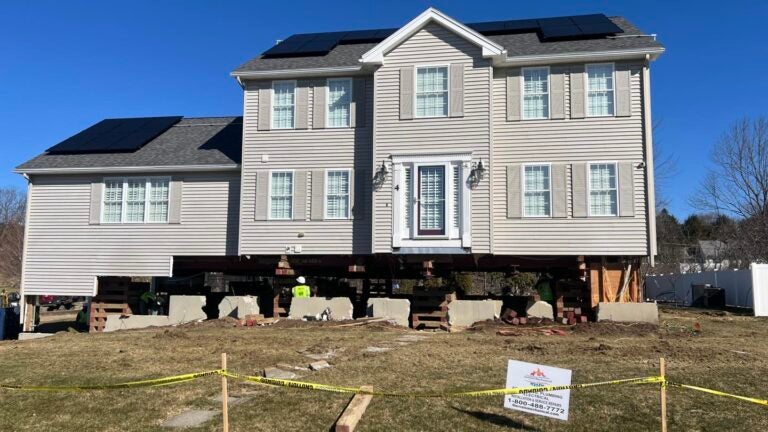
After the Massachusetts House failed to pass a budget amendment aimed at helping homeowners with crumbling concrete foundations, many affected residents are left devastated, uncertain if relief will ever come.
Earlier this week, the Massachusetts House rejected two amendments — one that would have created a Crumbling Concrete Assistance Fund with $100 million in seed money and a working group, and another that proposed the same plan but without any funding.
However, a third amendment to continue foundation testing and engineer inspections, with a $50,000 allocation, was included in the House budget.
“What it boils down to is the lack of empathy that we are getting from the House,” said state Sen. Peter Durant, who represents the Worcester and Hampshire districts and has helped resolve the issue.
Durant challenged lawmakers to look at the affected homeowners in the face and “tell them they’re not worth your time.”
He continued, “These are real stories, they are real people, affecting thousands of people, and it will affect thousands more.”
A 2019 State House report found that thousands of Massachusetts homes may have crumbling foundations due to pyrrhotite, a mineral that causes concrete to break down over time. The damage—often invisible for years—can lead to web-like cracks, flaking walls, and costly repairs.
The only fix is a complete foundation replacement, estimated at $150,000 to $250,000 per home.
Homes in 43 towns in the state reported damage from the mineral, and the number is growing.
“The failure of our state to face this crisis for seven years now is wearing on people,” said Michelle Loglisci, one of the founders of Massachusetts Residents Against Crumbling Foundations, who revisited the State House this week advocating for help. “People have died waiting.”
As legislators question why more people haven’t come forward, Loglisci says, it’s because many are afraid.
Once one acknowledges that their house is affected, their home and all the equity tied up in it become worthless, as the value plummets and insurance companies fail to cover the cost of repairs.
“It’s such a complicated, complex crisis,” said Loglisci. “How they can’t have done something by now is beyond me.”
It isn’t the first time legislation failed to pass. Legislation to help solve this problem has stalled twice before. At the end of October, homeowners took a different approach — pleading with the governor to use her executive power to help.
But several months later, the response has been “crickets,” said Durant.
Gov. Maura Healey’s office did not immediately respond to comment on this issue.
The only hope left for homeowners is a bill filed by Rep. Brian Ashe earlier this year. The bill is asking for essentially the same thing as the amendments, to create a fund and a working group to address this problem. It is now waiting to come out of the Joint Committee on Environment and Natural Resources for a vote.
Ashe, who represents Longmeadow, Hampden, and Monson, said in a statement that he is “deeply disappointed that legislative language to address the issues was not included in this year’s House budget.”
However, Ashe said, “There is still more work to do,” and he remains optimistic that a resolution in the bills will come soon.
“I’m frustrated,” said Durant, who says he is not giving up on the issue. “I can understand why these folks are getting furious.”

Get everything you need to know to start your day, delivered right to your inbox every morning.



To comment, please create a screen name in your profile
To comment, please verify your email address
Conversation
This discussion has ended. Please join elsewhere on Boston.com