
Sign up for the Today newsletter
Get everything you need to know to start your day, delivered right to your inbox every morning.
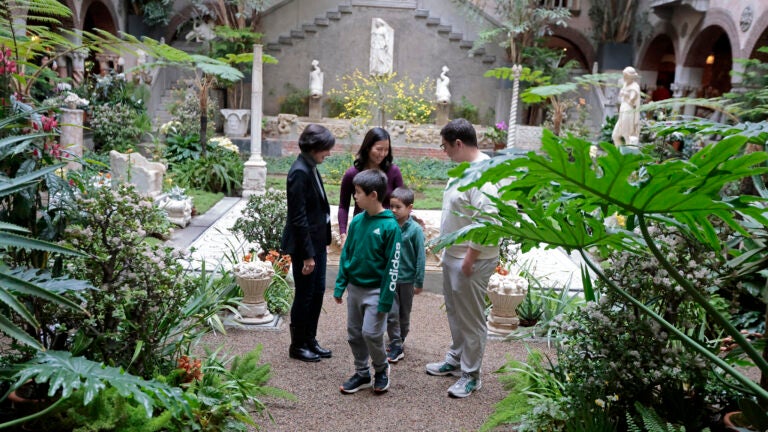
Some Boston City Council members are questioning the transparency of the Wu administration after it became clear that a handful of local museums were allowed to forgo their contributions to the city’s Payment of Lieu of Tax (PILOT) program. All six of those institutions are participants in the Boston Family Days program, a city-led effort that offers free admission to cultural institutions for school-aged children and their families.
Last year, Mayor Michelle Wu announced a new pilot program to offer free admission to Boston Public Schools students at a handful of museums and other cultural institutions. Soon after, councilors Ed Flynn and Erin Murphy led a push to expand the program to include young people who live in Boston but don’t attend the city’s public schools.
Wu resisted that initial effort, arguing it was not a good idea to change the parameters during the program’s pilot phase. By December, she announced that the program would indeed expand.
The city government relies heavily on property taxes, but Boston is home to a plethora of hospitals, schools, and cultural institutions that own large swaths of tax-exempt real estate. Boston’s PILOT program is a voluntary initiative through which these entities are asked to make contributions to the city based on tax-exempt property values. Institutions can make some of these contributions through community benefits instead of direct cash payments.
Most of these contributions come from the “big eds and meds,” as Councilor Liz Breadon put it during a City Council meeting Wednesday. In Fiscal Year 2023, for example, the city requested almost $70 million from educational institutions, almost $55 million from medical institutions, and only $4.3 million from cultural institutions.
Wu advocated in the past for the removal of cultural institutions from PILOT altogether. Breadon, who is the chair of the City Council committee that oversees the PILOT program, said that there is an ongoing effort to rethink the program in light of these lopsided numbers.
Recently the Wu administration released figures about PILOT contributions made during Fiscal Year 2024. The Boston Children’s Museum, the Institute of Contemporary Art, the Isabella Stewart Gardner Museum, the Museum of Fine Arts, the Museum of Science, and the New England Aquarium were all removed from the ledger. They are also all participants in the free-admissions program.
A footnote says that the city “entered into an alternative system” with those institutions “to report on their institution’s ongoing and expanded community benefits and other mission-related programs for Boston residents.”
In Fiscal Year 2023, those six institutions were responsible for just $102,505 in cash contributions to the city. The MFA paid $82,505 and the Gardner Museum contributed $20,000. None of the other four made cash contributions.
“To deliver the greatest impact and benefit for Boston families, the City is prioritizing expanded museum access and programming for Boston residents,” a city spokesperson said in a statement.
The city is focusing on growing “successful community access programs” like Boston Family Days, the city spokesperson said.
“This approach will deliver more value and better experiences for all Bostonians. In many other major cities, cultural institutions receive significant annual funding from city or state government to carry out their operations as they are seen as a critical part of the public infrastructure of a world-class city.
“Boston has been an outlier in doing the opposite in previous years—not providing public operating support and instead asking the museums and cultural institutions for cash payments to fund city government. Mayor Wu has been a champion of the arts as necessary public infrastructure and believes that every child growing up in Boston should have access,” the spokesperson said.
The decision to forgo PILOT payments from the six museums was apparently made by the Wu administration without input from the entire City Council. Flynn and Murphy filed a hearing order this week to learn more about the topic. Both are proponents of the free-admissions program, but expressed concern about the lack of transparency surrounding the decision to forgo PILOT contributions.
It was the subject of a discussion during Wednesday’s meeting.
“This lack of transparency undermines our collective responsibility to make informed fiscal decisions,” Murphy said.
Councilor Sharon Durkan defended the administration, saying that the arrangement is “an ideal solution.”
Durkan also took time to criticize Flynn and Murphy for leading a “politically motivated charge” against the administration’s initial free-admissions pilot before it was expanded. A conversation about the types of in-kind benefits associated with PILOT is worth having, Durkan said, but colleagues should avoid making it a forum for political attacks.
“Let’s keep it positive, that’s what this is all about,” Durkan said.
Flynn said that he called for a hearing so that councilors can better understand how forgoing those payments will impact city services and the budget.
He also defended himself from Durkan, saying that the effort to immediately expand the free-admissions program was “not about politics.” Instead, Flynn said, many of the students in his district attend classes outside the city through the METCO program or attend private schools. He took issue with the fact that they were excluded from the first iteration of the free-admissions program.
“It’s not about casting blame on anybody, but it’s about working together. The last thing on my mind when I wanted to work with Councilor Murphy on this was about the politics of it,” he said.
Breadon said that the Wu administration handled the rollout of the free-admissions program and its subsequent expansion well. She also acknowledged that it is a “difficult time” to talk about the specifics of PILOT contributions due to the fact that the Trump administration is targeting many of these institutions.
“In this moment of crisis, we stand shoulder-to-shoulder with our nonprofits and say ‘hands off.’ They do incredible work, and we do expect to have some voluntary contributions in lieu of taxes from them, but in this moment we have to find some finesse and support everyone to keep these vital engines of our economy going in the face of such an all-out assault on them,” Breadon said.
Councilors Breadon, Julia Mejia, and Enrique Pepén added their names to Flynn and Murphy’s hearing order. It was referred to a committee and a hearing will be scheduled on the topic.
Get everything you need to know to start your day, delivered right to your inbox every morning.



To comment, please create a screen name in your profile
To comment, please verify your email address
Conversation
This discussion has ended. Please join elsewhere on Boston.com