
Harvard rejects Trump administration’s demands with federal funding at risk
The school is the first to push back against the government’s efforts to force change at elite universities.
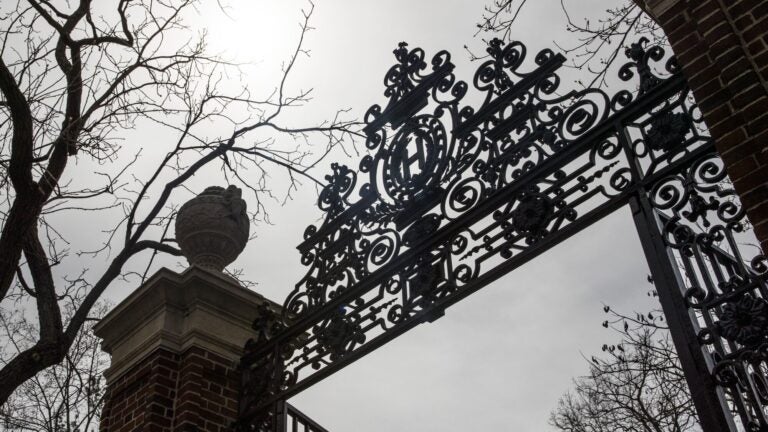
With billions of dollars in federal funding at risk, Harvard University officials on Monday rejected Trump administration demands to make sweeping changes to its governance, admissions and hiring practices.
Harvard will continue to work to combat antisemitism, and “Harvard remains open to dialogue about what the university has done, and is planning to do, to improve the experience of every member of its community,” two attorneys representing the school wrote in a letter Monday, but the school “is not prepared to agree to demands that go beyond the lawful authority of this or any administration.”
The school is the first to push back against the government’s efforts to force change at elite universities.
And it has the most funding potentially at stake: The administration recently announced that it was reviewing $9 billion in contracts and grants to Harvard and its affiliates.
Billions of dollars in federal funding have been threatened at several universities in recent weeks, as the Trump administration has moved to aggressively compel higher education to change. Some of the efforts are directed at combating campus antisemitism, with officials demanding that schools do more to ensure that Jewish students feel safe. Last year, intense protests over the Israel-Gaza war fueled concerns that some of the language and behavior was threatening to Jewish students, and that some universities were not doing enough to comply with federal civil rights law protecting students.
Some efforts targeting universities have been tied to other administration priorities, such as ending diversity, equity and inclusion programs and preventing transgender athletes from competing on women’s teams.
Columbia University, the center of pro-Palestinian protests last year, was the first target, with a $400 million cut in federal funding last month that included the termination of hundreds of research grants. Columbia officials have said they are “in active dialogue” with the administration in an effort to get the money restored.
That stance has brought criticism from some, including two unions, the American Association of University Professors and the American Federation of Teachers, which filed a lawsuit last month alleging that the administration had violated the First Amendment and civil rights law by unilaterally canceling the research funding at Columbia.
Others, such as some alumni, countered that the school, like many research universities, is so dependent on federal dollars that it must comply – and that the school had already been making changes in alignment with the administration’s demands.
Columbia’s funding has not been restored.
At Harvard, many have called for the university to resist. In a recent editorial, the Harvard Crimson urged, “Harvard should work with other universities to push back, leading the fight against the Trump administration’s relentless attacks on higher education.”
On Friday, the AAUP and Harvard’s chapter of the group filed a lawsuit seeking to block the Trump administration “from demanding that Harvard University restrict speech and restructure its core operations” or face funding cuts.
“The First Amendment does not permit government officials to use the power of their office to silence critics and suppress speech they don’t like,” Andrew Manuel Crespo, a professor of law at Harvard and general counsel of the AAUP-Harvard Faculty Chapter, said in a written statement. “Harvard faculty have the constitutional right to speak, teach, and conduct research without fearing that the government will retaliate against their viewpoints by canceling grants.”
The Trump administration announced last month that it would scrutinize billions in federal funding to Harvard, with a multiagency task force formed to investigate complaints of discrimination and harassment of Jewish people on campuses nationally.
The Joint Task Force to Combat Anti-Semitism announced that it would review more than $255 million in contracts between the federal government, Harvard and its affiliates, which include local hospitals whose physicians teach at Harvard Medical School, as well as more than $8.7 billion in multiyear grant commitments to Harvard and its affiliates to ensure the school is in compliance with federal regulations.
An April 3 letter from officials at the departments of Education and Health and Human Services and the General Services Administration outlined a series of demands to Harvard, such as shuttering diversity, equity and inclusion programs and review of and changes to programs and departments that “fuel antisemitic harassment,” and “end ideological capture.” It called for governance and leadership reforms.





To comment, please create a screen name in your profile
To comment, please verify your email address
Conversation
This discussion has ended. Please join elsewhere on Boston.com