
Sign up for the Today newsletter
Get everything you need to know to start your day, delivered right to your inbox every morning.
Federal immigration authorities announced hundreds of arrests in Greater Boston earlier this week, including some whose detentions were described as “collateral arrests” by President Donald Trump‘s “border czar.”
What happens to the people, some without criminal records, who are detained by federal immigration agents in Massachusetts?
Homan threatened to bring “hell” to Boston after critiquing of the city’s “sanctuary” policies, which limit local police’s ability to cooperate with federal immigration authorities. (Boston Mayor Michelle Wu recently testified on the topic to Congress.)
U.S. Immigration and Customs Enforcement agents then arrested at least 370 people as part of an “enhanced operation,” the agency announced Monday. The next day, Border czar Tom Homan called some of ICE’s arrests in Greater Boston “collateral” and said others were “criminals.”
Being present in the United States without legal status is not a crime, but a civil violation. Illegally crossing the border, or unauthorized entry, is a federal crime, and violating a previous deportation order is also a crime.
As Boston faces increased federal scrutiny for its “sanctuary” policies around immigration enforcement, the state overall has seen one of the largest surges of unauthorized immigration in the country. Massachusetts was one of only six states that “showed significant growth” in its population of unauthorized immigrants from 2019 to 2022, according to Pew Research Center, with an estimated 50,000 new arrivals.
The state had the largest year-to-year population increase since 1964 last year, mostly due to an influx of international populations.
If an undocumented person is detained by ICE, they will most likely begin to face deportation proceedings. As Homan noted, sometimes people arrested by ICE don’t have criminal records.
They might just be in the wrong place at the wrong time, Sarang Sekhavat, the chief of staff with the Massachusetts Immigrant and Refugee Advocacy Coalition, or MIRA.
“They’re just going after everybody,” Sekhavat said. ICE agents target “one person and then pick up anybody around them that you can, and oftentimes they’re not even getting that one person.”
After Mahmoud Khalil, a leading pro-Palestinian activist at Columbia University, was arrested earlier this month in Manhattan by federal immigration agents, his pregnant wife and their attorney couldn’t find him.
A lawyer for Rumeysa Ozturk, a graduate student at Tufts University who was arrested by ICE agents Tuesday ostensibly for her pro-Palestine activities, said Wednesday afternoon that she had not been informed about where her client is being held.
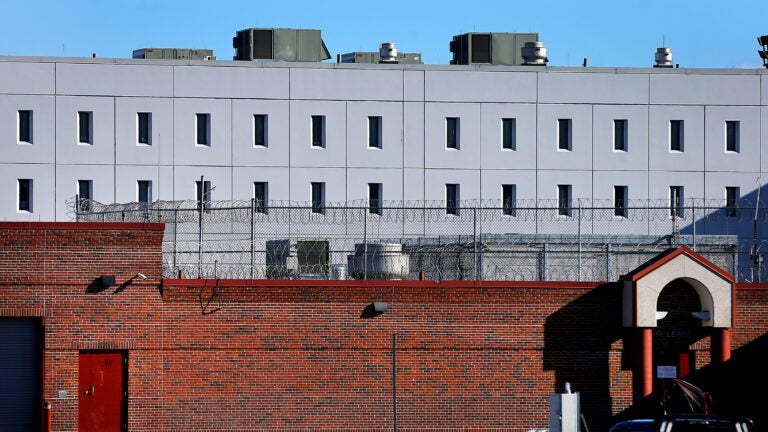
Moving people detained by ICE is common, according to immigrant rights advocates. Immigrants detained in Massachusetts can only be held in Plymouth County Correctional Facility, the only remaining facility with an ICE contract statewide.
ICE initially told family members of Khalil, a legal permanent resident, that he was at a detention facility in New Jersey. His family and attorney couldn’t locate him for multiple days, until the AP reported that he was sent to Louisiana.
Transferring people in ICE detention could be due to bed availability and jurisdiction matters, one immigrant rights advocate said. But, transfers can also sow chaos and fear.
In Trump’s first weeks in office, his administration sent 40 men in ICE custody to Guantánamo Bay. The men were returned within weeks, which the advocate pointed to as a fear mongering tactic.
Plymouth County is used as a transfer center for ICE detainees, according to one advocate, who said local individuals detained could stay in Massachusetts for just days or weeks. Sekhavat pointed to the state’s rapid transfer of ICE detainees as difficult for the loved ones of those arrested.
“Obviously that’s going to cause a lot of stress on families,” Sekhavat said about rapid transfers, “and, you’re also talking about just simply the fact that they don’t have that family support.”
Last month, more than 100 people in ICE custody were moved from Plymouth County to a facility in New Mexico, several advocates told The Boston Globe. A spokesperson for the Plymouth County Sheriff’s Office did not return a request for comment, but told the Globe that the sheriff, who operates the facility, doesn’t track ICE transfers.
Individuals can also be found through an inmate tracker online, but one advocate said that can take up to 72 hours to be updated.
“It’s not like they’re notified when someone gets transferred. ICE just transfers them, and then it’s up to the family to just even figure out where their loved ones are, and that can take some time,” Sekhavat said. “There’s no one anymore to visit them in detention, and also if they already have a lawyer, and they get transferred, well, how are they going to work easily with that lawyer?”
Deportation proceedings begin with a master calendar hearing, or MCH, which includes dozens of other people also facing deportation and is essentially the pleading stage before an individual hearing. Noncitizens can ask for more time, file for asylum, or submit paperwork for certain programs (such as the Temporary Protected Status program that Trump recently cut), according to an ICE handout.
Without a lawyer, the proceedings can be almost impossible to navigate, Sekhavat said. Because immigration offenses are classified as civil, immigrants facing deportation are not guaranteed legal representation if they can’t provide their own lawyer.
“People don’t often have representation. They don’t even know what options they might have or how to go about doing any of what they’re trying to do,” Sekhavat said. “There are … just very, very limited options for people, frankly, once they’re already in removal proceedings.”
ICE told Boston.com that detainees have access to a facility law library for a minimum of five hours each week. A spokesperson did not say whether legal materials are available in multiple languages.
Marlborough man Lucas Dos Santos Amaral, originally from Brazil, was detained with an overstayed visa but no criminal record, he told GBH News, after he was randomly pulled over by federal agents apparently looking for someone else.
Dos Santos Amaral spent three weeks in the Plymouth County detention center before his transfer to Texas, the station reported. In a “very rare move,” he was released on bond.
When asked about Kahlil’s detention and the practice of transferring detainees, an agency spokesperson said people in ICE custody have protections including being allowed to be represented by an attorney, being allowed to contest any charges of removal, and opportunities to present and examine any evidence.
“As part of its routine operations, ICE arrests aliens who commit crimes and other individuals who have violated our nation’s immigration laws,” the spokesperson said. “All aliens in violation of U.S. immigration law may be subject to arrest, detention and, if found removable by final order, removal from the United States, regardless of nationality.”

Get everything you need to know to start your day, delivered right to your inbox every morning.




To comment, please create a screen name in your profile
To comment, please verify your email address
Conversation
This discussion has ended. Please join elsewhere on Boston.com