
Sign up for the Today newsletter
Get everything you need to know to start your day, delivered right to your inbox every morning.
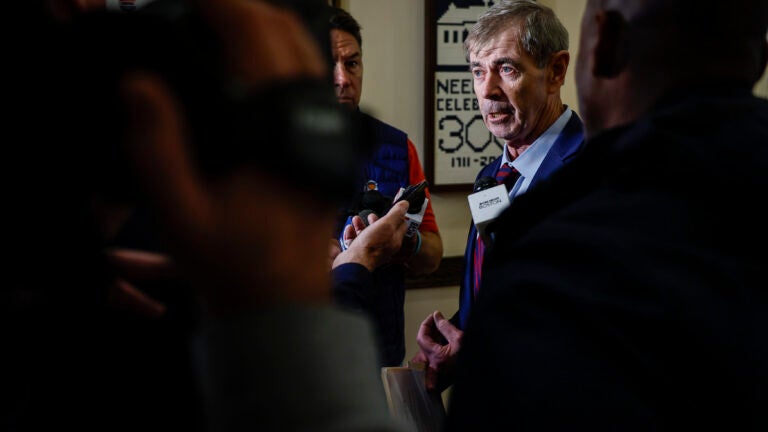
Secretary of State William Galvin ordered an “overhaul” of the Boston Election Commission’s practices after an investigation found that the department failed to provide enough ballots to polling places and exhibited serious communications issues during last November’s election.
Both the mayoral election this fall and the state elections next year will be under the microscope. Galvin is appointing a designee to oversee the process through the end of 2026, and the order could be extended if necessary.
Galvin opened the investigation shortly after the Nov. 5 election. That day turned chaotic when precincts in Hyde Park, Roslindale, and West Roxbury ran low or completely out of ballots. Police cruisers had to rush around the city to deliver more ballots, forcing voters to wait in long lines and some to abandon the polls altogether. Boston-based advocacy group Lawyers for Civil Rights called the situation a “colossal planning failure” and initially blamed Galvin’s office.
An investigator assigned by Galvin determined that Boston did not deliver enough ballots and therefore violated state law.
“This resulted in voters in the City experiencing needless and unacceptable delays in voting and, in some cases, disfranchisement because the voter was unable to wait,” the investigator, Rebecca Murray, wrote in a report after concluding her work.
The city and Galvin’s office are working together to address the problems, officials said.
“The City welcomes the Secretary of State’s order as a tool to restore full confidence in the Elections Department,” a spokesperson for Mayor Michelle Wu said in a statement.
“Over the last several months, the City worked closely with the Secretary of State’s office to investigate the operational missteps that occurred during the 2024 General Election and identify corrective actions and accountability measures,” the spokesperson continued. “The City suggested specific actions to address lapses and worked with the Secretary of State’s office to finalize the language of an agreement codifying these steps, which are now reflected in the order. The City has already begun to implement these steps for the upcoming municipal election to ensure that ballot shortages and the related problems never happen again.”
The city signed a contract with The Elections Group to help review operations, and is undertaking a “broader review” to modernize the elections department.
The secretary of state’s office delivers ballots to individual cities and towns, and local election officials then are responsible for distributing enough ballots to each precinct. Galvin’s office delivered more than 750,000 ballots to Boston officials. But not enough ballots were delivered due to a “calculation error,” according to the city and Murray’s report.
On Election Day, staffers and volunteers are directed to call each precinct periodically to get updates on voter turnout and other potential issues. The first call happened at 9 a.m. If the city compared the numbers received during this call to the number of ballots sent, the “impending ballot issue” could have been recognized and averted. Instead, workers at multiple precincts began calling the city around 11:30 a.m. to report potential ballot shortages.
Murray also found problems with the city’s communications systems. There were four phone lines set up for poll workers to request more ballots and report voting machine issues. The phone lines became overwhelmed to the point where the “vast majority” of calls were not connecting. The phone lines for machine breakdown and ballot issues received about 1,690 calls on Election Day, of which 1,205 were not connected.
Each polling location is also provided with a cell phone, according to the report, but the city did not indicate whether or how they were used on Election Day.
Poll workers began calling Galvin’s office directly later in the day as ballots dwindled. Galvin’s office also tried unsuccessfully to contact Boston’s elections department before sending a representative to assess the problems in person. The city’s election department then made the decision to request help from BPD in delivering all the remaining ballots.
Finally, Murray determined that election workers received insufficient training, leaving them without enough knowledge on how to handle ballot shortages and voting machine issues.
Galvin ordered the city’s election department to develop comprehensive plans for addressing these issues before, during, and after upcoming elections. These plans should include extra lines of communication, new training programs, and more staff members, Galvin wrote. A designee will review the plans, monitor their implementation, and report back to Galvin.
Boston City Council debated recommending the election department be placed under receivership last November. But the majority of councilors did not get on board, with some saying such a recommendation would have been premature at the time.
Councilor Ed Flynn, who pushed for receivership last year, said on social media that he supported Galvin’s decision, calling it an “important first step for Boston to regain trust that was lost from the failed Nov 2024 Election Day operations & management.”
Boston elections report by Ross Cristantiello on Scribd
Get everything you need to know to start your day, delivered right to your inbox every morning.



To comment, please create a screen name in your profile
To comment, please verify your email address
Conversation
This discussion has ended. Please join elsewhere on Boston.com