
Sign up for the Today newsletter
Get everything you need to know to start your day, delivered right to your inbox every morning.
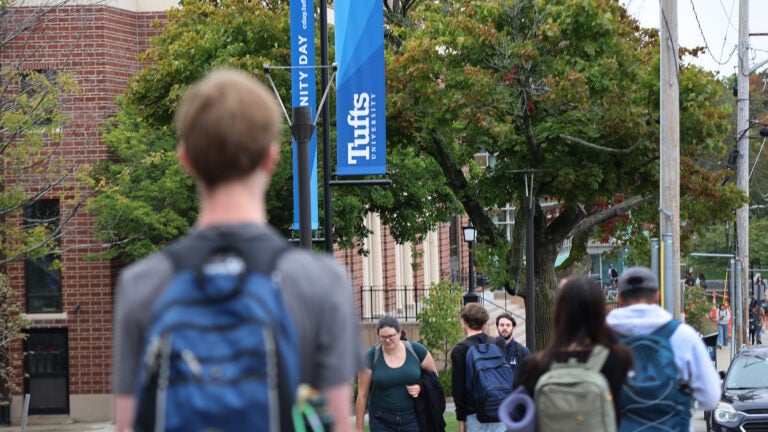
After more than 50 Medford residents signed a letter to the City’s Community Development Board opposing the height of a proposed Tufts University residence hall, the Board will vote for a second time Wednesday, having agreed to reconsider the vote during last month’s meeting.
The case was first continued from a CDB meeting on Dec. 18 to two meetings later on Jan. 15, when it was expected to come to a conclusion. The residence hall Tufts has proposed would sit on Boston Avenue and be 10 stories high, which is what neighbors in the Medford Hillsides area say they take issue with. The letter, sent to the CDB ahead of the December meeting, outlined concerns over light and sound pollution, traffic and transportation impacts, and pedestrian and cyclist safety.
The coalition of neighbors emphasized that they are not opposed to the project itself, but that the Board should not approve the current proposal with the 10-story plan. When Tufts first announced the new residence hall more than two years ago, it said the eventual building would be only seven stories tall.
“The addition of three floors to the building design is directly connected and consequential to the introduction of a for-profit development partner, who will continue to manage and profit from this project for years to come, while the neighborhood bears the impact of the oversized building,” the neighbors wrote in their letter.
They asked the CDB to consider whether this project is justly protected by the Dover Amendment, the Massachusetts law that allows buildings for educational, agricultural, and religious uses to be exempt from zoning restrictions. At its meeting earlier this month, the plan was discussed for two hours before a final answer to that question was ultimately pushed off again.
The Board deliberated about the project and the applicability of Dover before a motion for the Board to vote on whether they consider this building to be protected under Dover, and if so, whether the conditions were acceptable, according to Jeremy Martin, one of the Medford residents who signed the letter and has been part of the push for the Board to reconsider.
The motion needed four affirmative votes, but only received two.
“During the vote, it became clear the Board doesn’t support it,” Martin said. “And as the attorney and city staff asked board members who voted ‘no’ to explain their position, it seemed like the board felt pressured to reconsider the vote.”
The City of Medford did not directly answer questions about whether it is pressuring the CDB to vote yes.
“As Tufts has an application for site plan approval pending at this time before the Community Development Board, which is an independent public body, the City will not be commenting further,” Steve Smirti, Mayor Breanna Lungo-Koehn’s director of communications, said in a statement to Boston.com.
A motion was made to reconsider the vote, which everyone agreed to after some initial confusion about whether the motion was to revote. Members of the CDB who abstained or voted no on the proposal voted the same way they did previously.
“As best as I can tell, it really comes down to trying to avoid a lawsuit or a fight with Tufts through an appeal,” Martin said, who added that he believes Medford is “very averse to getting sued by Tufts.”
Tufts maintained it is working in collaboration with the Community Development Board and with the community. It has had four CDB hearings, hosted three community meetings, and has met with “neighbors, government officials, and community partners” over the last seven months, said Patrick Collins, executive director of media relations for the university.
He called it “the most comprehensive approval process that the university has participated in [in] the last decade.”
The university agreed to 25 conditions on the project that include a university-funded shuttle service that would go back and forth between Tufts’ Medford campus and Medford Square and would be free and open to the public. It has also committed to increasing the tree canopy and adding new sidewalks on both sides of Boston Avenue with new crosswalks, retail options, and a BlueBike station, which Collins said would make the street “greener, more walkable, and more accessible.”
The project is expected to generate $2 million in permitting fees for Medford and an additional $500,000 for the city’s Affordable Housing Trust. The university has also agreed to provide an additional $500,000 for a “neighborhood improvement fund,” Collins said.
But, the building’s height is not up for discussion.
“To build on a smaller scale than this would make each of the apartments unaffordably expensive for our students and fail to alleviate the housing shortage in Medford for working families,” said Collins, who noted that the 677 students the proposed residence hall would house will free up Medford apartments.
“A smaller project would reduce the number of students that could be brought onto campus,” he said.
Martin said that while Medford seems concerned over a potential lawsuit or appeal from Tufts, in the event that the plan goes through, he and other neighbors may consider moving forward with the appeal process.
“I think what the City may be overlooking is that Tufts are not the only ones who can appeal the decision,” Martin said.
Get everything you need to know to start your day, delivered right to your inbox every morning.





To comment, please create a screen name in your profile
To comment, please verify your email address
Conversation
This discussion has ended. Please join elsewhere on Boston.com