
Sign up for the Today newsletter
Get everything you need to know to start your day, delivered right to your inbox every morning.
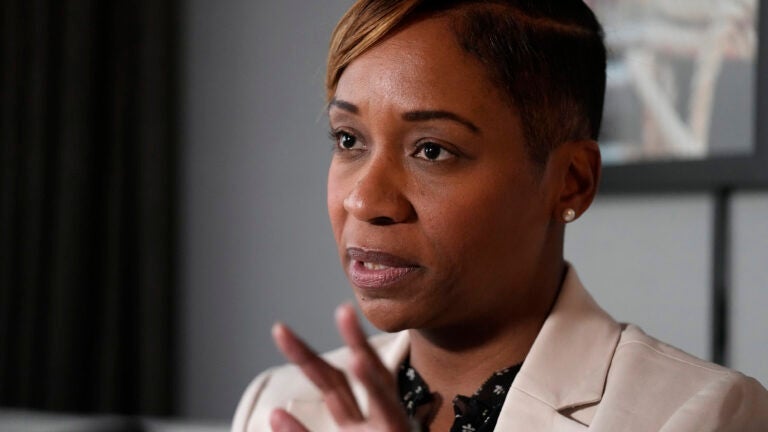
Massachusetts Attorney General Andrea Campbell announced Thursday the release of a cell phone and social media toolkit aimed to help regulate student phone use and inform policies across the Commonwealth.
The “Cell Phones and Social Media in Schools Toolkit” was developed by the AG’s office in collaboration with the Shah Family Foundation. Campbell introduced it to educators at the mid-winter meeting of the Massachusetts Association of School Superintendents.
The toolkit’s introduction reports that 72% of high school teachers cite cell phone use as a “major problem” in classrooms, and that more than one third of teenagers ages 13 to 17 report using social media “almost constantly.”
It outlines three kinds of cellphone policies districts can choose. “Bell-to-bell” requires students to store their phones in a secure location upon entering the school building and not access them until the end of the day; “off and away” policies mean students must have phones powered off and stored out of sight for the duration of the school day but can carry them; and a “limited use” policy allows students to use their phones during designated times and in specific areas such as lunch or passing periods, though they must be powered off and out of sight during class time.
The toolkit explains the benefits and drawbacks of each policy, as well as common parent concerns and age group considerations. “Off and away” policies are recommended only at the middle and high school levels and “limited use” policies only at the high school level.
It also cites examples of districts across Massachusetts that have put each kind of policy in place. Holyoke Middle Schools and High School, Brockton High School, and Pioneer Valley School District are phone-free from “bell-to-bell” policies, Brookline Public Schools and Mount Greylock Regional High School use “off and away,” and Lowell High School and Worcester Public Schools utilize a “limited use” model.
The toolkit includes a section on establishing community norms that effectively support these policies, and another on integrating digital media literacy into curriculum.
“Together, we can create communities where children and youth are healthy, safe, and thriving,” it says in its conclusion.
Though the toolkit does not include any mandates or requirements for districts, its release came shortly after Campbell introduced legislation that would ban cellphones and other electronic devices entirely during school hours.
The Safe Technology Use and Distraction-Free Education Youth Act would require all public schools to develop formal policies around cellphone use that prevent students from accessing their phones during the day.
“There’s no statewide policy, there’s no statewide standard, there’s no statewide template,” Campbell said at the meeting. “The STUDY Act looks to change that.”
Get everything you need to know to start your day, delivered right to your inbox every morning.





To comment, please create a screen name in your profile
To comment, please verify your email address
Conversation
This discussion has ended. Please join elsewhere on Boston.com