
Sign up for the Today newsletter
Get everything you need to know to start your day, delivered right to your inbox every morning.
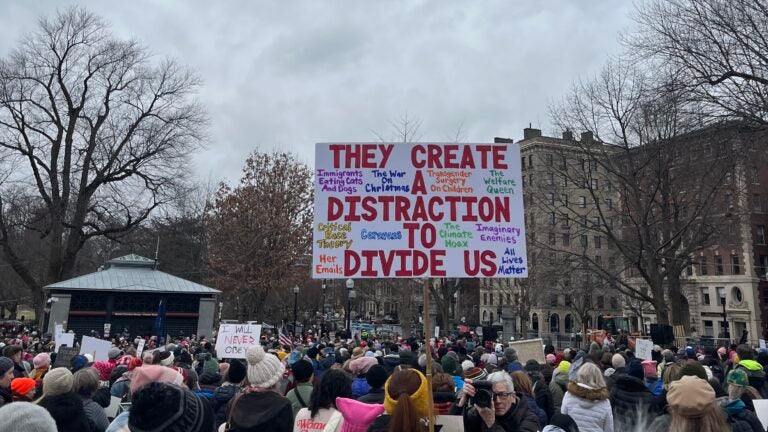
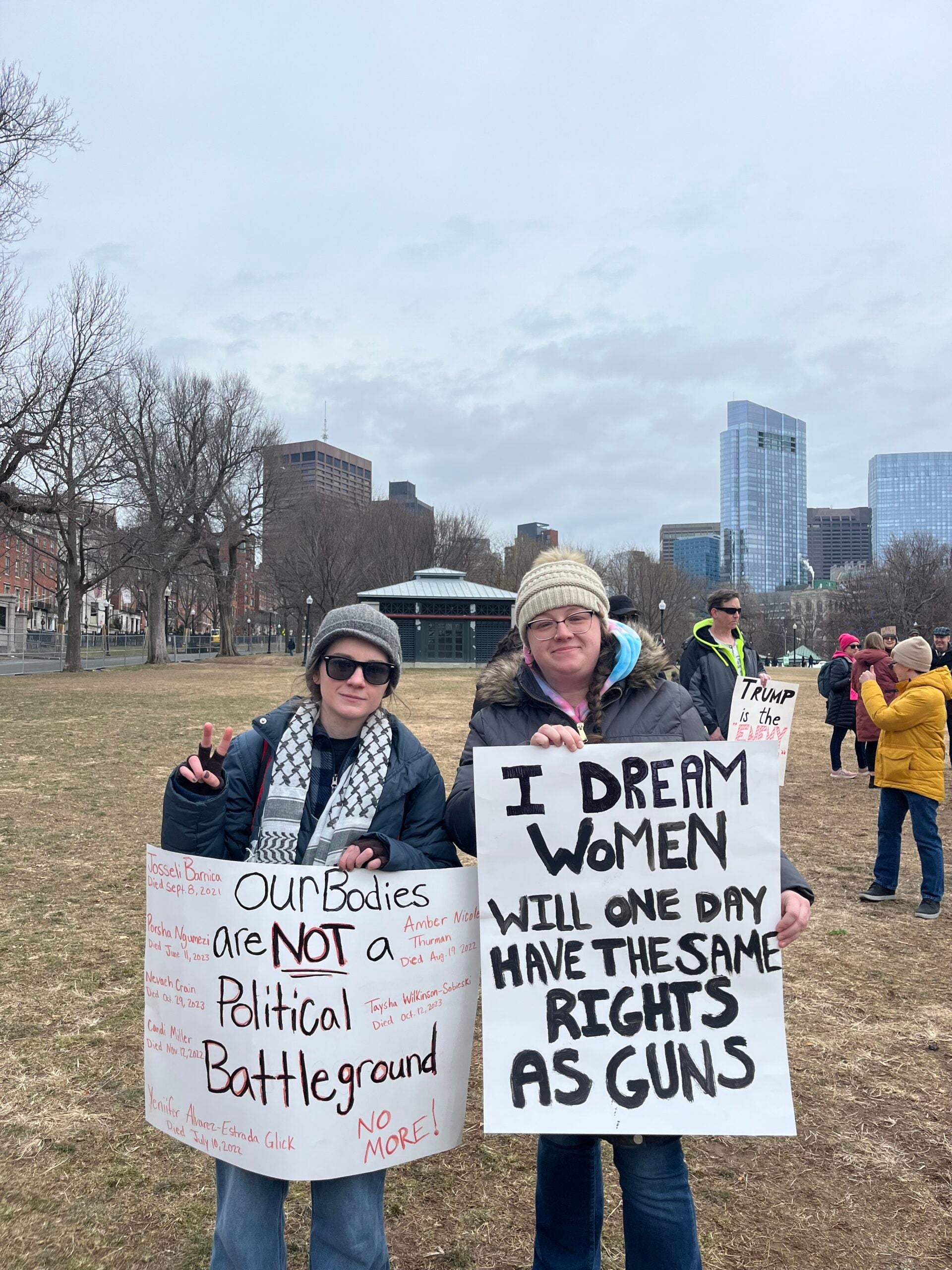
“I dream women will one day have the same rights as guns.”
“Only weak men fear strong women.”
“Super-callous-fragile-Fascist-extra-braggadocious.”
“Wait, a convicted felon can be president?”
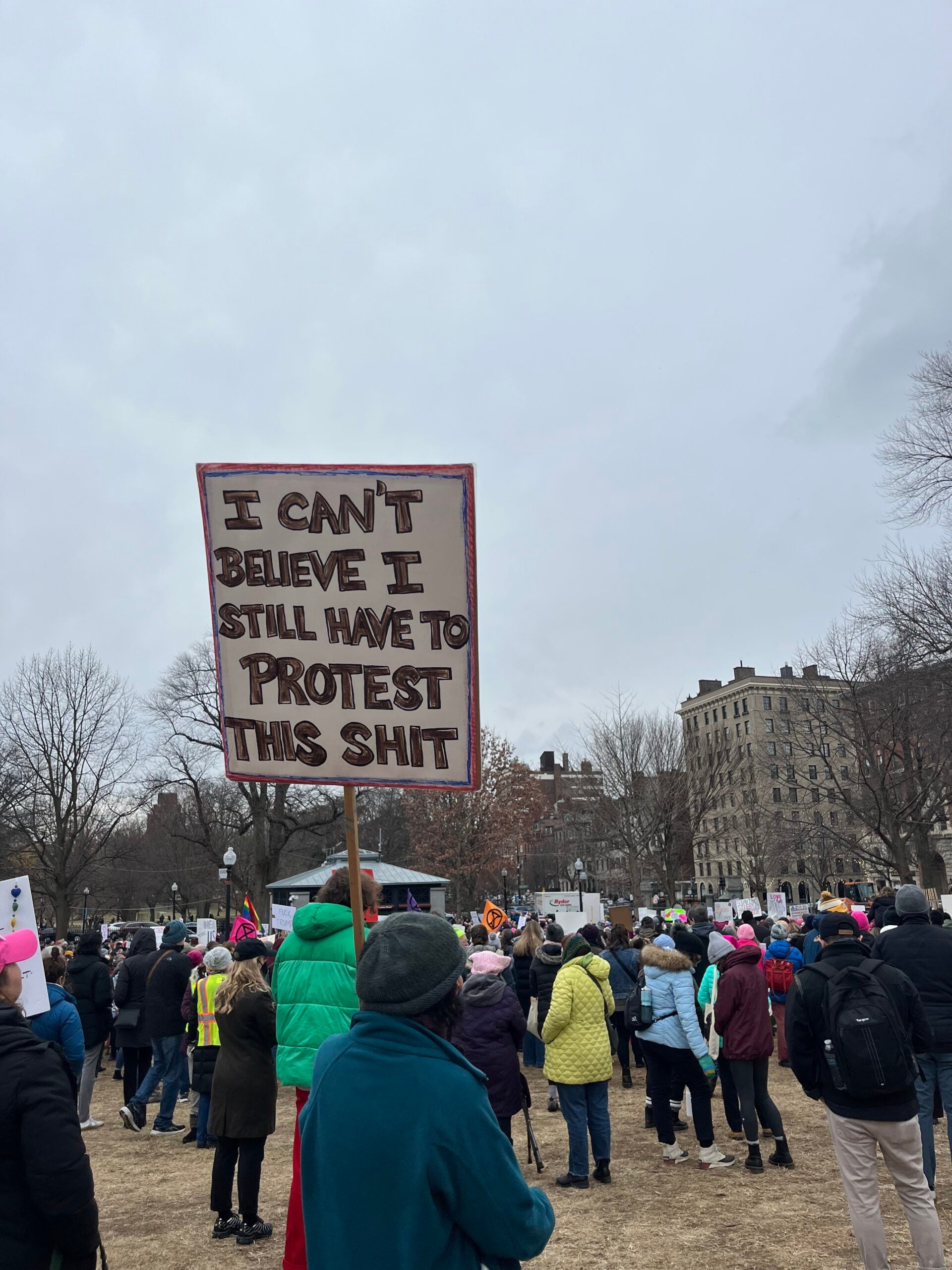
Two days before Donald Trump’s inauguration in Washington, D.C., Massachusetts residents gathered on Boston Common for People’s March 2025 with their pussy hats on and their homemade signs held high.
The protest and demonstration on Saturday was part of a national network of such events organized by Women’s March, the organization behind the worldwide protests in 2017 when Trump entered office for the first time and brought over 400,000 people to Washington.
Though People’s March 2025, hosted in Boston by the New England Independence Campaign with Voter Choice Massachusetts and Ranked Choice Boston, saw a smaller crowd, its attendees were equally impassioned.
“I’m angry about a lot of things. Protecting reproductive rights is extremely important, gun violence is also at the top of my list,” said Hope Perkins, who also attended Boston’s iteration of the 2017 Women’s March.
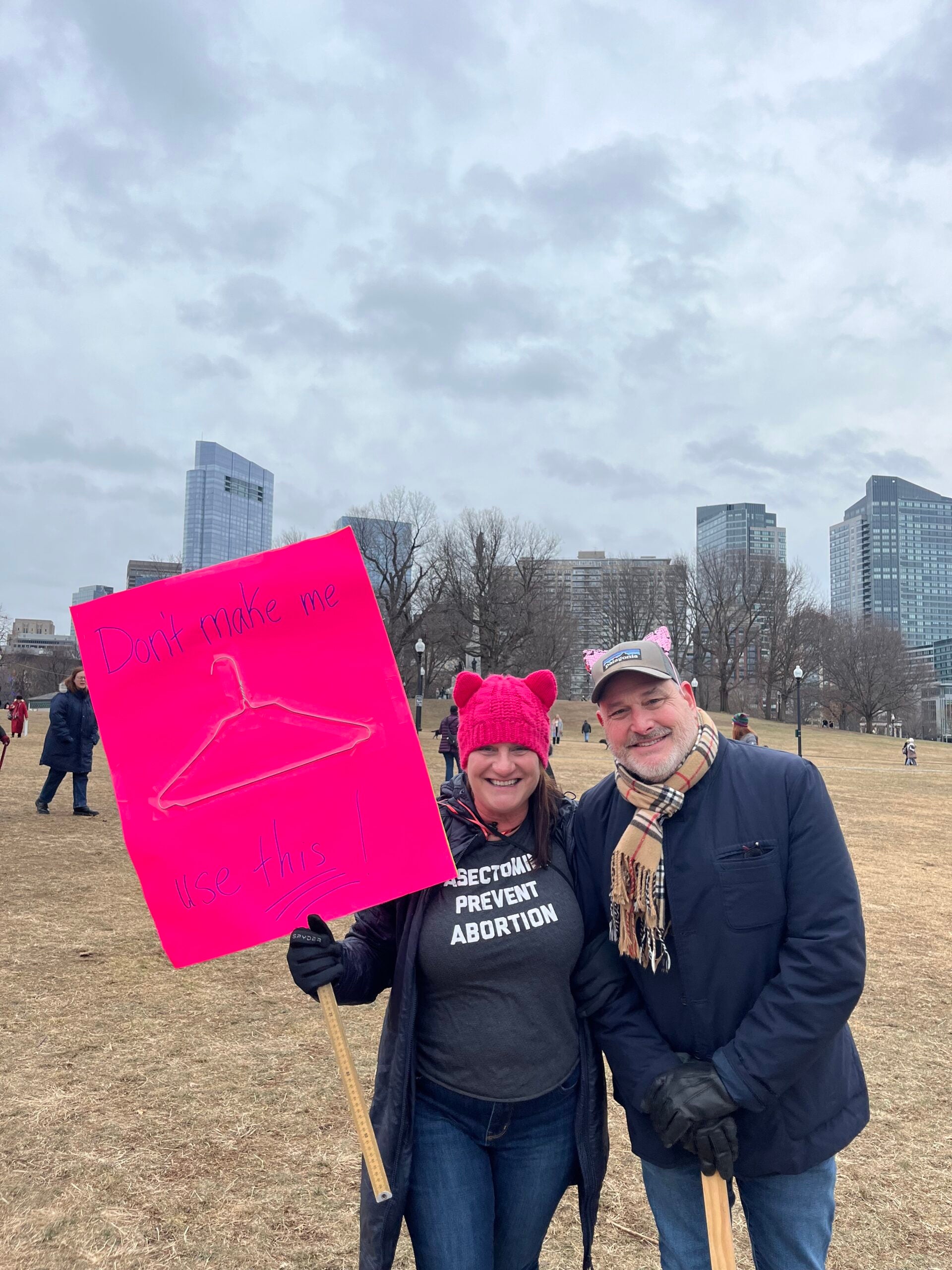
She was reusing a sign with a coat hanger that said, “Don’t make me use this!”
“I keep it in my attic, but sadly I have to keep getting it out of my attic,” Perkins said.
John Kilgour, who attended the event with Perkins, said seeing the crowds gave him “at least a little bit of hope for humanity.”
That was the tone of most of the rally’s speakers, a list that included Boston City Councilors Julia Mejia and Sharon Durkan alongside representatives from Planned Parenthood and the MA Trans Political Coalition.
As she opened the event, emcee Casi Kristant, co-chair of Berkshire Pride, said, “Change is not just possible, it’s inevitable, when we rise together.”
MaryRose Mazzola, chief external affairs officer at Planned Parenthood League of Massachusetts, implored attendees: “We’re going to need your energy.”
Whitney Shanahan, host of the Pro Choice Podcast, spoke to the crowd about being questioned in the ER in 2019 when she was pregnant in a red state that was working on passing a six-week abortion ban. She was asked by medical professionals what she did to “cause” a potential pregnancy loss.
“And this was when Roe v. Wade was in place,” Shanahan said.
But as the rebranded People’s March suggests, the demonstration was about more than just women’s or reproductive rights. Speakers brought up the importance of protecting democracy and demanding peace worldwide, and attendees seemed to identify with the broader message.
“We’re gay, so it’s terrifying right now, and I’m also so concerned about Gaza,” said Alexis Riley, who wore a keffiyeh and held a sign declaring, “our bodies are not a political battleground.” “I’m glad they transitioned it to People’s March, because there are so many things we need to be addressing.”
Amy Brenneman, known for her role on the TV series “NYPD Blue,” raised the climate concerns associated with the wildfires in Los Angeles. She lives there with her husband, director Brad Silberling, and her daughter Charlotte, who both joined her on stage.
Shanahan agreed: “Abortion rights won’t matter,” she said, as long as “we are in a climate crisis.”
But, Brenneman said, the silver lining of the wildfires has been their unifying effect on the city.
“There was no us and them, there was only us,” Brenneman said. “Here’s the deal: we want to care for one another, and given the chance, we do.”
Felicia Jadczak, co-CEO of the DEIB consulting group Inclusion Geeks, echoed this sentiment.
“I was here on the Common eight years ago in 2017,” Jadczak said. “What I learned at that time is that the system is not going to save us…. What will save us are people, community, our friends, our neighborhoods.”
Durkan said it was precisely the 2017 Women’s March that led her to run for Boston City Council. She urged others to take action that resonates with them.
“Do not give up, do not despair, do not back down,” she said.
Maddie Lee, treasurer of the New England Independence Campaign, reminded attendees of New England’s progressive history — Vermont was the first state to ban slavery and Massachusetts was the first to legalize gay marriage — before BABAM, the Boston Area Brigade of Activist Musicians, led attendees in a march around the Common to “When The Saints Go Marching In.”
“Democracy is not a spectator sport,” said Ed Schumacher, executive director of Voter Choice Massachusetts and Ranked Choice Boston. “Together we can reclaim it, and together we will win.”
Get everything you need to know to start your day, delivered right to your inbox every morning.




To comment, please create a screen name in your profile
To comment, please verify your email address
Conversation
This discussion has ended. Please join elsewhere on Boston.com