
Sign up for the Today newsletter
Get everything you need to know to start your day, delivered right to your inbox every morning.
As Donald Trump prepares to re-enter the White House with promises of mass deportations, immigration law is on the minds of many across the country and in Massachusetts.
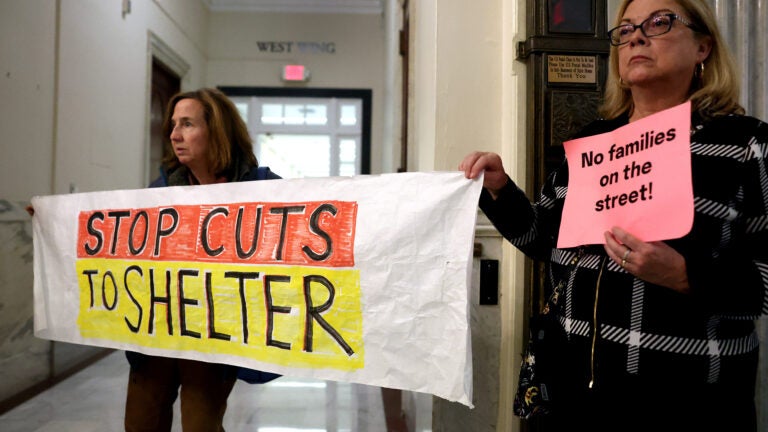
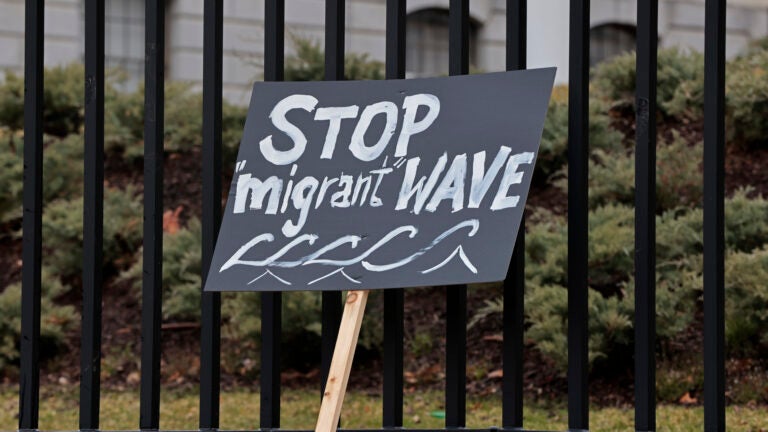
Republican lawmakers proposed a series of changes to the state’s emergency shelter system this week, which has been overwhelmed due, in part, to rising levels of immigration. Now, Gov. Maura Healey is also pushing for changes to the state’s unique right-to-shelter law, arguing that it was never intended to account for the “waves and waves of people” who have been coming into Massachusetts in recent years. At the same time, undocumented immigrants are bracing for potential workplace raids.
So, is Massachusetts actually a “sanctuary state,” as it has been labeled in the past? It’s a complicated question.
Generally, sanctuary policies are ones that limit local cooperation with federal immigration authorities. The term became widespread in the 1980s, as refugees from Central America fled their homes due to civil wars and widespread violence. The Reagan administration granted asylum for only a small percentage of these refugees.
This prompted a network of religious organizations to launch the sanctuary movement in order to provide services like legal aid and medical care to the refugees. San Francisco was the first city to adopt an official policy prohibiting the use of city resources in enforcing federal immigration law, according to the National Conference of State Legislatures.
As the movement came to New England, Cambridge became a hub of resistance to federal immigration laws. Officials there made it the fourth city in the country to prohibit cooperation with federal agents looking to arrest and deport unauthorized migrants. Boston, Somerville, Chelsea, and other Massachusetts municipalities followed suit, according to Boston College’s Global Boston project. Leaders in Boston, Cambridge, and Somerville all recently voted to reaffirm policies limiting cooperation with federal immigration authorities ahead of Trump’s second term.
But that is at the local level. What about statewide? The answer to whether Massachusetts should be considered a sanctuary state depends on who you ask.
When Gov. Ron DeSantis of Florida orchestrated the transportation of migrants to Martha’s Vineyard in 2022, he labeled Massachusetts a “sanctuary destination” while explaining the operation. Over the past year and a half, Healey has been working to spread the message that Massachusetts is “full” and that it does not have room for more migrant families seeking shelter. She explicitly said that Massachusetts is “not a sanctuary state” in an interview with WBZ last month.
Some immigration-focused organizations would disagree with her. The Center for Immigration Studies maintains a list of sanctuary states, cities, and counties across the U.S. It classifies Massachusetts as a sanctuary state, citing a Supreme Judicial Court ruling from 2017 that prohibits law enforcement officials from making arrests based on federal civil immigration matters. The Federation for American Immigration Reform, which seeks to reduce overall immigration levels, also classifies Massachusetts as a sanctuary state by referencing the 2017 decision.
The Massachusetts Chiefs of Police Association recently circulated an advisory reminding police of the implications of that decision ahead of Trump’s return to power. U.S. Immigration and Customs Enforcement (ICE) regularly lodges detainer requests with local police when the agency has determined that an undocumented immigrant has been arrested. Through these requests, ICE asks local authorities to detain the immigrant for a longer period of time.
Massachusetts police are barred from detaining people beyond their state-law release time solely on the basis of a detainer, according to the advisory which was obtained by The New Bedford Light. An ICE spokesperson told Boston.com last week that the agency had issued 198 detainer requests with Boston police in 2024, all of which were not acted upon.
While some groups use the 2017 decision as a basis for classifying Massachusetts as a sanctuary state, any “true sanctuary jurisdiction” should take more factors into account, according to Ragini Shah, the director of the Immigrant Justice Clinic at Suffolk University.
Shah argues that no true sanctuary jurisdictions exist anywhere in the country. She said that four questions should be asked about a specific jurisdiction when evaluating whether or not it is a sanctuary:
If a jurisdiction can answer “no” to all four questions, it can be considered a true sanctuary, according to Shah. But the existence of the Secure Communities program ensures no jurisdiction in the country can answer “no” to all of these questions. That program mandates information sharing between local police and the federal government so that the latter can check whether a detained person is unlawfully present in the U.S.
“Since all state and local jurisdictions share information about noncitizens who are arrested for criminal offenses with federal authorities through Secure Communities, no jurisdiction can truly be called a ‘sanctuary,’” Shah told Boston.com.
The 2017 decision itself does not turn Massachusetts into a sanctuary state, she added.
Shah said she would like to see more precise language be used to describe how a specific city or state interacts with federal immigration enforcement, as opposed to the vague “sanctuary” terms.
There are many unanswered questions about how Massachusetts will be impacted by the Trump administration’s focus on undocumented immigrants.
Healey’s support for changing the right-to-shelter law is not a good omen, Shah said.
“I am deeply disappointed to hear Governor Healey try to roll back an important protection for all residents of Massachusetts,” Shah said. “I would say that rolling back the right to shelter and any other benefits shows that Massachusetts is not only not a sanctuary but is not as welcoming as it promises.”
Federal lawmakers are debating the Laken Riley Act, which would require federal authorities to detain undocumented immigrants accused of theft and other related crimes. It would significantly expand the detention and possible deportation of immigrants across the country, and is already getting support from some Democrats on Capitol Hill. Although any Massachusetts attorney general would be unlikely to sue for compliance, the possibility of non-citizens having their due process rights violated would be increased everywhere, Shah said.
Massachusetts officials should be bracing for federal authorities to target noncitizens here once Trump is inaugurated, Shah said.
“I would encourage state officials to engage in full non-cooperation with ICE to the extent possible by prohibiting 287(g) agreements, cancelling contracts with ICE to detain noncitizens in the state, and removing sovereign immunity from state and local officials who participate in immigration enforcement actions as they are so often rife with racial profiling and abusive practices,” she said.
Get everything you need to know to start your day, delivered right to your inbox every morning.





To comment, please create a screen name in your profile
To comment, please verify your email address
Conversation
This discussion has ended. Please join elsewhere on Boston.com